Creating Theros Adventures
Source: Mythic Odysseys of Theros, p. 109
A quote from Jenna Helland, Godsend
Can the gods determine my fate?” Elspeth asked. “What is truly the extent of their power? Can they make what I want happen—if only I please them enough?”
“If you want a god to determine your fate, you must ask the god for an ordeal,” Sarpedon said. “They will only grant it if they think you are worthy—whatever ‘worthy’ means for them. If you accomplish it, you may request a hand in your own destiny.”
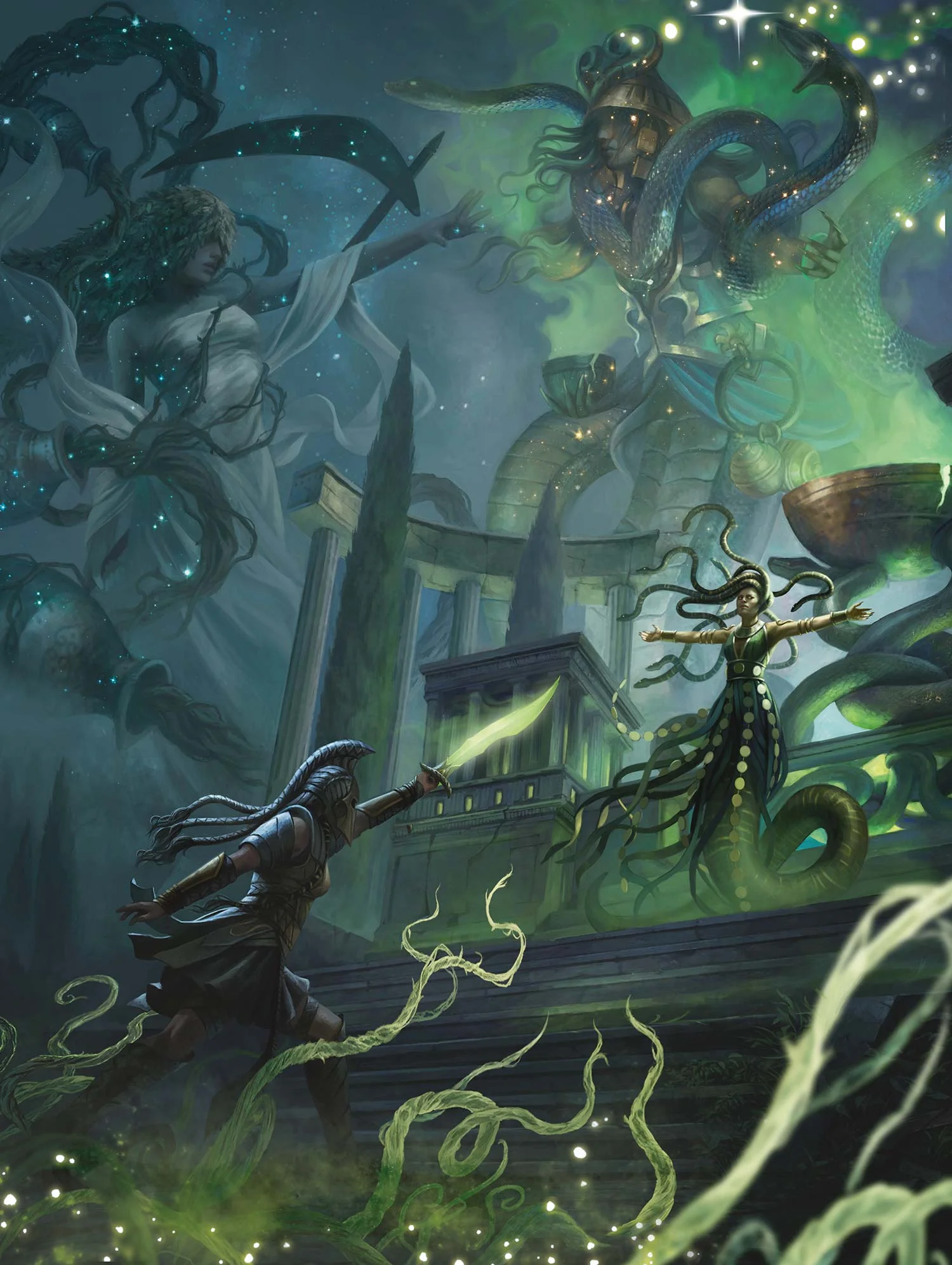
As exemplified by the labors of Anthousa, the exploits of Haktos the Unscarred, the wondrous inventions of Dalakos, and Elspeth’s escape from the Underworld, the heroes of Theros chart their own fates—and so will the player characters in your campaign.
What adventures might Heliod’s champions undertake? What villains and monsters are associated with Phenax? How might adventurers get entangled in divine schemes? This chapter explores these questions, providing abundant advice, tools, and maps for players to create their own exciting stories. The options presented here expand on the material in “chapter 3” of the “Dungeon Master’s Guide” to help you craft adventures for your own Theros campaign. Each god of Theros’s pantheon has a section here, describing how the deity interacts with the mortal world. Beyond the gods, tools for running nautical odysseys and descents into the Underworld appear in this chapter, along with an adventure that explores the machinations of immortals and the dead.
Monsters and nonplayer characters mentioned in this chapter can be found in this book (MOoT), the “Monster Manual” (MM), “Mordenkainen’s Tome of Foes” (MToF), or “Volo’s Guide to Monsters” (VGtM). When a creature’s name appears in bold type, that’s a visual cue pointing you to the creature’s stat block. If the stat block appears in “chapter 6”, the text tells you so.
God-Based Adventures
Three elements combine to form the adventures recounted in the epics of Theros: heroes, gods, and monsters. Each god’s section in this chapter provides the ingredients to build your own epics: champions and blessings, villains and monsters, divine schemes, and adventure locations.
Champions and Quests
Each god’s entry in this chapter begins with a discussion of the god’s champions: quests for them to undertake, how you might structure a campaign around that god’s champions, and blessings the god might bestow.
Serving Two or More Masters
Often, each of the characters in an adventuring party is the champion of a different god—or no god at all. What brings the characters together? How do you motivate the whole party? Consider these options:
- Divine Coalition. The characters represent a coalition of gods who have joined forces against a common foe (or cabal of enemies). For example, you might build a campaign around the idea that Erebos, Mogis, and Pharika are conspiring to unleash slaughter and plague on the mortal realm. Perhaps heroic champions of Ephara, Heliod, Karametra, Nylea, and other gods unite to protect the world from this threat.
- Friendly Cooperation. If Thassa’s champion helps Heliod’s champion today, perhaps Heliod’s champion will help Thassa’s champion tomorrow. As long as the aims of gods aren’t in opposition, those gods take no issue with their champions helping each other.
- Together by Circumstance. A group of characters might find themselves on a galley foundering in a storm, in a polis under attack, or on the same side in a war. In such a case, when divine champions contend against a common threat, their allegiance to different gods might be less important than the urgency of their current situation, and they might forge lasting friendships that transcend their religious allegiances.
Quests
A mortal champion is a vessel of divine power and an agent of divine will. A champion’s role is to act as the god’s eyes and hands, upholding the deity’s ideals and shaping the world to conform to those ideals.
In return for the gods’ divine blessings, champions are expected to do the god’s bidding. The quests in each god’s section throughout this chapter provide examples of tasks the gods might assign to their champions. As long as at least one member of the adventuring party is a champion of the god in question, these ideas might serve as adventure seeds.
-
Completing a Quest. When a champion undertakes a quest on a god’s behalf, the champion can expect a reward for doing so. As long as the champion is actively pursuing the quest and upholding the god’s ideals along the way, you can increase the character’s piety score, using the general rule of raising it by 1 every session. Upon completing a quest bestowed by the god, the character might earn a blessing (such as those described in this chapter) as well as a piety score increase.
-
Declining a Quest. The cost to a champion for refusing to accept a god’s quest can be steep. Sometimes, a champion can safely put the task on hold for a time, such as when helping another champion complete a quest for a different god. As long as undertaking the quest isn’t a matter of urgency, gods usually don’t punish champions who procrastinate. But if a champion willfully ignores a god’s quest or pursues opposite aims, they might suffer any of the following consequences:
-
The character’s piety score might decrease by 1 each day, or each play session, for as long as the character continues to refuse the quest.
-
The god might intervene to steer the champion toward the quest: Thassa could cause a storm to blow the character’s ship off course, for example, bringing the champion to where the god wants them to be.
-
In extreme instances, the god might place a magical command on the character, similar to a geas spell.
God-Based Campaigns
Each god’s entry in this chapter explores the themes and events that could drive a campaign focused on the champions or agenda of that god. Typically, in a campaign centered on a god, one or more of the player characters are champions of that god, so it’s natural—and perhaps even necessary—for them to become directly embroiled in how events unfold.
Villains and Monsters
Just as many heroes serve as champions of the gods, many villains also serve their wills. Each god’s section offers ideas for NPCs whose devotion turns their behavior in a villainous direction. It also provides suggestions for the kinds of monsters that might be associated with that god and serve as foes in an adventure. Generally, monster suggestions exclude foes that could work for most gods, like acolytes and priests from the “Monster Manual” and oracles from “chapter 6” of this book.
Gods as Campaign Villains
You can build a campaign around the villainous plans and deeds of a god, pitting the heroic adventurers against that god’s servants and emissaries throughout their careers. Each god’s entry offers suggestions on how such a campaign might progress. Additionally, a table of divine schemes suggests ambitions a god might pursue, or threats they might unleash, as a campaign’s primary antagonist.
Adventure Locations
Each god’s section includes a map of an iconic location often associated with a specific god. The description of each location includes tables that list possible goals for an adventure based there and villains the characters might face there.
Divine Assistance
A quote from The Callapheia
Storm-tossed and broken, foundering,
Callaphe cried out to Thassa.
Tritons came swiftly to save her,
bringing her north to the Lindus.
The gods are fond of meddling in mortal affairs, and heroes sometimes call on their gods for aid in times of desperate need. Spells such as divination and commune give characters the opportunity to ask their gods for information, and clerics who beseech their gods for assistance sometimes receive miracles in answer. Heroes also have the opportunity to ask the gods for favors, after proving their worth by enduring a divine ordeal.
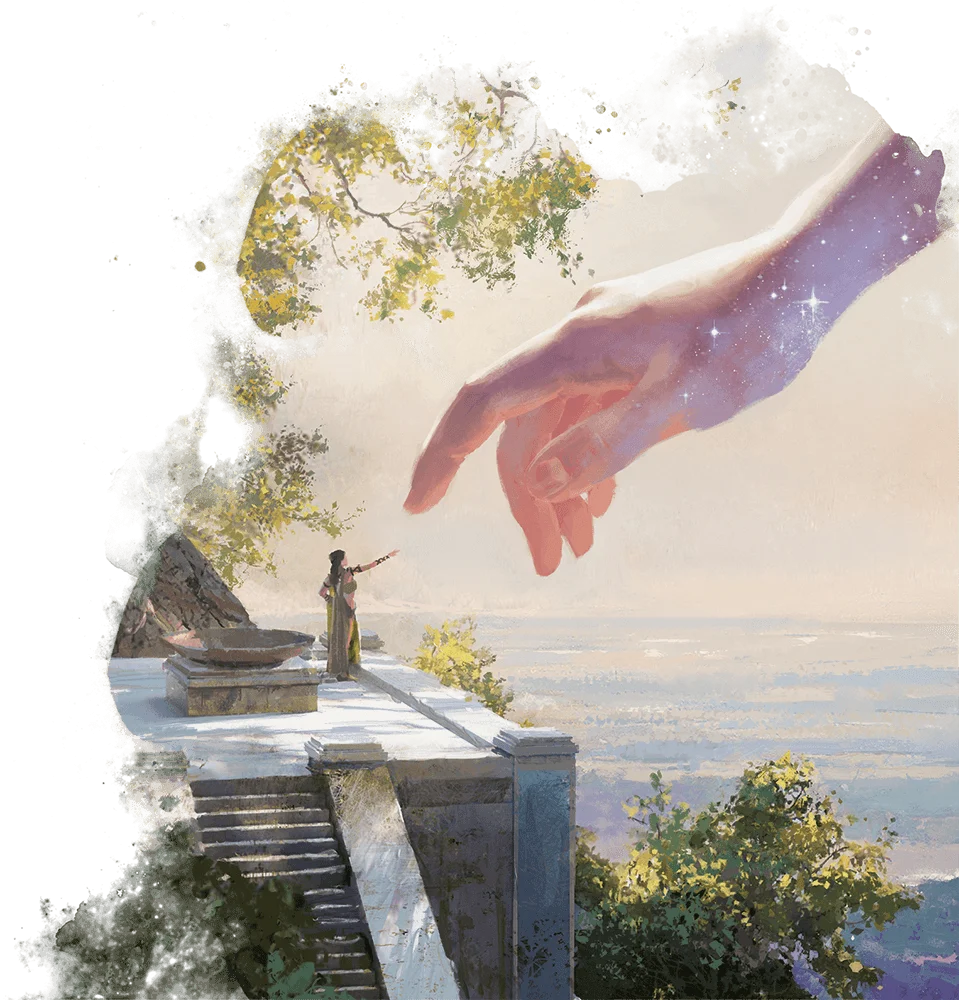
At other times, the gods take the initiative to reach out to mortal heroes, sending them on quests or meddling in their adventures. Dreams, omens, and emissaries are the most common means by which gods might make their wishes known.
Two crucial principles should guide your use of divine involvement in your campaign:
Don’t eliminate character choice
The gods can tell characters to do things, and even threaten to punish them if they don’t do things, but the gods can’t control mortal actions.
Don’t eliminate risk and danger
The intervention of a god should never guarantee success or victory, nor should a god’s interference portend immediate defeat. Gods can act to change the balance of an encounter or offer an avenue of escape, but they count on their champions to be heroes and act accordingly.
Communication
Communication between the mortal world and the divine can take a variety of forms, from omens that get mortals’ attention by distorting natural phenomena to face-to-face conversations between a mortal and the manifestation of a god.
As explained in “chapter 2”, the gods aren’t all-knowing, so theoretical limits do exist on the information a god might be able to pass on to a human champion. That said, the gods are tremendously knowledgeable, with perfect recall of their past experiences and a reliable ability to predict the short-term future. The gods don’t like to reveal their ignorance of any matter, so they might give a purposefully unclear or misleading answer rather than admit they don’t know the right one.
Omens
When the lynx-constellation paces restlessly in the night sky, it is an omen that Nylea is worried. When the tides rise high in defiance of the natural cycle, that is an omen that Thassa is distressed. When rain falls on a sunny day, Keranos and Heliod must be in conversation. Through supernatural events such as these, evidence of the gods’ presence and influence is demonstrated, metaphorically manifesting their divine wishes.
Weal and Woe
The gods usually send omens as either warnings or as signs of their favor. The response to the augury spell takes the form of an omen foretelling weal or woe, and the gods might use omens in the same way, even without being asked to provide a sign. When a divine champion sets out on a course of action, a god might express approval or disapproval, hoping to either encourage or dissuade the mortal.
The augury spell requests an omen. At your option, you can simply provide the short answers offered in the spell description—weal, woe, weal and woe, or nothing—but you can also describe more elaborate omens. The form of the response might vary depending on the method of divination used, which can go beyond the inlaid sticks, dragon bones, or ornate cards mentioned in the spell description. Diviners in Theros look for signs in the stars, in the patterns of flocks of birds in flight, in the shapes of clouds, in the organs of sacrificed animals, in the sounds of thunder, in the designs left by waves on sand, and through many other means. So if an oracle stands on a beach imploring Thassa for an augury regarding a course of action you believe to be disastrous, you might describe the waves washing over the beach—and circling around the oracle’s feet, leaving them completely dry. (If necessary, though, you should clarify that the oracle knows the answer to be “woe.“)
- Other Messages. An omen can also have a more direct meaning beyond simply “weal” or “woe.” You can use omens to nudge the characters to an adventure location, to lead them to an oracle who lives far from the polis, or to hint at the true identity of a villain. Nylea might cause a flock of birds to suddenly rush eastward, inviting her champion to follow in that direction, or an animal might snarl whenever the villain’s name is spoken. Omens should communicate important messages from the gods, something meaningful enough that deities have deigned to interfere in mortal efforts. The gods don’t provide omens to address unimportant questions (unless the characters use a spell for this purpose).
- Interpreting Omens. A degree of mystery surrounds every omen, but the more complex an omen is, the more confusing mortals might find it. In addition, it’s sometimes not clear whether a strange occurrence in the natural world is the work of the gods or has some other origin.
If a character struggles to interpret the meaning of an omen, you might allow them to make a DC 14 Intelligence or Wisdom check (perhaps modified by proficiency in Arcana, Nature, or Religion) to determine the nature of simple omens, with a success indicating that the correct message has been gleaned. Alternatively, characters might need to seek out oracles to interpret complicated omens for them.
- Omen Examples. The tables on the following pages provide examples of phenomena that could serve as omens of the various gods. Although they each have their own areas of concern, any god can manipulate the natural world as they please. You can choose a god to closely align the omen with and roll either a
d6or ad8to get an omen associated with that god, or you can roll ad100to get an omen from any of the god’s omen tables at random.
Divination
Clerics and oracles have spells at their disposal that allow them to ask the gods for insight. The divination and commune spells contact a god and promise a truthful reply to the caster’s questions. The reply takes the form of a simple “yes” or “no,” a cryptic rhyme, or an omen. It might be transmitted through a disembodied voice, a vision only the caster can see, or any other mystical manner. A verbal reply to a divination or commune spell must be truthful, but it might still be misleading. A god can’t speak a deliberate lie in response to either spell, but they can be evasive while remaining within the boundaries of the truth. If a character casts one of these spells more than once in the same day, however, there is an increasing chance of receiving an unclear answer or none at all (as described in the spells’ entries in the “Player’s Handbook”). This might happen because another god, alerted to the connection between the caster and their god by the first casting of the spell, intercepts the second one and chooses to mislead the character. Or it could simply mean that the god is tired of the character’s pestering and chooses not to answer.
Dreams and Visions
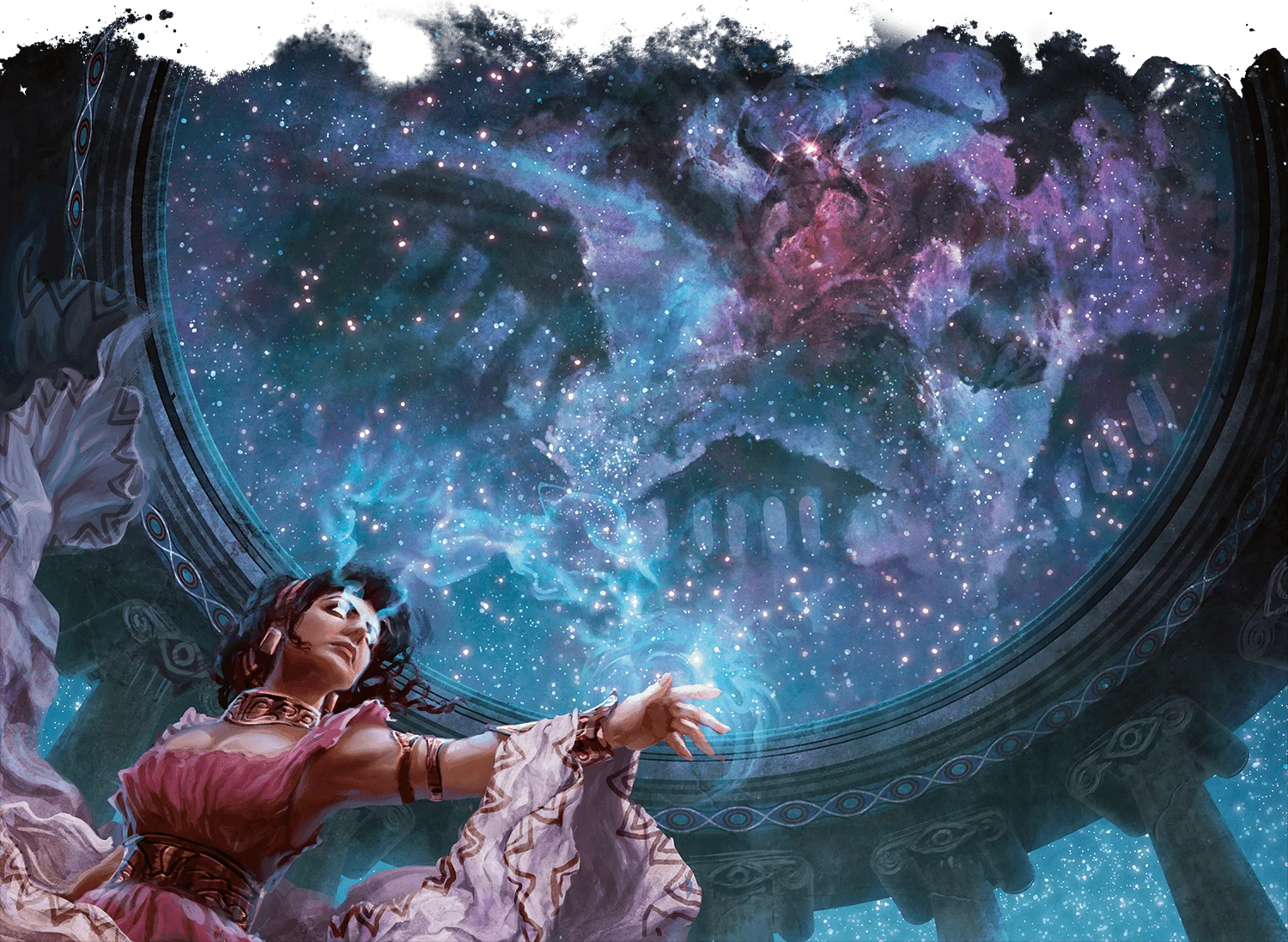
When mortals sleep and dream, they are said to “visit Nyx.” During this time, mortals are particularly susceptible to divine contact. A god might communicate with a sleeping mortal as if by casting dream—including the ability to transform the mortal’s dreamscape into a nightmare. Whatever form such a dream takes, they are often similar to omens, making heavy use of symbol and metaphor.
Divine Intervention
As with Callaphe the Mariner’s desperate cry to Thassa, heroes in dire straits sometimes implore their gods for help. Occasionally, the gods answer. Whether a response is elicited by a hero’s desperate prayer, a cleric’s use of the Divine Intervention class feature, or a god’s decision to intervene in mortal affairs for good or ill, an answer can manifest in a variety of ways.
Blessings
As described in “chapter 7” of the “Dungeon Master’s Guide”, the gods sometimes use blessings to reward their faithful servants for momentous deeds. Completing a quest bestowed by the god is an accomplishment that might merit a blessing as a reward. Occasionally, a god might also offer a blessing when sending a champion on a quest, helping them to prepare for the task ahead.
A character retains the benefit of a blessing until it is taken away by the god who granted it, which might happen if a character’s piety score is reduced. Unlike a magic item, a divine blessing can’t be suppressed by an antimagic field or similar effect. There is no limit on the number of blessings a character can receive, but a character can’t benefit from multiple applications of a blessing at the same time.
If you choose to award blessings to the characters in your campaign, use the guidelines in the “Dungeon Master’s Guide”. If a blessing duplicates the effect of a magic item, it requires a minimum piety score based on the rarity of the item:
Uncommon magic item
requires piety 3 or higher
Rare magic item
requires piety 10 or higher
Very rare magic item
requires piety 25 or higher
Legendary magic item
requires piety 50 or higher
You can use these additional blessings for your campaign, or use them to inspire more supernatural gifts.
Blessing of Farsight (Requires Piety 3+)
You have advantage on Wisdom (Perception) checks that rely on sight.
- Blessing of Protection (Requires Piety 3+). As a bonus action, you can invoke your god’s protection, providing you with a +1 bonus to your AC for 1 minute. Once you use this blessing, you can’t use it again until the next dawn.
- Blessing of Resilience (Requires Piety 3+). When you are about to take acid, cold, fire, lightning, or thunder damage, you can use your reaction to gain resistance to that damage type until the end of your next turn. Once you use this blessing, you can’t use it again until the next dawn.
Eyes of Nyx (Requires Piety 10+)
As an action, you can imbue your eyes with enhanced vision for 10 minutes. While the blessing is active, your eyes look like the starry void of Nyx, and you can see invisible creatures and objects within 60 feet of you that are within your line of sight. Once you use this blessing, you can’t use it again until the next dusk.
- Weapon of Nyx (Requires Piety 10+). You can use a bonus action to cause one weapon you are holding to surge with divine power for 1 minute. On a hit, the weapon deals an extra
1d8radiant damage. (Depending on your god, it might deal a different damage type—necrotic for Erebos, lightning for Keranos, or fire for Purphoros, for example.) Once you use this blessing, you can’t use it again until you finish a long rest.
Emissaries
A divine emissary is a creature woven from the fabric of Nyx as a tool to carry out a god’s divine will. Emissaries have no will of their own; they are extensions of their creators’ divine substance, brought into the mortal world to fulfill a specific mission. When that mission is complete, they return to Nyx.
While certain deities are associated with sending favored animals as their emissaries—such as the stag often associated with Heliod and Nylea’s lynx—any animal might be a god’s emissary. In each case, divine emissaries have a few shared characteristics:
- They are Nyxborn and have one or two of the Nyxborn traits described in “chapter 6”, commonly magic resistance and magic weapons.
- They’re of remarkable size, being at least one size category larger than normal.
Miracles
As the simplest form of miracle, a god can produce the effect of any cleric spell or any spell associated with one of the god’s domains, and have the spell take effect anywhere in the mortal realm. The gods’ capabilities aren’t limited by spell lists, though, and their miraculous intervention can have any effect you want. Direct godly intervention tends to be subtle and rare, though, as it attracts the attention of other gods and might encourage them to meddle in their own ways.
Divine Ordeals
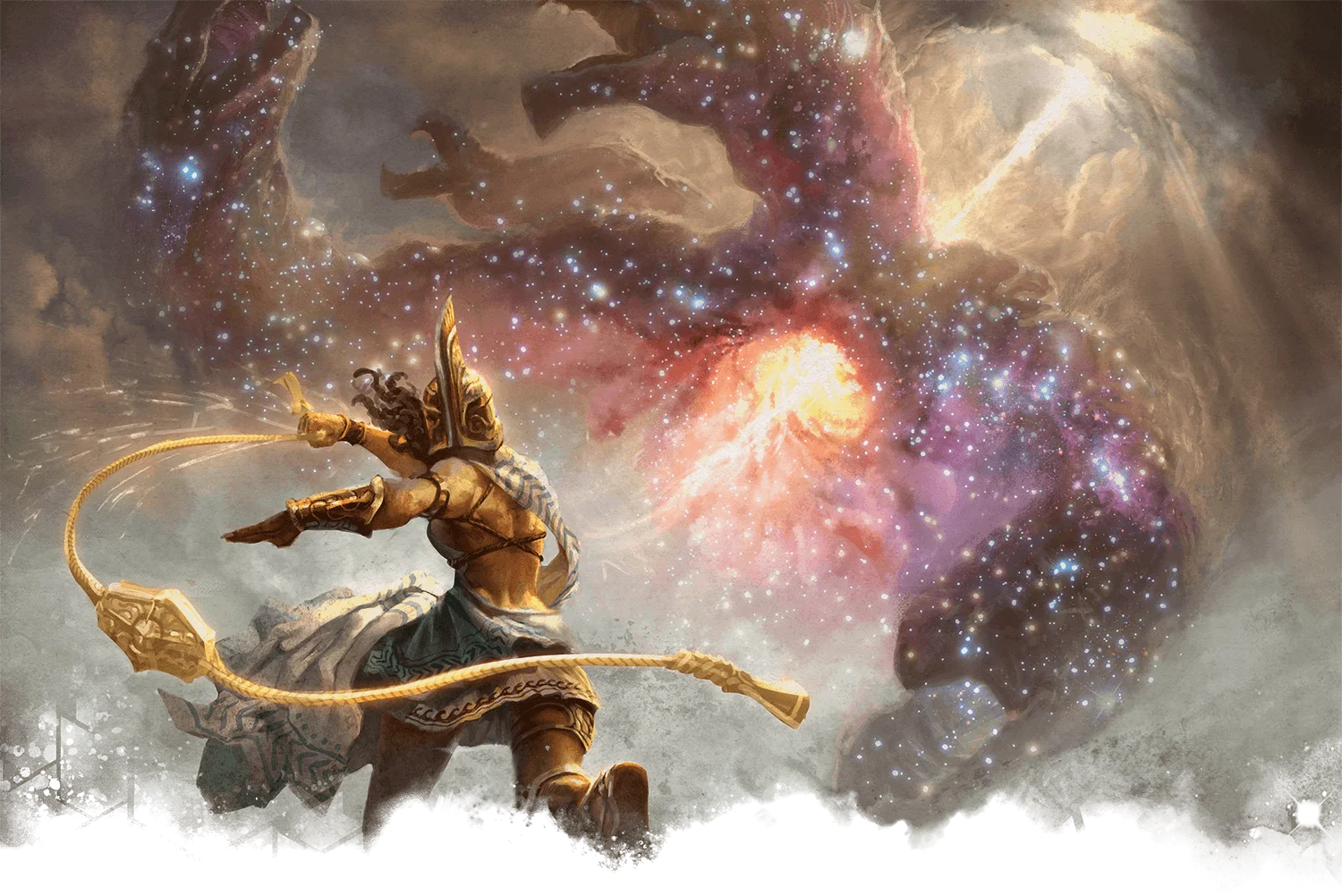
Life as a champion of a god offers abundant opportunities to escape life’s tedium, but a mortal who wants to truly take control of fate can request an ordeal from one of the gods. An ordeal, as the name indicates, is no easy task. To receive one, a candidate must accomplish at least one near-impossible feat to even make the request: finding a pathway into Nyx. But the reward for triumph is appropriate to the scale of the challenge.
Journey into Nyx
The first stage of a divine ordeal is entering Nyx. Callaphe the mariner is said to have sailed her ship over the waterfall at the edge of the world and right into Nyx, where she can still be seen among the constellations. Additionally, Kruphix’s Temple of Mystery at the edge of the world and the shrine of Nykthos are known to hold portals that lead to the gates of Nyx.
In theory, high-level characters can use spells such as plane shift or gate to move from the mortal realm to Nyx. In practice, securing the proper material component to travel to Nyx through the plane shift spell is roughly as difficult as sailing to the edge of the world, and Kruphix can (and usually does) prevent the gate spell from opening a portal into Nyx.
There might be other ways to get into Nyx, and each one is a challenge suited for the greatest heroes.
Ask and Receive
After reaching Nyx, a hero must next ask a god for an ordeal. Asking for an ordeal is as simple as calling out one’s intention to the god: “Erebos, I request an ordeal!”
The gods grant ordeals only to those they consider worthy. The hero need not be a worshiper of the god being beseeched, or be concerned with upholding the god’s ideals. As a rule, any hero capable of reaching Nyx is worthy of receiving an ordeal in most gods’ eyes. Additionally, a god will typically only grant a champion one ordeal in their lifetime—allowing more only under exceptional circumstances.
A god might test multiple members of a group, confronting each with their own ordeals. Alternatively, champions devoted to different deities might all request ordeals from their own gods. Those who don’t participate in an ordeal, though, still have plenty to do in Nyx and might find themselves contacted by agents of the gods or that realm’s other legendary inhabitants.
The Ordeal
Assuming the god deems the hero worthy, the ordeal gets under way. The hero falls into a trance and steps alone into a dreamscape constructed by the god.
Work to craft an ordeal that provides a significant challenge for the character to overcome. Fundamentally, an ordeal is a test of the character’s heroic drive, as described in “chapter 1”. Will the character’s drive prove strong enough to overcome everything else?
An ordeal is a single encounter, which might involve combat, interaction, a series of ability checks, or other activities. It takes place in a dream state, so it’s not essential that you give this encounter anything more than a narrative framing. The point is that the ordeal should test whether the hero’s drive can counteract their other personality traits. The god who grants an ordeal shapes it. Keranos, for example, might challenge a hero with saving innocents during a dangerous storm, or Thassa might throw a mortal into a dreamscape where their ship is attacked by a kraken. Beyond the obvious challenge, the ordeal should create tension between a character’s heroic drive and their other characteristics.
You can use these guidelines to determine the appropriate degree of challenge for elements of an ordeal:
- Combat with One Creature. Use a monster or an NPC with a challenge rating equal to half the character’s level.
- Combat with Multiple Creatures. Use
2d4creatures, each of which has a challenge rating of about one-fifth the character’s level. - Ability Checks. Set the DC at 20 for most checks and 25 for checks that are crucial to the ordeal.
The Reward
There’s typically no penalty for failing an ordeal, but the reward for success can be great. A character can request anything from a god. Consider these examples of what a god might grant to a successful hero:
- A miracle or other form of divine intervention
- A supernatural gift of your choice from those described in “chapter 1”
- A magic item of a rarity appropriate to the character’s level
Athreos

The River Guide straddles the line between life and death, maintaining the cosmological balance with no regard for the morals and emotions of mortals. Athreos’s champions seek to further his goals, and rarely do so with greater sympathy than their grim patron.
Athreos’s Champions
Athreos expects his champions to maintain the balance between the living and the dead, just as he does. Beyond this, his servants take it upon themselves to maintain funerary customs unique to their cultures and preserve the memories of the departed. Beyond the mortal world, the River Guide opposes any who disrupt the cycle of life and death, behavior that occasionally brings him into conflict with other deities—particularly Erebos and Heliod, but also occasionally Phenax and Pharika.
The Athreos’s Quests table suggests a few adventures the god’s champions might involve themselves in.
An Athreos Campaign
Early in a campaign, Athreos’s champions likely face dangerous or wayward undead, such as ghouls and ghosts, or monsters that have taken up residence in sacred burial sites. As the story progresses, the Returned and eidolons might feature more prominently, along with situations that force champions to oppose those seeking the souls of loved ones or the spirits of those with work left undone. At some point, Athreos’s champions might come to oppose the arrogance and treachery of Erebos, Heliod, and Phenax, or the machinations of demons or the necropoleis of the Returned.
The River Guide’s mortal servants will likely find their emotions tested—particularly their sense of morality and their inclination toward sympathy. Any mortal might be moved to restore a ruler whose death will ignite a war or by the plight of lovers separated by death. Athreos cares not for such things, and he expects his followers to guard the borders between life and death as emotionlessly as he does. If one of his servants falters, Athreos is quick to revoke his blessings.
Athreos’s Villains
Athreos’s champions readily forsake their connections to other mortals. Working among endless throngs of the dead and grieving can sap one’s empathy and harden any soul. As a result, Athreos’s followers make grim opponents when they prioritize the needs of the dead over the living. Their mission also makes them ready foes of the Returned and their allies. Some seek to achieve greater efficiency in the transition of the doomed into death, such as by impeding medical treatment or wrecking warships destined for hopeless wars. Athreos doesn’t approve of utter cruelty, but neither does he particularly care, so long as the dead meet him with coin.
The Athreos’s Villains table suggests a variety of foes that might arise from among the god’s followers.
Athreos’s Monsters
Most creatures that serve Athreos aid the god in destroying the undead. Beyond that, the Athreos’s Monsters table presents a few creatures likely to serve the god.
Athreos as Campaign Villain
Athreos sees his responsibilities as necessary, but doesn’t cherish them. Were there a more efficient way to maintain the cycle of life and death, or to create some sort of stasis, he might pursue it. Alternatively, wittingly or otherwise, Athreos might allow some less reliable being to take over his labors. Regardless of the circumstances, any change in the River Guide’s role would have dramatic effects on the living and the balance of power between Theros’s immortals. Adventurers caught in Athreos’s machinations have the potential to influence nothing less than the underpinnings of existence.
Correcting any imbalance in the cycle of life and death likely involves the assistance of other gods. If Athreos ever truly abandons his duties, it might be necessary for another to take up his labors. Candidates could include titans or gods, but a selfless mortal might also sacrifice themselves to become the new Athreos.
Athreos’s Divine Schemes
If Athreos were to have desires beyond his responsibilities to the dead, he would likely keep them secret and act with slow, nearly invisible, deliberateness. The Athreos’s Divine Schemes table suggests just a few of the god’s potential objectives.
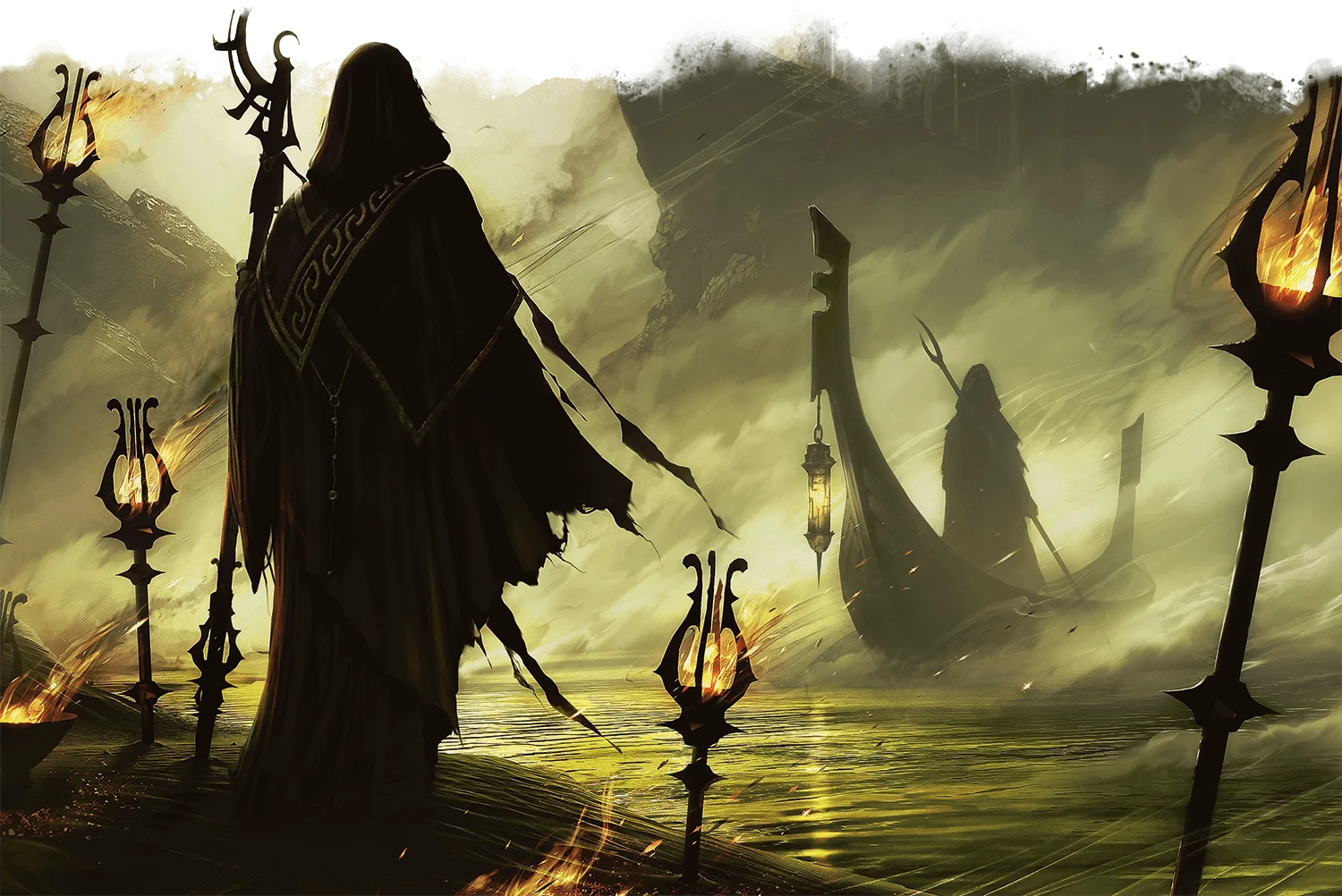
Underworld Crossing
The Tartyx River is dotted with ruined temples of Athreos on either side of its banks that serve as crossing points between the mortal world and the Underworld. Souls of the dead wait on the riverbank at these desolate places for the River Guide to appear and grant them passage to the Underworld side.
The ruined temple buildings are as enigmatic as their patron. No priests inhabit or care for these places, though they are guarded by cerberi and phylaskia (both described in “chapter 6”). When living mortals enter these shrines, the buildings come alive with magic traps meant to keep the living out of the realm of the dead and the dead from returning to the land of the living.
Underworld Crossing Adventures
Adventures in Underworld crossings usually involve the characters entering or exiting the Underworld or helping or preventing someone or something from doing so. Souls with coin left after crossing the Tartyx often discard their excess valuables upon reaching the Underworld—their treasures proving useless in the realm of the dead. The dunes of discarded coins that pile up on the Underworld’s shores might be enough to tempt mortal treasure hunters, even at the risk of being eternally pursued by Athreos’s servants.
Alternatively, it might be souls rather than riches that tempt adventurers to the Tartyx’s banks. A spirit who died without payment for Athreos might linger at the river’s edge. Perhaps adventurers seek to help such a lost soul pass on to the Underworld, or they might offer to pay for passage if a spirit shares valuable information with them. In either case, adventurers might offer the dead help in reaching their final resting place.
The Underworld Crossing Adventures table offers ideas for adventures that could occur in such a place.
Underworld Crossing Map
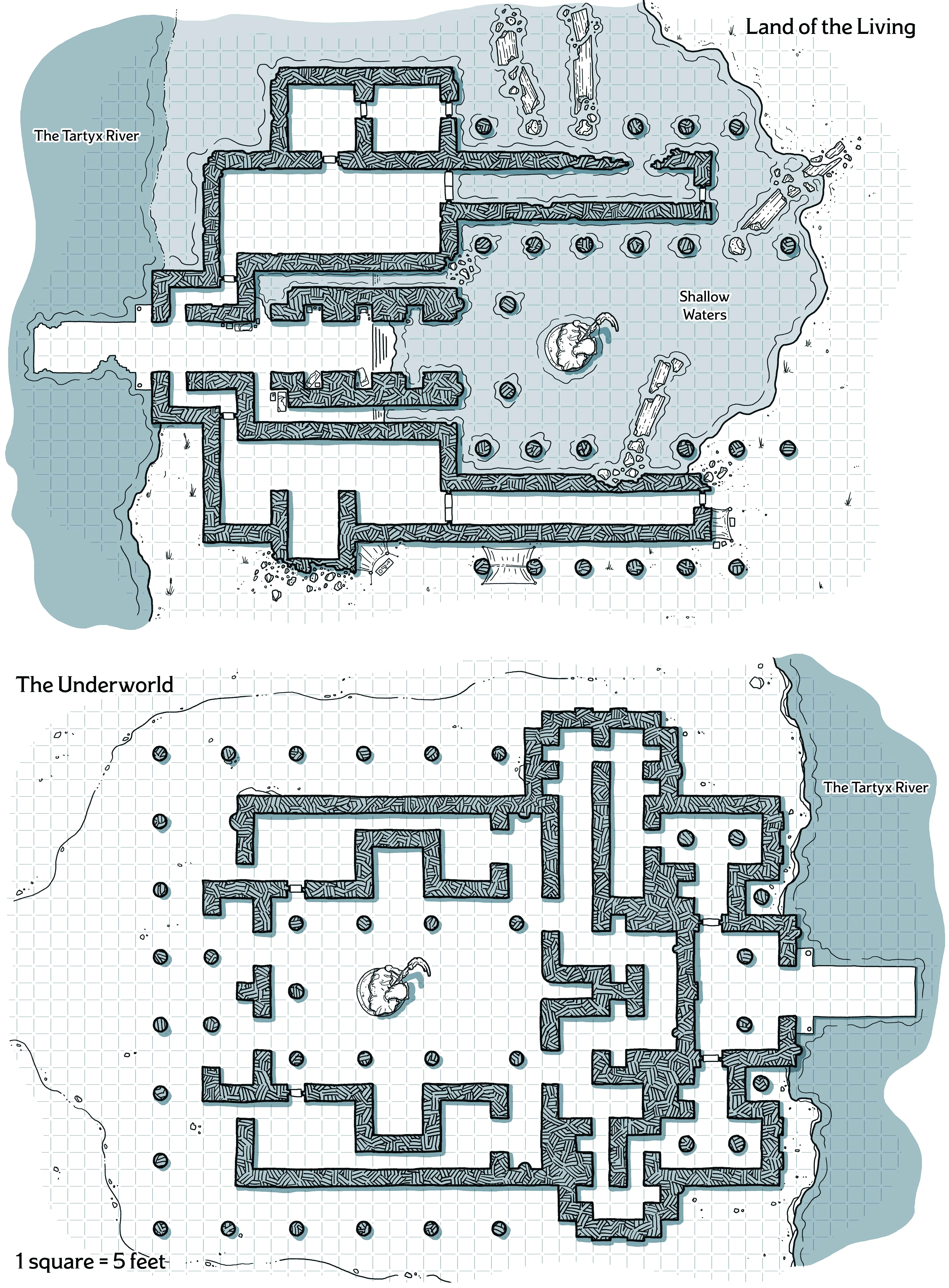
The Underworld crossing shown in map 4.1 is made up of two halves of a bleak, broken temple on either side of the Tartyx River. Each half of the temple facing the river ends in a dock. The riverbank on the mortal side is covered in gold coins. This half of the temple holds a large sanctuary with a cracked floor and sinking altar where phylaskia and cerberi stand guard. Surrounding this cavernous hall, shadowy corridors that lead to the dock are covered in trapped glyphs that explode with energy and collapse ceilings when activated by the presence of mortals.
The temple half on the Underworld side of the river consists of twisting crypt halls that hold no bones, bodies, or other remains—only dust and guardians. These halls give way to a second sanctuary filled with somber funeral music—though there are no instruments in sight. It’s said that living creatures that hear this song are driven to the depths of despair. A massive statue of Athreos watches over this chamber and the guardians who reside there.
Gallery
Underworld Crossing Villains
Mortals who adventure in an Underworld crossing are likely to battle foes trying to enter or escape the Underworld—or trying to prevent the characters from doing so. Examples of such villains appear on the Underworld Crossings Villains table.
Ephara
Serious and knowledgeable, Ephara watches over cities, protecting them from the wilds and seeing that they develop in a just and beautiful way.
Ephara’s Champions
The god of the polis seeks out those who would defend their cities with the same devotion that she does, fighting against threats both within and outside a city’s walls.
The Ephara’s Quests table suggests a few adventures the god’s champions might involve themselves in.
An Ephara Campaign
A campaign centered around Ephara is almost by necessity an urban campaign, and likely one that primarily or entirely takes place within a single city. Ephara is concerned with the establishment, development, and protection of cities, and a campaign centered on her champions and goals might focus on just one of these aspects over the course of the campaign.
A game focused on establishment might see the characters founding a new city, or perhaps reviving a dead one. One focused on development could go beyond the basics of what a city needs to survive and get into what a city requires to thrive—which could easily lead to campaigns less focused on combat and more on social encounters and intrigue. Lastly, a campaign focused on defending a city could present a range of threats, from external foes—like wild creatures or invading armies—to internal enemies—like corrupt leaders or dangerous criminals. In any of these cases, Ephara cares about protecting cities from the poison of corruption and tyranny as well as threats from armies or the wild.
If the characters falter in any of these major goals, they could lose Ephara’s favor and have to prove themselves again worthy of her grace, perhaps by making substantial improvements to a city or defeating a major threat.
Foes in an Ephara campaign could be deadly monsters, corrupt politicians, or even impending natural disasters. The reappearance of figures from a city’s past, either as Returned or Nyxborn, can also throw a community into disorder. Who has the greater right to rule: the current ruler or the city’s legendary founder?
Ephara’s Villains
Many see Ephara and her followers as villains, treading on the wilderness to expand cities and civilization. Even people who live in urban environments might not be safe from foes who profess to be in Ephara’s service. Those who become excessively focused on rules and justice could overstep their bounds, using the law to oppress countercultural or nonconforming populations.
The Ephara’s Villains table suggests a variety of foes that might arise from among the god’s followers.
Ephara’s Monsters
Ephara isn’t often associated with monsters. Even so, a few monsters common in urban settings might be involved with the deity or her worshipers. Since many of Ephara’s most devout followers are scholars, they commonly use magically constructed creatures in their plans. The vast majority of villains associated with Ephara are humans: soldiers, politicians, priests, and scholars who believe that Ephara’s vision of a proper city is more important than the people living in it. The Ephara’s Monsters table presents just a few foes likely to serve the god’s will.
Ephara as Campaign Villain
A campaign with Ephara as the villain might be well suited to a wilderness-based campaign. Many people of the wilds see the patron of cities as inherently villainous—a colonialist monster who crushes the wilderness in the name of supposed civilization. For player characters who are affiliated with the wilderness or who worship Nylea, Ephara makes an obvious antagonist.
A likely storyline with Ephara as the main villain would involve the characters trying to stop champions of Ephara from establishing a new city or expanding an existing city into the wilderness, displacing the people and creatures that inhabit the area. This wilderness could be where the characters live, or the residents of the area might ask the characters for help. Since the followers of Ephara see cities as inherently superior to other locations, they are unmoved by simple pleas to leave the wilderness as it is, and the characters likely must stop them by force.
Ephara’s Divine Schemes
Ephara’s power struggles with other deities often have a ripple effect that touches the mortal followers of all gods involved. The Ephara’s Divine Schemes table presents just a few conflicts the god might be involved in.
Agora
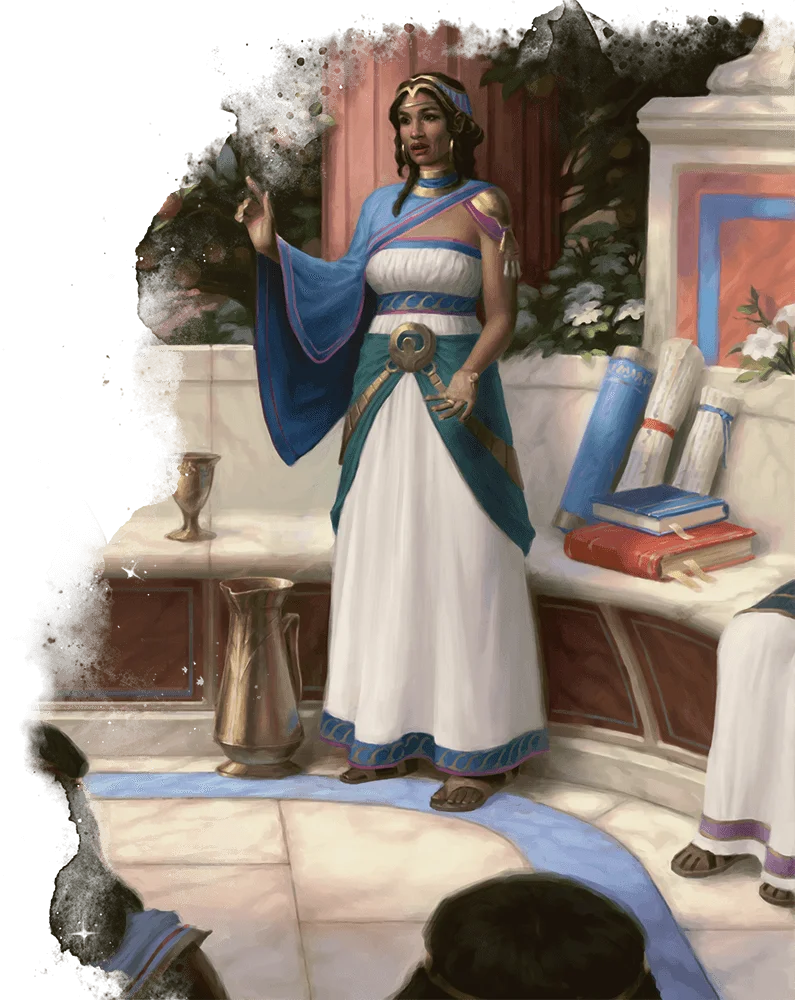
Many settlements in Theros have a centrally located agora, or public forum, where artists perform, politicians give speeches, philosophers debate, vendors hawk their wares, and people congregate. Many agoras are surrounded by stoas, covered walkways that lead to other areas of the settlement. People in the agora might retreat beneath the awnings for privacy and shade, while others stand on the roofs of the porticos to shout messages to the assembled crowds.
In addition to activities involving art, commerce, politics, and religion, people come to the agora for socializing and learning the latest news and gossip. The crowds attract less savory folk, like spies and thieves. Priests of Ephara often bless agoras because they are so central to civilized life in Theros, but all the gods are usually honored in these forums with statues or other works of art.
Agora Adventures
An agora is the perfect location for adventures where roleplaying takes center stage. The characters could use the crowd as cover for a clandestine meeting or as an audience to rally to action. A simple shopping trip in an agora can turn into an adventure when a thief steals from the characters or they overhear a sinister conversation. The Agora Adventures table offers ideas for adventures that could occur in such a place.
Agora Map
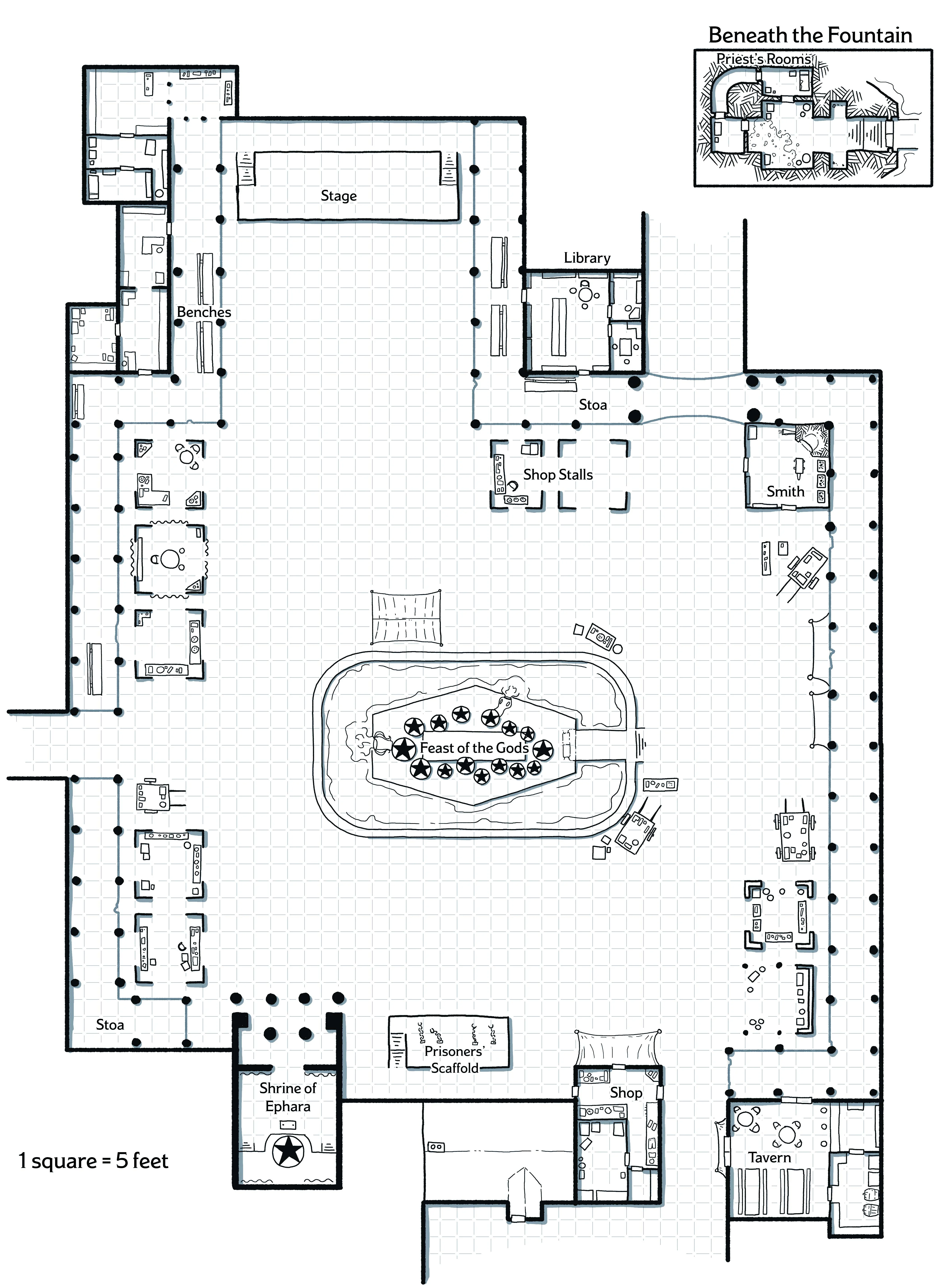
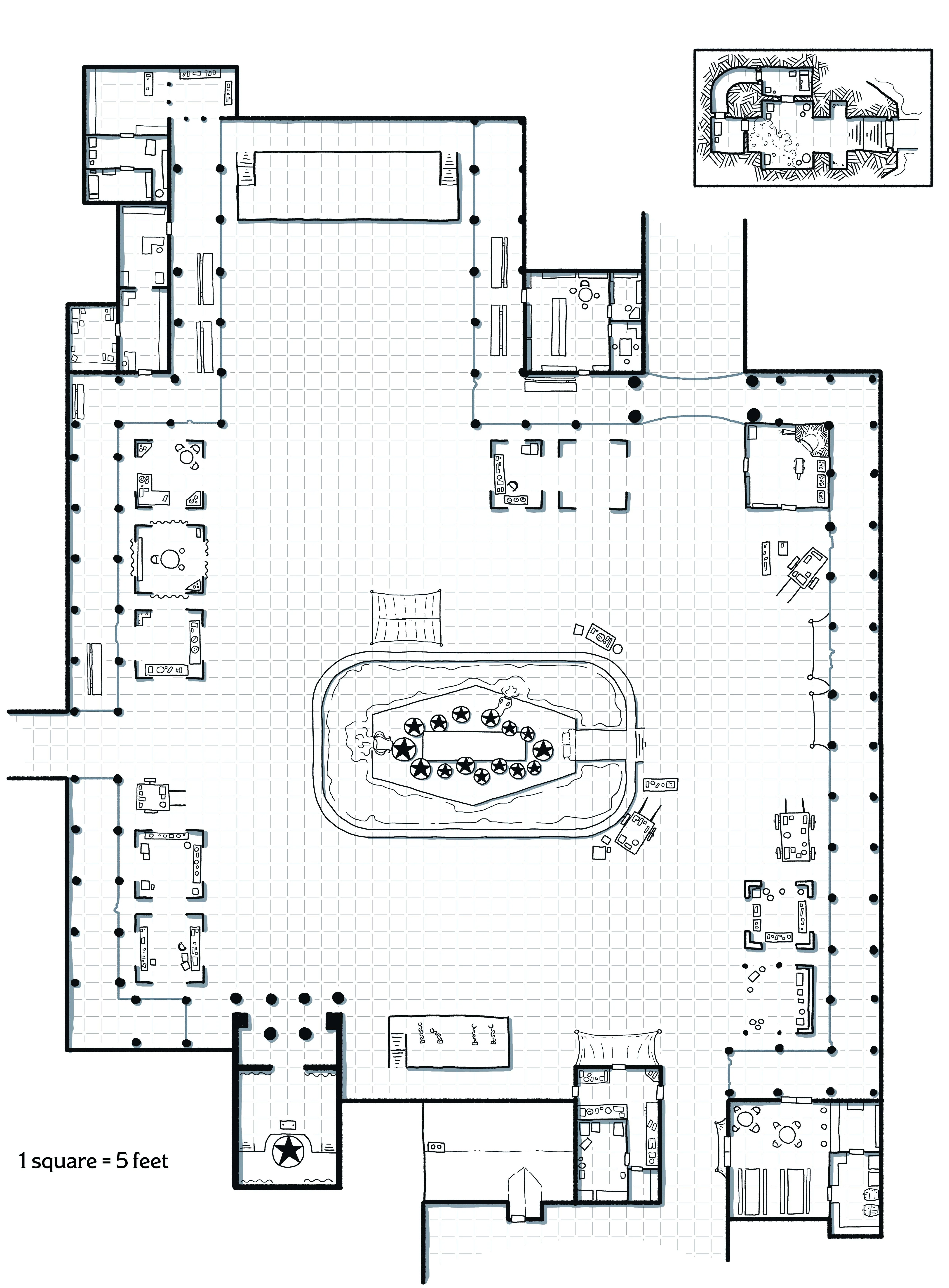
The agora shown in map 4.2 is surrounded by stoas, with statues of different gods on their roofs overlooking the public area. Market stalls stand in orderly lanes, and vendors position their carts between them.
Two stages stand at either end of the forum. One is a huge platform where performers, politicians, and philosophers address the crowds. The smaller stage has steps that lead up to a higher platform. Criminals sentenced to death are thrown from this height onto the ground below, where the crowd then finishes the job. Stocks are also set up at the top of this stage for petty criminals to be publicly humiliated.
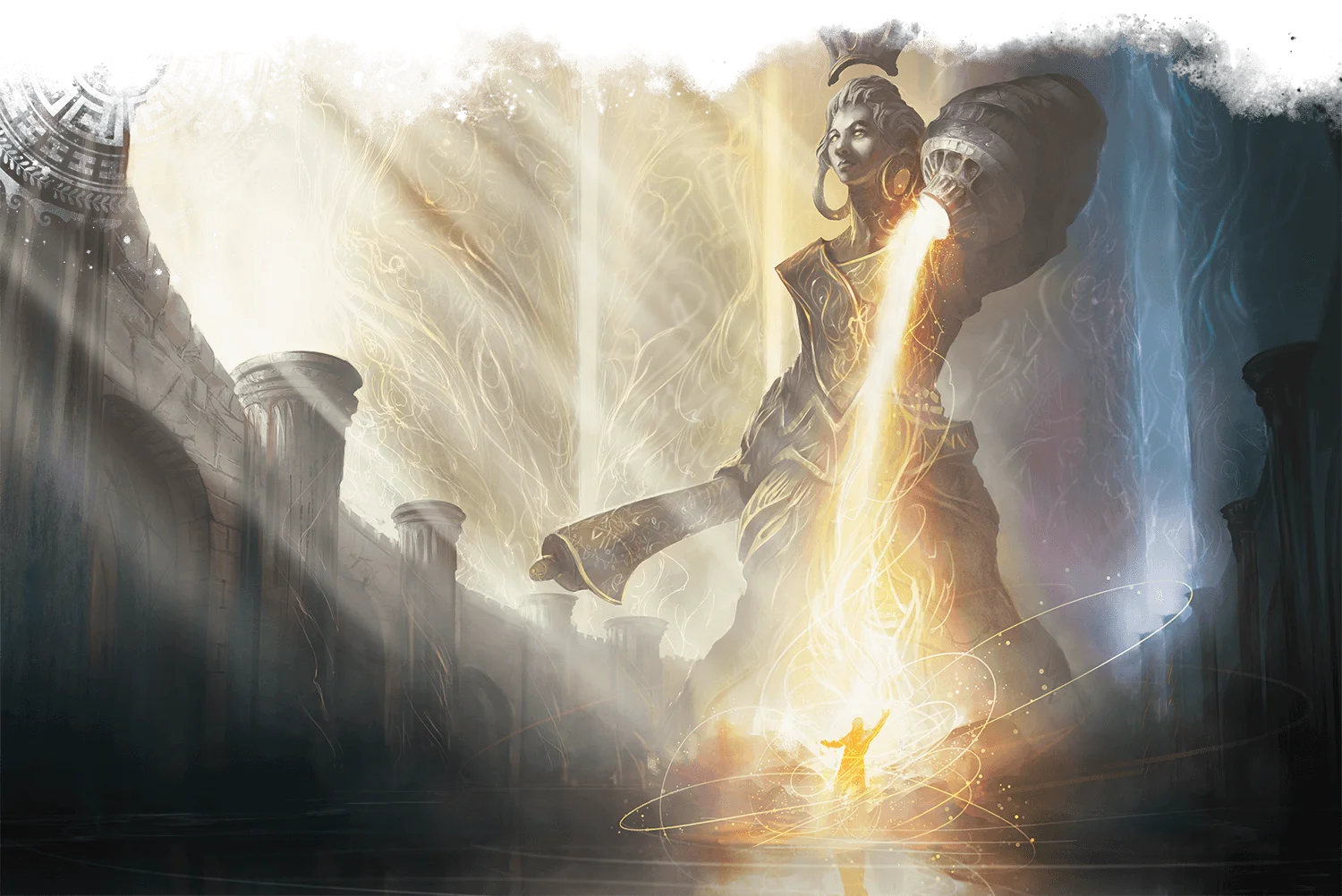
At the agora’s center stands a grand fountain with a larger-than-life sculpture depicting all the gods sharing a feast. On holy days, priests invite people to wash their feet in the fountain and receive blessings from the gods.
Gallery
Agora Villains
An agora villain could be almost any humanoid, from a corrupt politician to a common criminal thug. Some of these folks use monsters to do their dirty work. Examples of such villains appear on the Agora Villains table.
Erebos
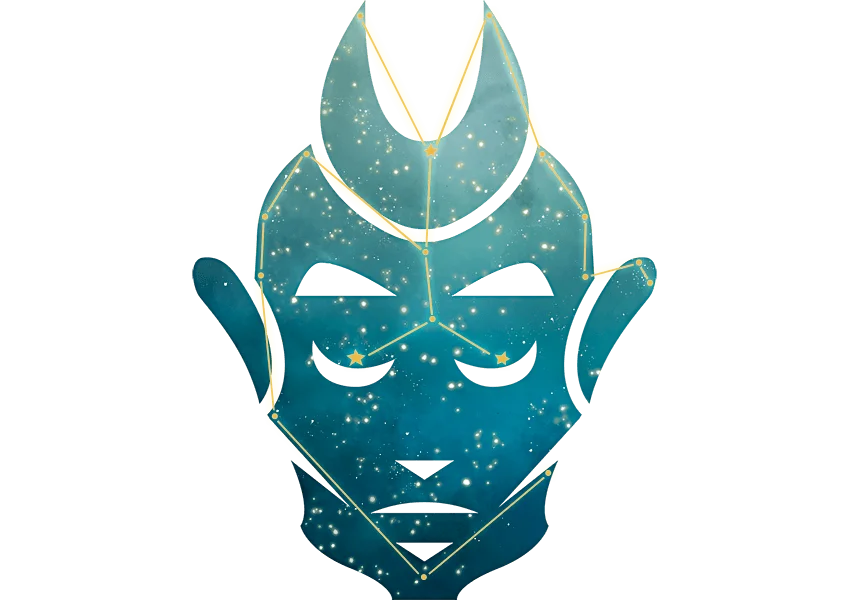
Jealous but patient, Erebos is a demanding master. His champions know that service to him lasts not just until their deaths, but beyond that.
Erebos’s Champions
Erebos spends most of his time and attention on the Underworld, leaving his champions to safeguard his interests in the realm of the living. He might call upon his followers to punish those who escape the Underworld, spread despair, or thwart the schemes of other gods, particularly Heliod and Phenax. The Erebos’s Quests table suggests a few adventures the god’s champions might involve themselves in.
An Erebos Campaign
A campaign structured around the player characters as champions of Erebos often invites a certain amount of moral complexity. Perhaps heroes are brought together to oppose an overreach by a champion of Heliod. Or maybe they’re united by some common plight such as plague or war, as Erebos grants his blessings to those who determinedly face fate. From there, they might be drawn into helping Erebos maintain the line between life and death by fighting against Returned raiders.
Champions of Erebos who want to maintain a moral code separate from that of their god have a difficult path to walk. They might find themselves forced to choose between what they believe is right and what their god tells them to do. If this leads them to violate one of Erebos’s most sacred rules—by allowing a lost soul to escape, for example—Erebos could transform into a campaign villain. The characters might then try to atone for their behavior or seek the protection of another god.
Erebos’s Villains
Erebos’s sphere of influence is every bit as essential to life on Theros as Heliod’s, but it is easy to see why many take a dim view of him and his champions. The status quo that Erebos seeks to uphold is a brutal one, based on the tragic fact that every life ends in death.
Followers of Erebos might become villains when they follow their god’s orders, sowing despair among the populace. Some become death-crazed killers or dispassionate murderers, unable to see the difference between dying now and dying later. Others abuse their blessings to cheat death for themselves or their loved ones, and still others simply want to get rich.
The Erebos’s Villains table suggests a variety of foes that might arise from among the god’s followers.
Erebos’s Monsters
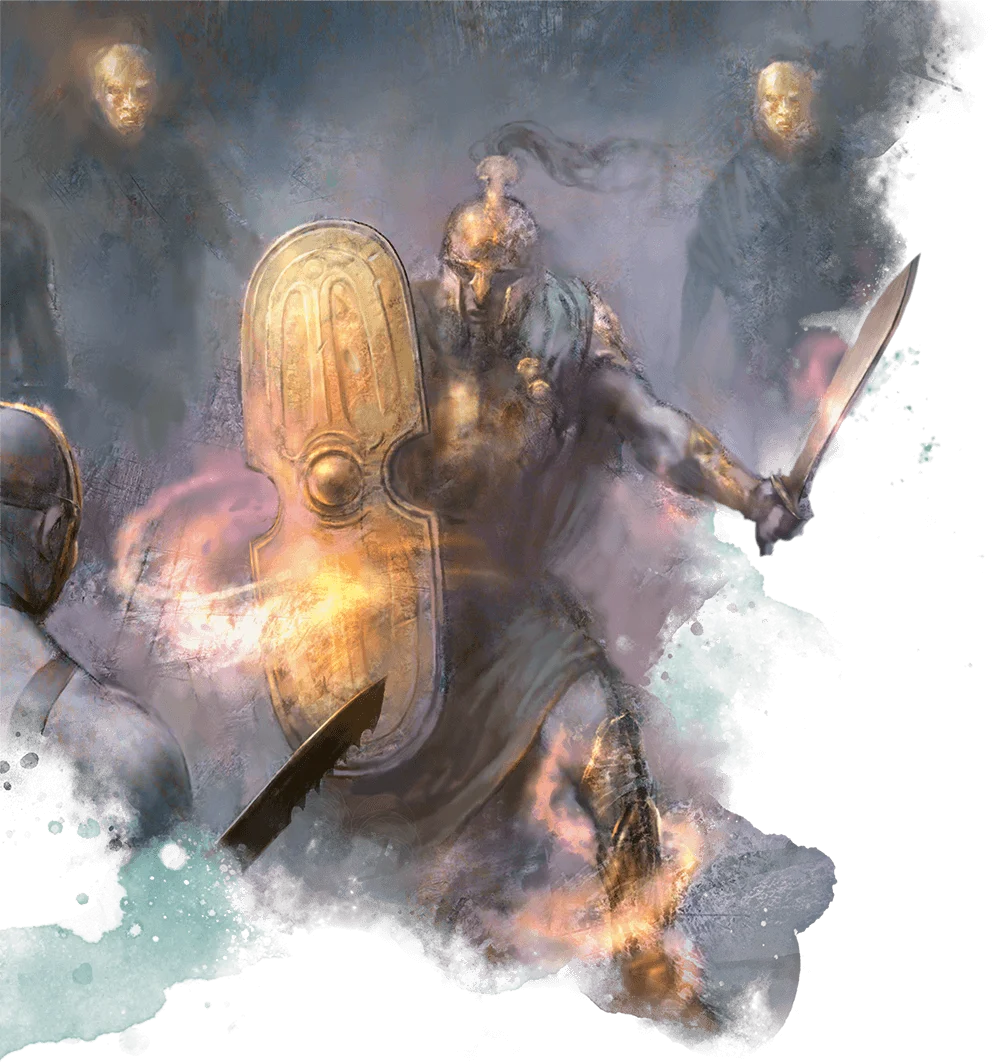
Erebos has legions of fallen monsters, heroes, and villains that he can send back to the world of the living temporarily as Nyxborn. The Erebos’s Monsters table presents just a few foes likely to serve the god’s will.
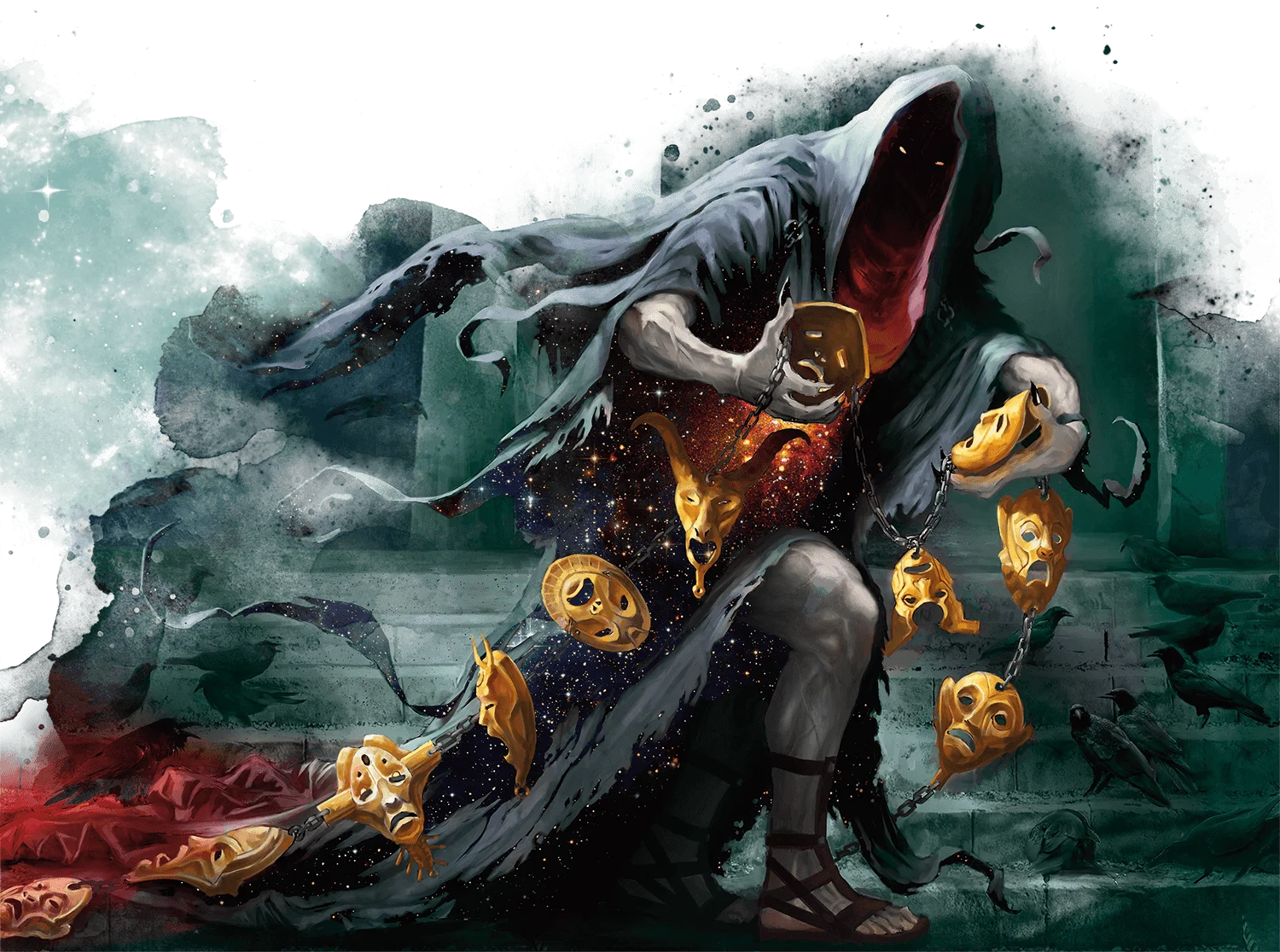
Erebos as Campaign Villain
The god of death is a natural villain, whether from the beginning of the campaign or after he takes a villainous turn against his former champions.
As a campaign villain, Erebos will try to carry out the worst of his schemes: sowing despair, ending lives before their time, or supplanting Heliod. The campaign might begin with cultists of Erebos committing random murders, then escalate when a prominent priest or champion of Heliod is assassinated. Adventurers who have no love for the sun god might still find cause to put a stop to Erebos’s terrors—particularly if he starts lashing out against followers of other gods.
Erebos’s Divine Schemes
When the god of death chooses to move against the other gods, the effects can be catastrophic. The Erebos’s Divine Schemes table suggests a few ways Erebos might move against both gods and mortals.
Graveyard Temple
Any place where the remains of the dead are interred is considered a place of worship for Erebos. A graveyard can consist of mass graves, individual burial plots, family tombs containing interment niches or urns, or a combination of all such sites honoring the dead. These places often include a shrine to the god of death, which is home to the graveyard’s priests.
During the day, the priests lead funeral rites, care for the graveyard, and offer counsel to those praying for acceptance of their fates. Larger graveyard complexes might also have a vault for storing gold or other valuables, and the priests could act as financial advisors and executors of estates, since wealth and death go hand in hand in Theros.
At night, the restless dead might walk through the graveyard’s temple. Sometimes these dead are restless ghosts that can’t pass into the Underworld until they finish a piece of business. Others might be Returned, lingering near their place of burial because they can’t remember where else to go, or evil undead—such as specters and wraiths—waiting to harm any living creatures they come across.
Graveyard Temple Adventures
Graveyard temple adventures are centered on death and wealth. The characters could be asked to deal with undead, protect or steal a grave’s remains or treasure, or attend a funeral in the graveyard. Many graveyards have tunnels connecting the tombs that the priests use in their caretaking duties, so exploring such a complex can be a daunting task. The Graveyard Temple Adventures table offers ideas for adventures that could occur in such a place.
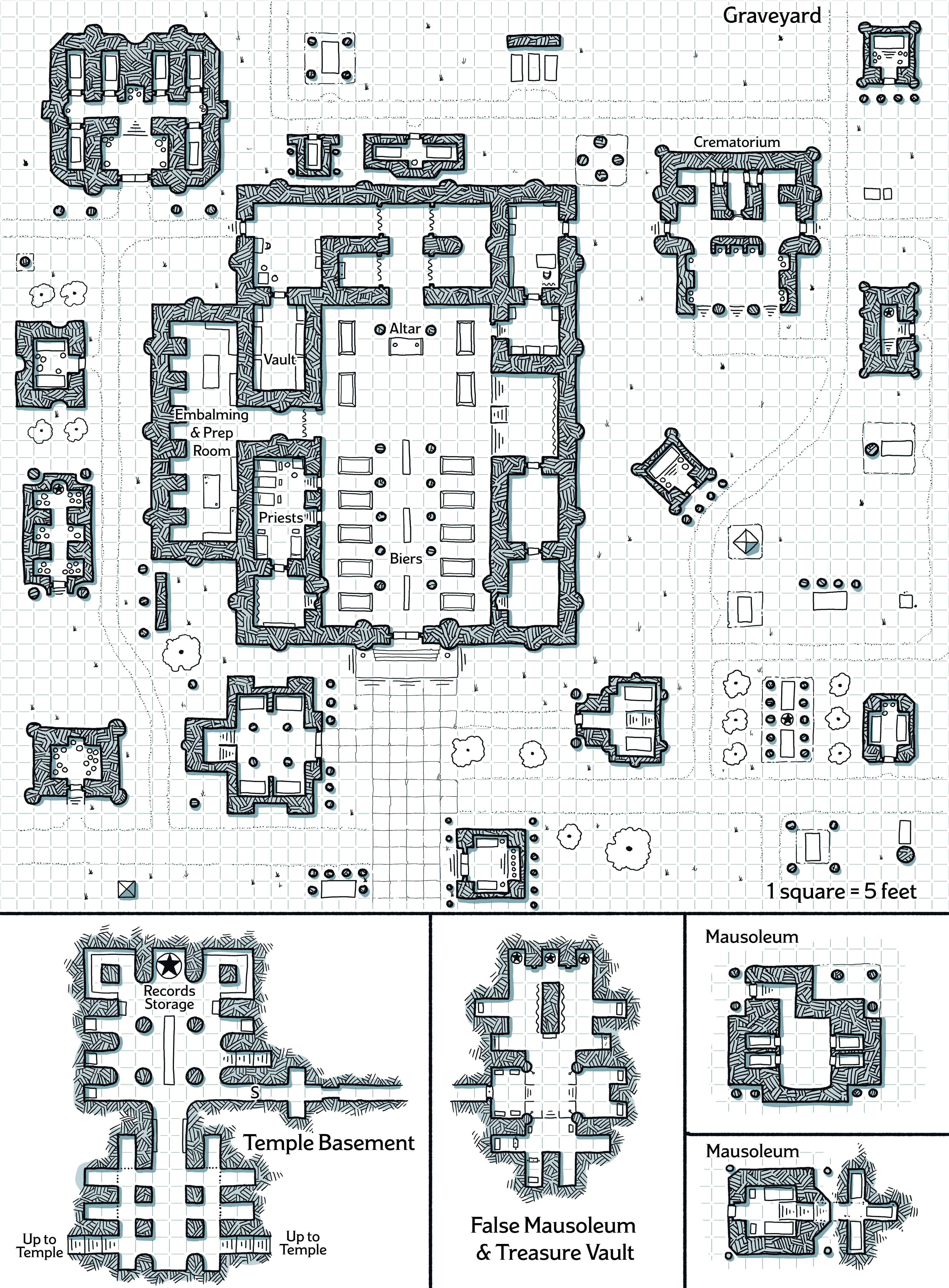
Graveyard Temple Map
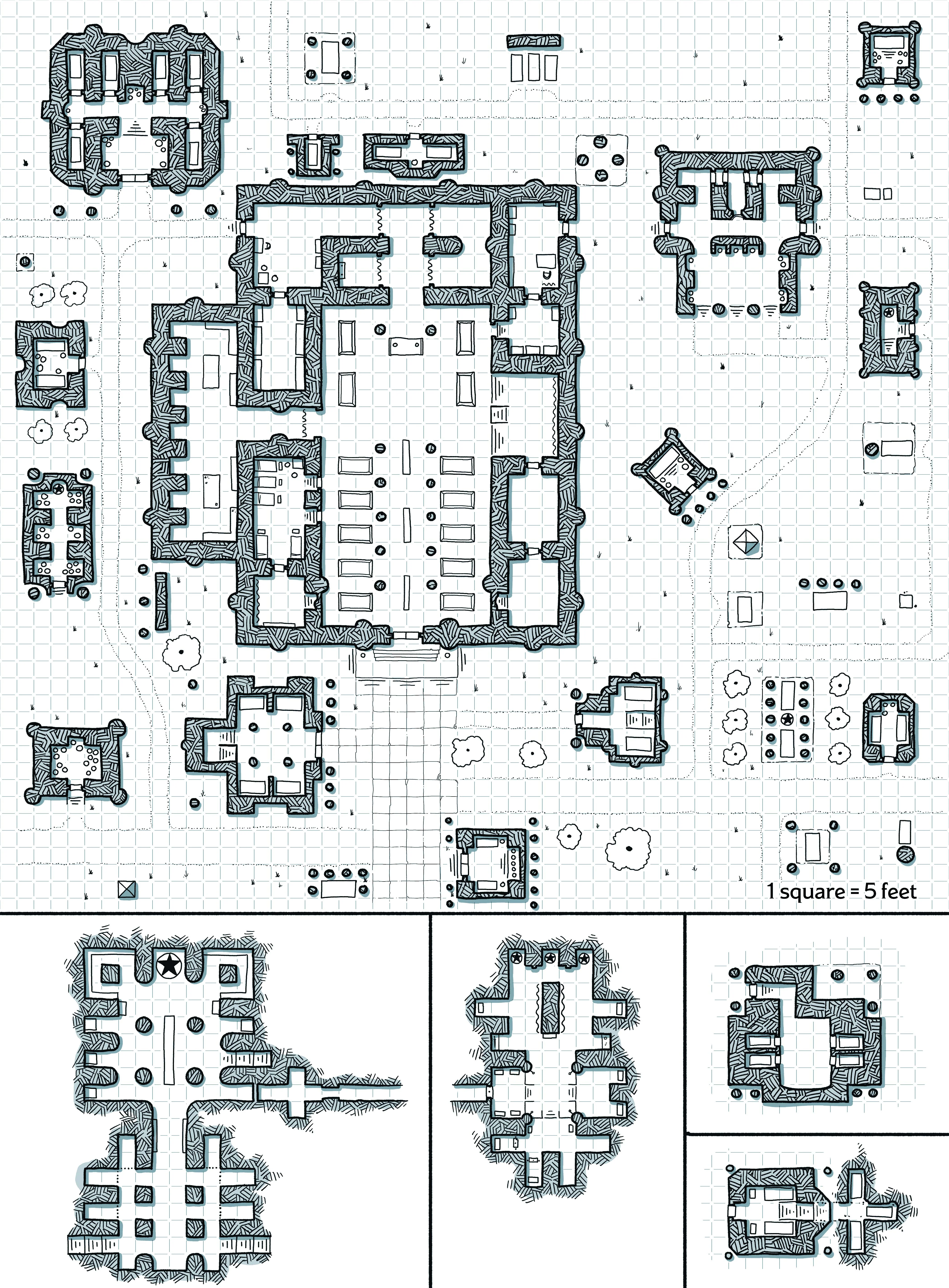
The temple shown in map 4.3 sits at the center of a graveyard, which consists of underground tombs that hold urns of ashes, individual burial plots, and a mass grave for those who couldn’t afford better. The ground level of the temple contains a chapel with benches and a raised dais, which holds an altar and a viewing table for bodies of the deceased. The other chambers of the temple’s first floor contain the priests’ quarters, offices, embalming chambers, as well as a vault.
The temple’s cellar holds burial and financial records, as well as tools used in the caretaking of the graveyard. Tunnels that can be sealed with iron doors connect the cellar to all of the graveyard’s tombs.
One of the graveyard’s individual plots is marked with a nameless marker. This grave plot doesn’t contain a body. The most valuable treasures entrusted to the temple’s care are buried in this spot.
Gallery
Graveyard Temple Villains
Graveyard temple villains include those seeking to control death and wealth. Examples of such figures appear on the Graveyard Temple Villains table.
Heliod

As powerful as he is arrogant, Heliod believes in his vision of a bright, orderly future and demands that his champions help bring it into being.
Heliod’s Champions
Heliod’s champions are a means to accomplish his goals. In the world, Heliod is concerned with law and order, justice and fidelity. On a larger scale, he seeks to establish his superiority over the other gods, and his mortal champions might get caught up in those schemes in ways both large and small.
The Heliod’s Quests table suggests a few adventures the god’s champions might involve themselves in.
A Heliod Campaign
A campaign structured around champions of Heliod might cast adventurers as valiant protectors of civilization. Rampaging monsters, lawless agitators, hardened criminals, oath breakers, and the champions of Heliod’s divine enemies pose constant threats, and the characters are charged with combating them all.
At the beginning of the campaign, the characters might stand alongside other defenders of a polis against attacking monsters and receive Heliod’s blessing at a crucial moment to turn the tide of battle. Hailed as heroes by the polis, they continue to enjoy Heliod’s favor as they vanquish one threat after another.
Losing their patron’s favor is the greatest danger to champions of Heliod. If the god views them as disobedient or comes to see them as a threat, he might turn against them. At that point, characters might either try to regain his favor or seek protection with another god.
Heliod’s Villains
It’s easy for servants of Heliod—and even the god himself—to take on a villainous role in the world. Heliod’s followers easily become obsessed with upholding justice at the price of mercy, or with advancing order at the price of freedom, turning them into vicious tyrants or overzealous enforcers. On a smaller scale, someone who has suffered a grievous wrong might swear an oath of vengeance in Heliod’s name and become a deadly vigilante. When a follower of Heliod’s righteous zeal for justice turns to oppressive tyranny, Heliod himself might send champions to stop the would-be tyrant.
The Heliod’s Villains table suggests a variety of foes that might arise from among the god’s followers.
Heliod’s Monsters
Heliod is rarely associated with deadly monsters, more often with celestial messengers and noble creatures. Even so, adventures that bring characters into conflict with Heliod’s agents might pit them against creatures such as those on the Heliod’s Monsters table.
Heliod as Campaign Villain
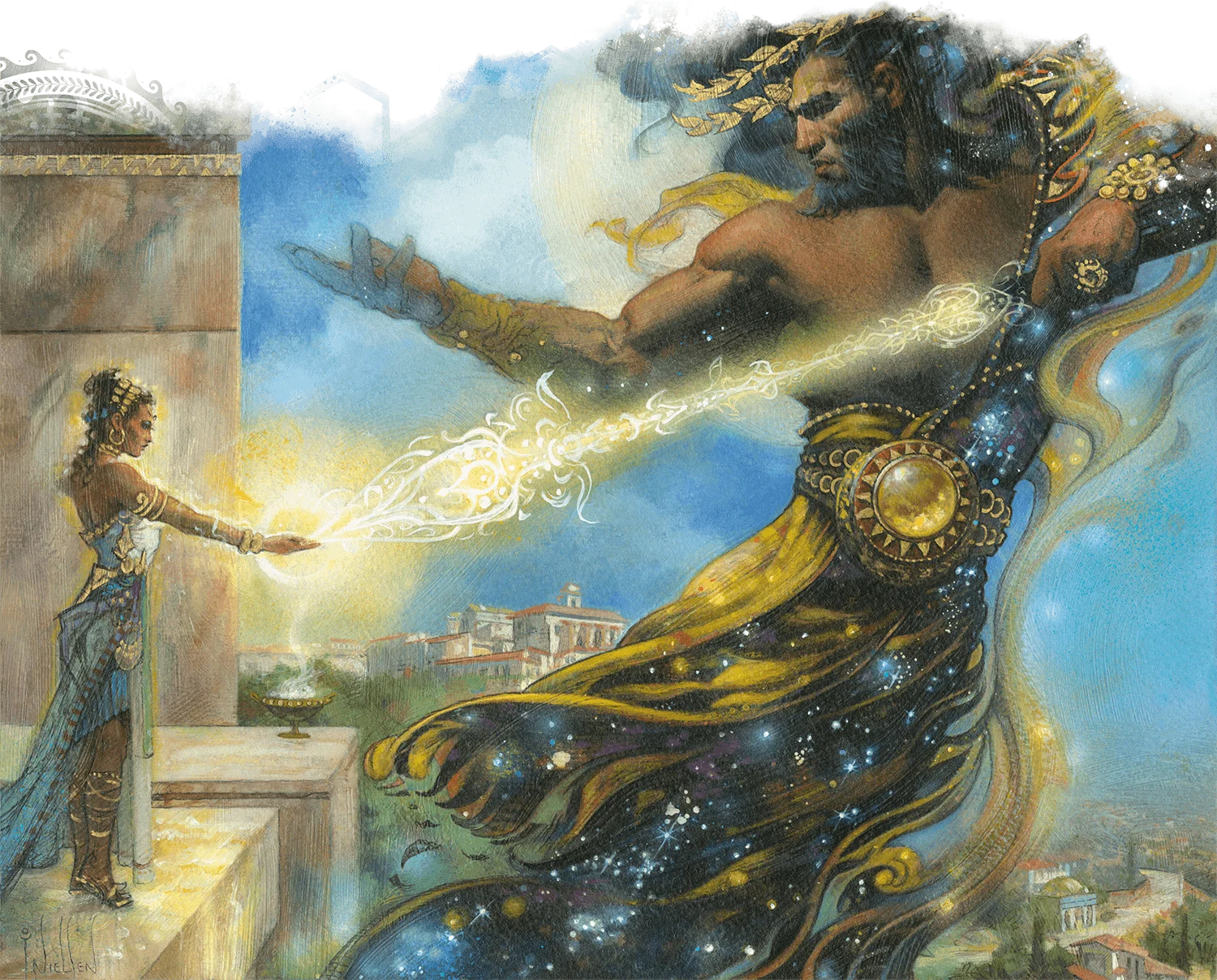
Whether Heliod is a villain from the beginning of the campaign or takes a villainous turn against his former champions, a campaign centered on Heliod’s arrogance and peevishness brings the worst of the sun god’s qualities into focus.
As a campaign villain, Heliod is most likely driven by his desire to assert his rulership over the other gods of the pantheon and his kingship over everything: Nyx, the mortal world, and the Underworld. He might begin, through his agents, by enacting laws that make participation in Heliod’s rites mandatory for the citizens of a polis. From there, it’s a small step to suppressing the open worship of other gods, then trying to spread both policies to other cities. If the characters are champions of other gods, they might find themselves the targets of Heliod’s agents, marked as a threat to order and stability in the poleis.
Such a campaign might end with the characters appeasing Heliod in some way, convincing the other gods (especially Kruphix or Klothys) to intervene and rein in Heliod’s hubris, or even confronting Heliod with the support of other gods.
Heliod’s Divine Schemes
Heliod’s activities among the other gods can have a wide-ranging impact on the pantheon and the mortal world. The Heliod’s Divine Schemes table offers examples of how the god might have a mythic impact on the mortal world, embroiling the characters in the middle of divine squabbles.
Sun Temple
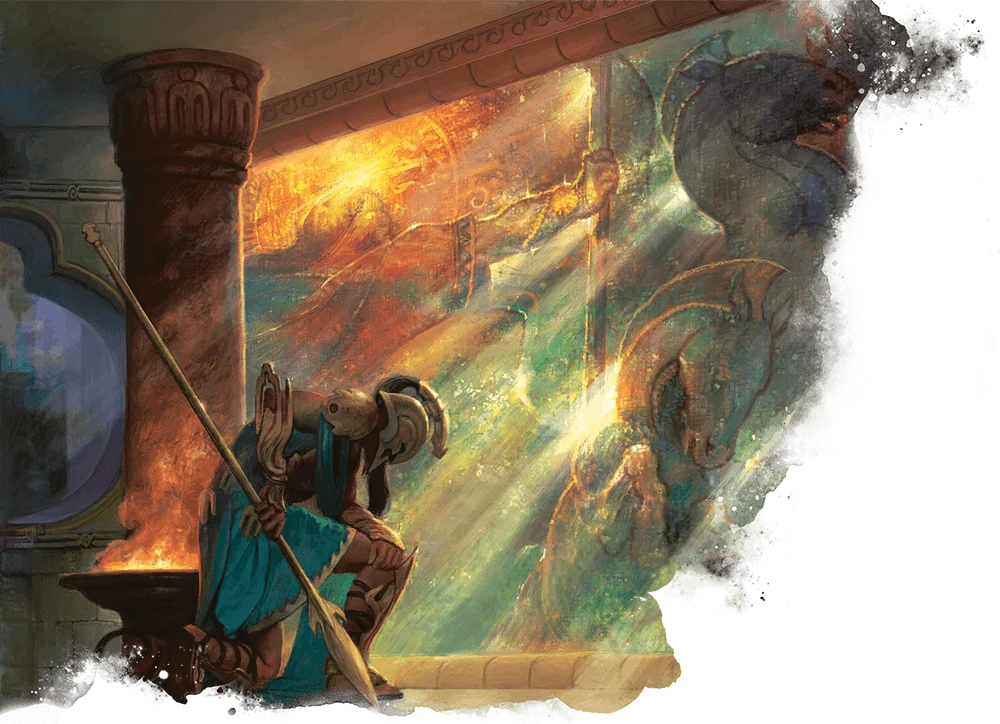
These multistory towers of worship rise atop mountains, hills, and the highest ground in a settlement, bringing congregants as close as possible to the sun. Huge windows, light-reflecting stone, and art depicting legendary heroes make every sun temple a bright, inspiring space.
The rites conducted in sun temples include marriages, ceremonies to honor heroes, dawn worship services, breakfast banquets, and occasionally funerals, which typically involve a pyre for the deceased. These events are held on the temple’s roof, where worshipers are closest to the sun and can feel its warmth.
Sun Temple Adventures
Sun temples honor heroes and record their deeds. An adventure in which the characters need to meet, research, protect, or confront a legendary figure might happen in one of these houses of worship. Additionally, large groups gather in these temples, potentially leading to adventures involving crowds that need to be protected, quelled, or investigated. The Sun Temple Adventures table offers plots that could occur in such a place.
Sun Temple Map
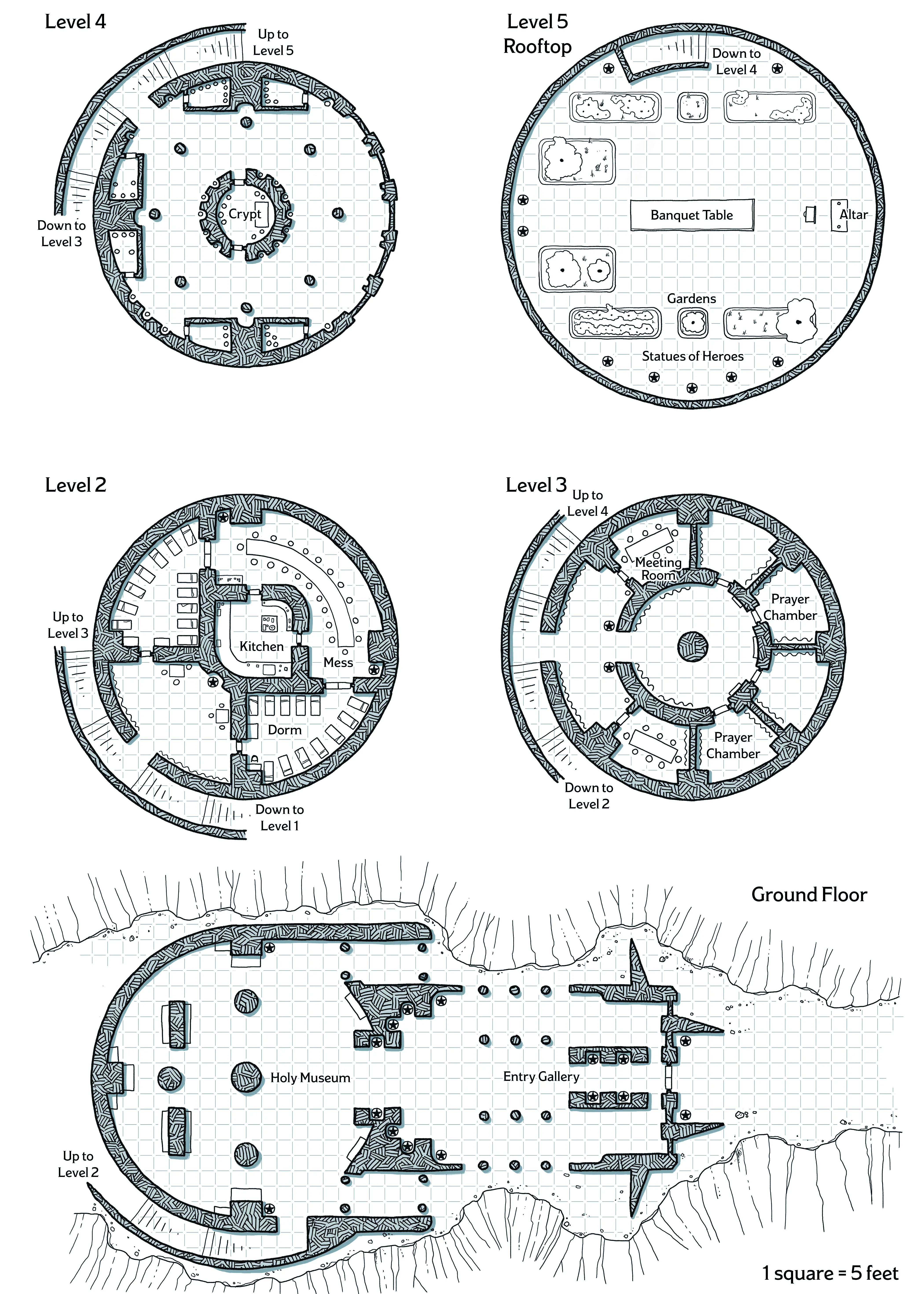
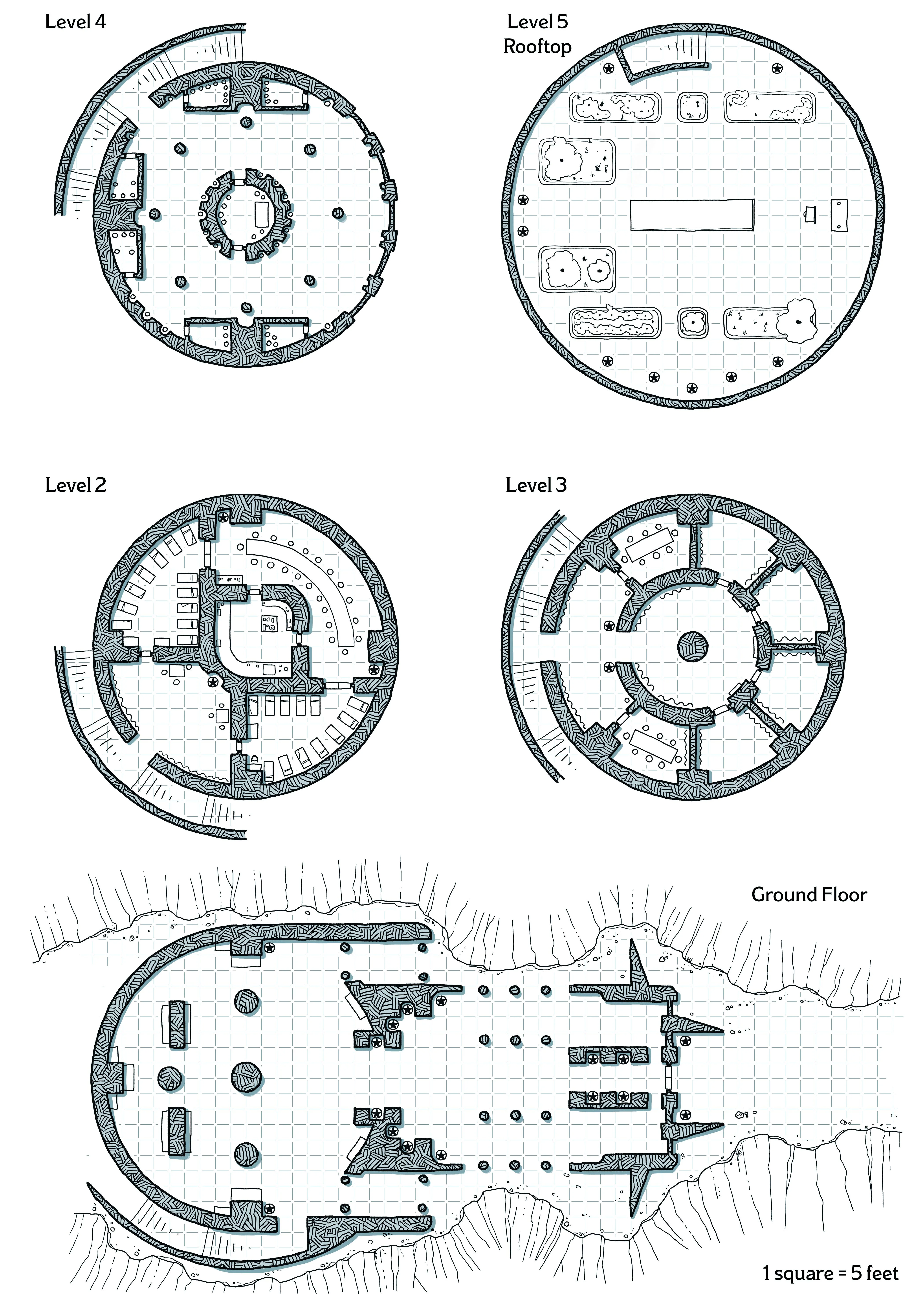
The sun temple shown in map 4.4 presents a common design for Heliod’s holy sites. Most ceremonies take place on the rooftop, which is surrounded by statues of heroic figures and magnificent gardens that bloom in the dawn light. Worshipers reach the top by climbing stairs on the outside of the tower.
Floor-to-ceiling windows on the temple’s fourth level reveal a crypt with hundreds of funeral urns placed in niches on the wall and in decorative columns. Lower levels hold the personal chambers of priests, as well as quiet chambers where people can worship at small altars or seek counsel from clergy who specialize in matters of morality. The temple’s ground floor contains a museum displaying heroic artifacts and accounts of epic deeds, all of which are guarded by the ghosts of heroes interred in the crypt.
Gallery
Sun Temple Villains
Although sun temples are places that glorify heroic deeds, they do attract villains eager to please Heliod, defy him, or twist his tenets. Examples of such villains appear on the Sun Temple Villains table.
Iroas

Iroas expects much of his champions. Constant training and testing oneself against the strongest foes available are the hallmarks of Iroas’s champions.
Iroas’s Champions
Iroas’s champions are his generals, through whom he can deliver death blows to his enemies. On a daily basis, Iroas serves the causes of justice and honor. The weak are to be protected, just laws are to be upheld, and evildoers must be struck down in righteous anger. Iroas’s champions also serve as his vanguard in the eternal war against his brother, Mogis.
The Iroas’s Quests table suggests a few adventures the god’s champions might involve themselves in.
An Iroas Campaign
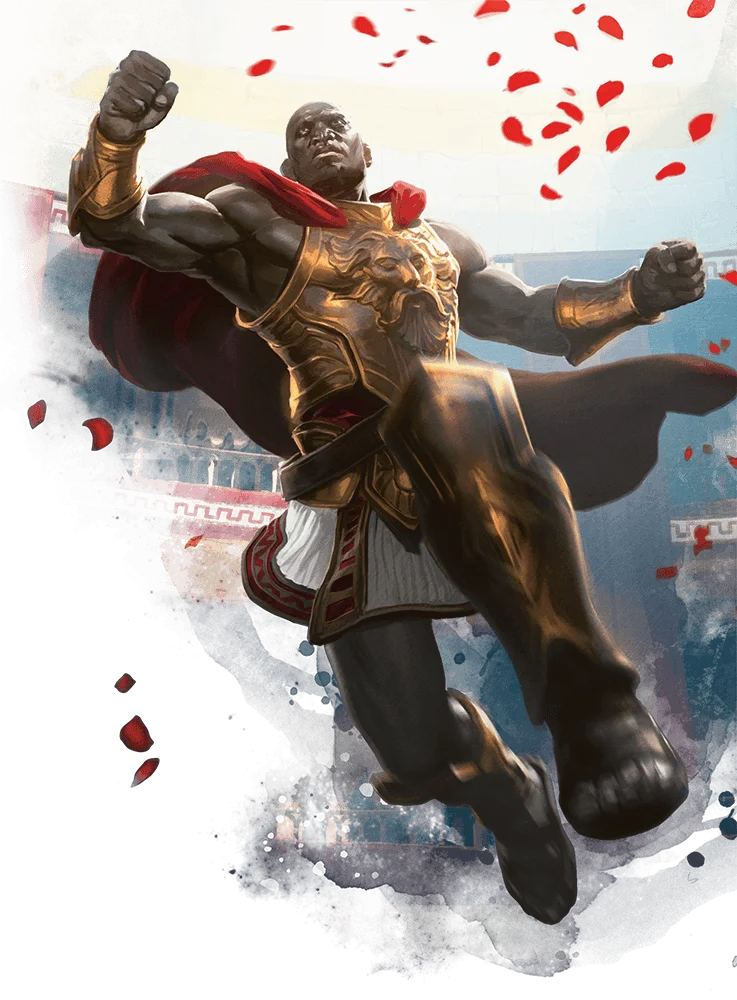
A campaign focused on champions of Iroas is filled with battle, stunning acts of heroism, and valorous stands against great odds. Iroas is a god of action, and his champions are the tip of his spear, expected to hurl themselves at danger when it presents itself. Iroas holds a bitter grudge against his brother Mogis, and Iroas’s champions often counter the agents of the god of carnage.
As the campaign begins, the characters could find themselves on a field of battle, either as mercenaries or sworn soldiers for a polis. Their courage at arms and the honor they demonstrate in battle impress Iroas, and he proudly bestows his blessing on them. Every subsequent engagement only enhances the characters’ reputation as skilled, steadfast warriors without peer. Their actions inevitably lead to a challenge from a champion of Mogis who is intent on destroying the characters and anyone they hold dear.
Iroas exalts winners, but even a narrow defeat is still a defeat. An opponent who has no qualms about cheating and using subterfuge holds an advantage over champions of Iroas. If the characters sink to using dishonorable tactics, they can expect swift retribution and loss of favor in return for their weakness.
Readaloud
Myth of Kelephne the Victor
It started with a rumor. Athletes gathering in Akros for the Iroan Games whispered of a hermit in the wilderness, a master wrestler who’d brought down giants with her bare hands. As the games commenced, the rumors continued, and athletic victories seemed hollow so long as the so-called best was not there to compete.
When Kelephne did arrive, she was barefoot and had a fire in her eyes. The rumors of her skill were not exaggerated, and for three days, she battled a continuous stream of competitors. When no others would challenge her, she left without ceremony. She was never seen again, and some speculated she was Iroas in human form.
Athletes tried for years to mimic Kelephne’s techniques. Years later, wanderers discovered a cave covered in writing. These instructions became known as Kelephne’s manual, and her technique was called pankration—now a widely studied style of weaponless fighting.
Iroas’s Villains
Iroas, for all his love of justice and honor, is still a god of war. Anyone on the opposing side of Iroas’s forces can expect to face motivated, dedicated warriors. He is also quite stubborn and takes losing a challenge personally, sometimes declaring a vendetta if he believes the challenge was won dishonorably.
Iroas’s followers sometimes forsake mercy and compassion, as matters of honor and victory are uppermost, making them pitiless foes. Writ small, this behavior could show up in an overzealous young commander who would sacrifice his unit in a hopeless battle rather than retreat. If a great champion of Iroas loses their moral compass amid the horrors of war and commits atrocities in the name of victory, Iroas himself will send heroes to stop the fallen champion.
The Iroas’s Villains table suggests a variety of foes that might arise from among the god’s followers.
Iroas’s Monsters
Iroas is associated with warriors of all backgrounds. Most of the creatures in his retinue lack subtlety and excel in physical combat. Adventures that bring characters into conflict with Iroas’s agents might pit them against monsters such as these. The Iroas’s Monsters table presents just a few foes likely to serve the god’s will.
Iroas as Campaign Villain
Characters are likely to raise the ire of Iroas because they oppose his followers in battle or defy his ideals. His anger is direct and unsubtle, much like Iroas himself.
Iroas might be titled the god of victory in all respects, but he cares less about victory in competitions than he does about victory in war. In war, both mortals and gods could be blinded by the rush to victory or by cleaving to stubbornly held ideas. Although a campaign against Iroas might be straightforward in how the action plays out, the underlying causes of conflict could be quite complex, involving attacks on people who may seem unrelated to the initial conflict. As a campaign villain, Iroas is most likely driven by his desire to win in battle, to confront Mogis, or to avenge an insult to his honor.
The campaign might end with the adventurers winning Iroas’s respect in some way, convincing the other gods (including Heliod if the party is interested in honor and justice, or Mogis if not) to blunt Iroas’s anger, or even battle Iroas with the support of other gods.
Iroas’s Divine Schemes
Iroas isn’t much of a schemer. His view of the world is through the crystal-clear lens of battle—strategic and tactical plans are unambiguous and executed with precision. This isn’t to say he is unaware of treachery or unprepared for it, only that he prefers to act forthrightly and decisively. The Iroas’s Divine Schemes table suggests a few plots the god might involve himself in.
Arena
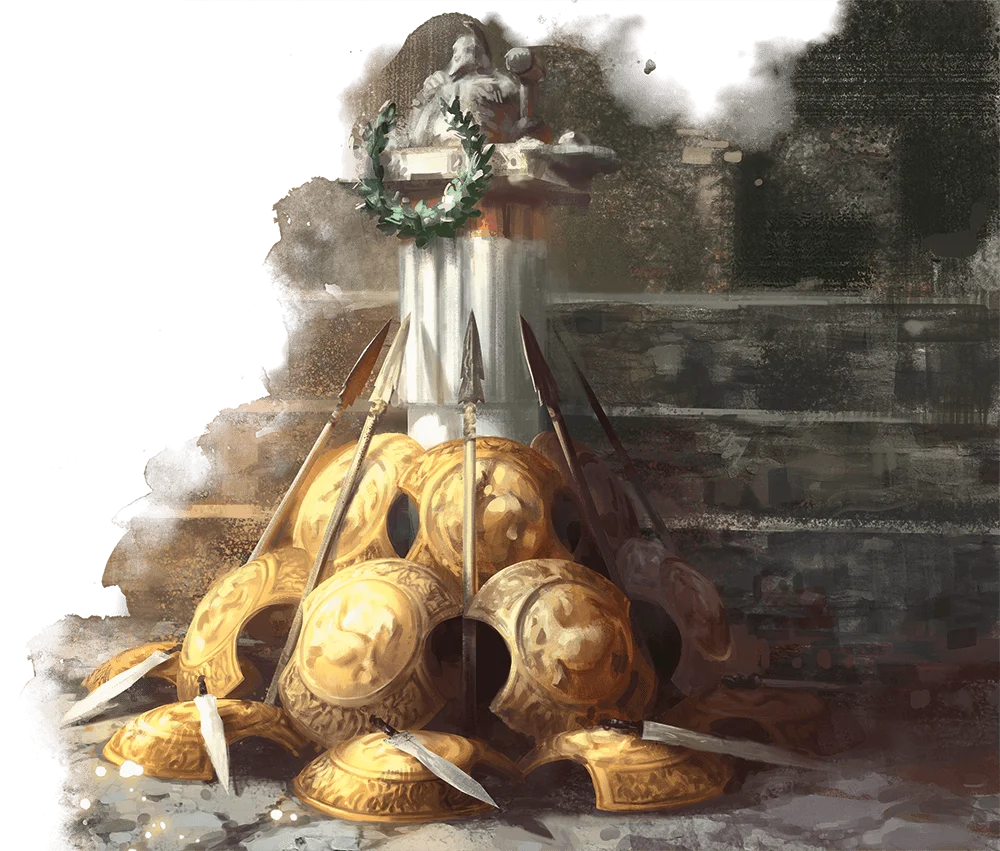
Across Theros, contest grounds host athletic competitions and often serve as places to worship the god Iroas. The grandest hippodrome in Akros holds thousands of spectators, but more modest stadiums can be found throughout the land, serving as proving grounds for athletes and entertainment for the rich and poor. Foot and chariot races, hurling competitions, and combat sports (wrestling, boxing, and pankration) are all common events in arenas, especially during the Iroan Games, an annual series of athletic competitions held in Akros.
Arena Adventures
Adventures in an arena often feature the characters as contestants in an athletic competition. The reward for winning could be treasure, a favor, or an audience with a person of importance—even Iroas himself, in the case of the Iroan Games. The Arena Adventures table offers ideas for adventures that could occur in such a place.
Arena Map
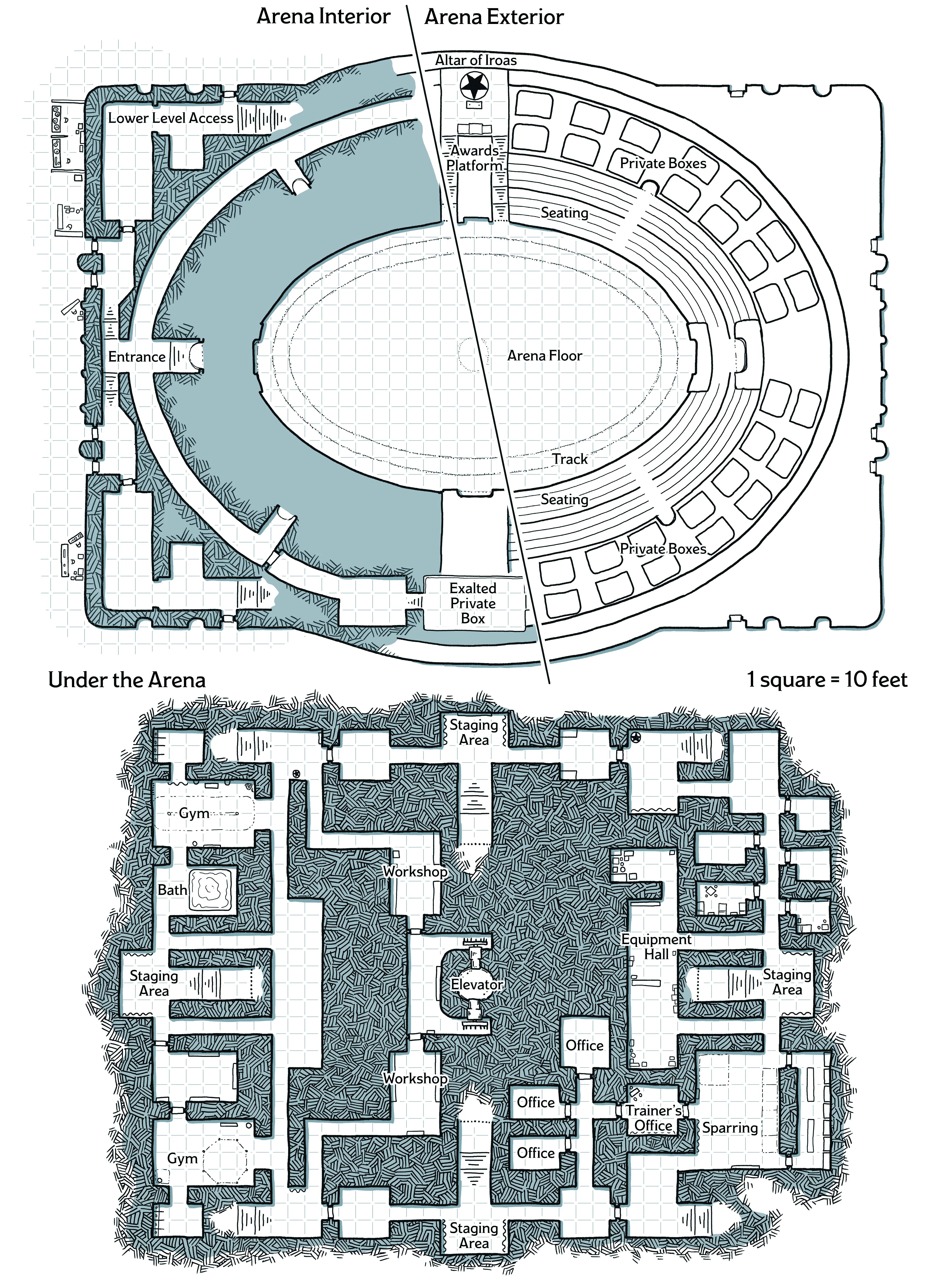
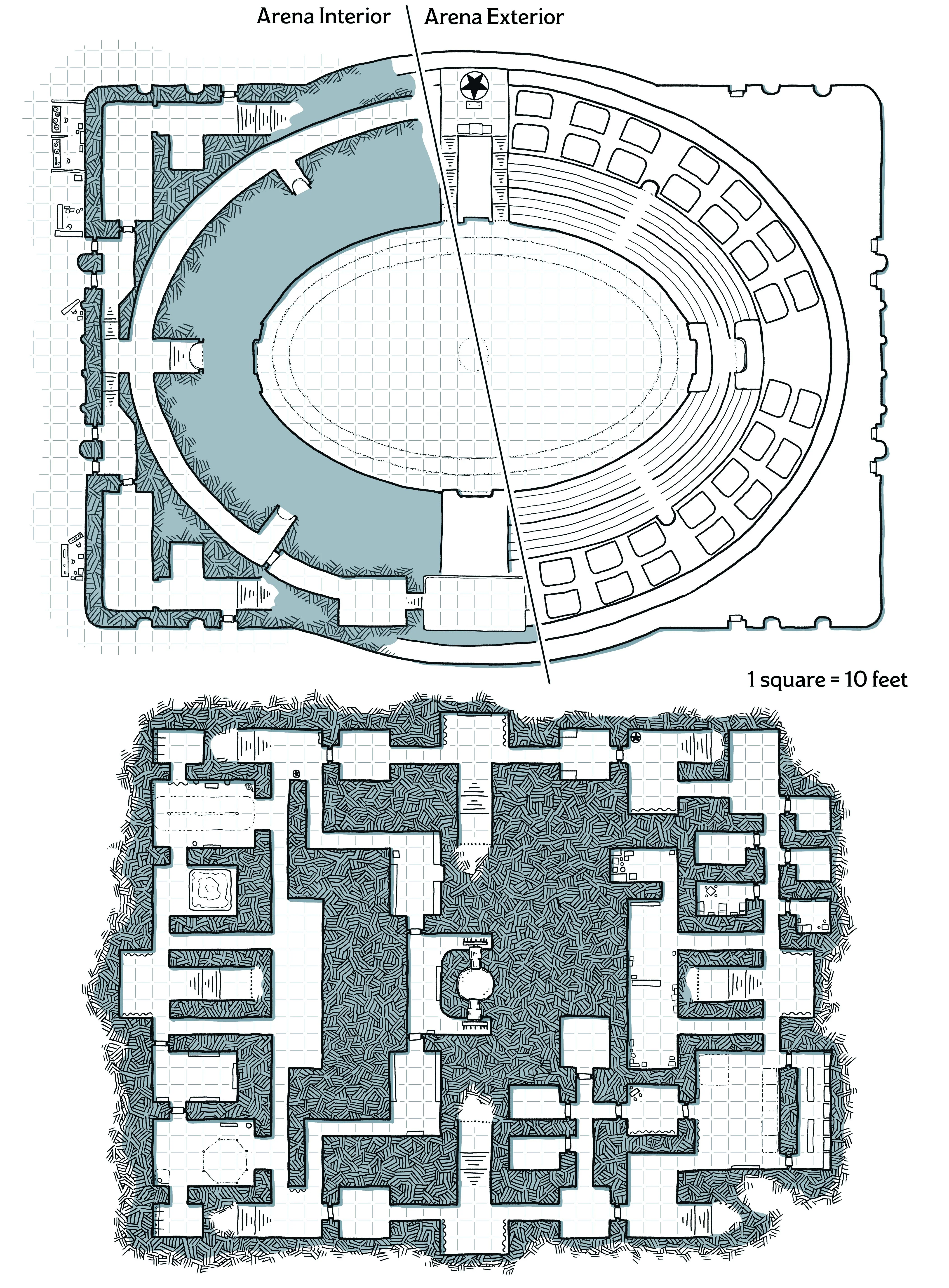
The arena shown in map 4.5 has a ring of raised benches and private boxes around its sandy floor. The map of the arena’s upper levels depicts the exterior seating and the interior halls below (both of which are largely mirrored on the map’s opposite site). Tunnels and trapdoors allow competitors to enter the arena from almost any angle. A large tarpaulin attached to the roof can be unfurled to shade the arena’s audience. An awards platform serves as a shrine to Iroas. Winners of athletic competitions stand here to receive medals, wreaths, rewards, the blessings of priests, and the praise of the crowd.
Outside the arena and beneath the seats are open areas and alcoves where vendors sell concessions and trinkets, along with booths for making bets.
The space under the arena holds gymnasiums, an equipment hall, and several staging areas and specialty rooms used as locker rooms, animal pens, and separate training areas for various creatures.
Gallery
Arena Villains
All sorts of unsavory elements can be found in an arena—backstabbing competitors, desperate gamblers, cruel trainers, savage animals, and worse. The Arena Villains table presents just a few ne’er-do-wells who might frequent physical contests.
Karametra

All life—plant and animal—needs fertility to continue to exist, making Karametra’s constancy vital to sustaining a habitable world for mortals.
Karametra’s Champions
Karametra’s champions build community, advance civilization, and bestow bounty wherever they go in the name of their god. Karametra seeks to provide for all, end famine and desperation, and ensure that everyone is supported by family and community. She isn’t a demanding god, but her champions diligently court her favor by trying to further her goals.
The Karametra’s Quests table suggests a few adventures the god’s champions might involve themselves in.
A Karametra Campaign
At first glance, a campaign in which the player characters are champions of Karametra might seem counterintuitive, since Karametra’s goals seem to promote the antithesis of an adventuring life. But her ideals might be attractive to some adventurers, such as exiles for whom the idea of settling down in a safe, prosperous community can be a profoundly seductive prospect.
Karametra lavishes her favor on those who protect established communities, but her most cherished champions are those who strike out to found a new settlement or bring aid to a struggling or endangered community. She loves most keenly those followers who embody her values of putting community before self by leaving their peaceful lives behind and looking for others to bring into the fold. And her pride in them is all the greater when they manage to build chosen families who journey with them to pursue the same goals.
At the beginning of the campaign, the characters might discover a community in desperate straits and receive Karametra’s blessing as they restore it to a state of safety and prosperity. Or they might find their home destroyed, only to receive a vision from Karametra that she’s placing the community’s refugees in their care.
The greatest danger to champions of Karametra is walking the line between cultivating bounty and protecting the vulnerable versus becoming greed-driven and paternalistic. Karametra values humility, and often seeks to teach those who grow too big for their britches sharp lessons against hubris.
Karametra’s Villains
Karametra’s followers can embody the best or worst of civilization. Just as society can protect the vulnerable it can also reinforce injustice and give it the power of law. Too much material wealth and security can make people less inclined to empathize with those who have less, or even make them believe that wealth is a sign of virtue. Ignoring these truths can lead Karametra’s followers down wicked paths.
At its worst, the worship of Karametra can be twisted into compulsory conformity. It can value nature and people only for what they can provide. It can care for orphans while doing nothing to remedy the circumstances that made them orphans. It can turn defense of one’s community into xenophobia. It can come to treat the wealthy as moral exemplars and the poor as moral failures. Karametra’s followers can easily tip from valuing bounty to indulging in greed. Those who provide for others might come to believe it gives them a right to control them. When followers of Karametra cease to balance bounty with care, they might come to align with the foes presented on the Karametra’s Villains table.
Karametra’s Monsters
Karametra’s followers usually protect innocents from monsters, but in certain circumstances, they might oppose characters. The Karametra’s Monsters table presents a few foes likely to serve the god’s will.
Karametra as Campaign Villain
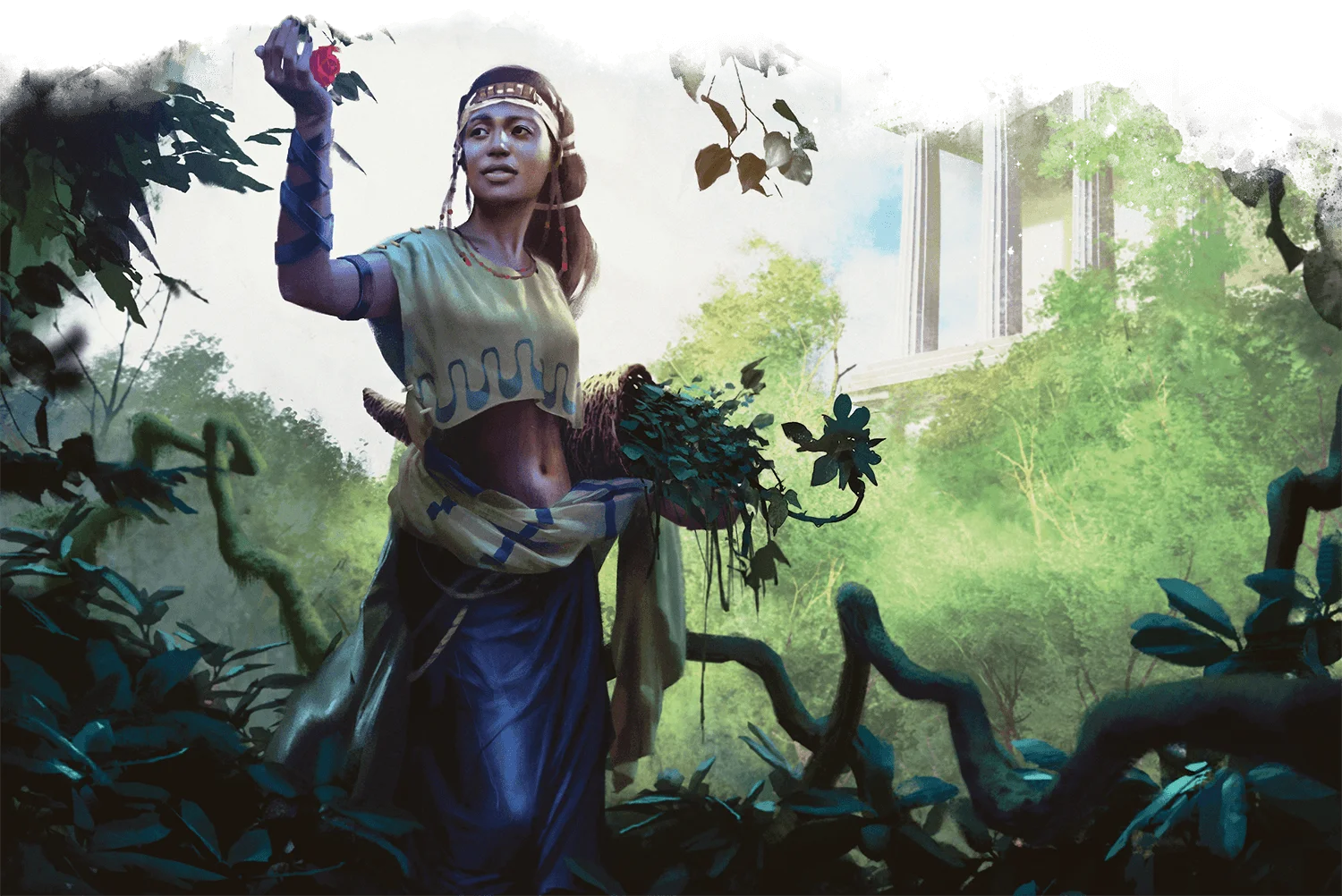
The intrinsic wildness of nature is part of Karametra’s being. A campaign that paints Karametra as a villain might explore the ferocity that seethes inside her, a wild aspect held in check by the power of mortal belief, which paints her as a gentle, mothering source of bounty. She no longer demands blood sacrifices from her worshipers because they no longer believe such supplication is necessary—not because she decided to stop. In the pantheon, she personifies a truth that most gods don’t fully appreciate but do fear: for all the influence they might have over mortal lives, the collective force of mortal belief can reshape the gods’ very nature.
As a campaign villain, Karametra might seek to return to her blood-soaked origins, sending her champions to convince communities they must again make blood sacrifices to please her. Karametra may send monsters to the poleis to remind them of the dangers of displeasing her, causing even more bloodshed. The campaign might end with heroes confronting Karametra or finding some other way to appease her.
Karametra’s Divine Schemes
The Karametra’s Divine Schemes tables explores ways in which the god’s whims might impact the mortal world and snare adventurers in divine affairs.
Arbor Watchtower
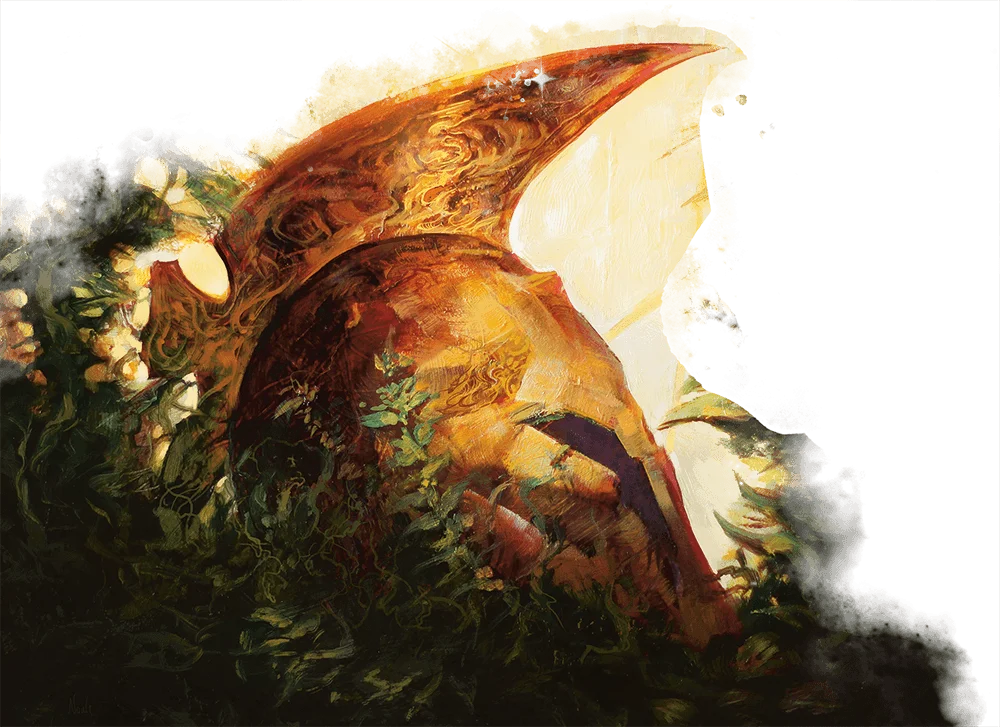
Sites that are sacred to Karametra, from her grand temple in the heart of Setessa to outposts in the wilderness, combine careful construction with natural growth. The god favors towers and hanging gardens that lift the verdant natural world up toward Nyx in her honor. In the Nessian Wood, Setessans build watchtowers that serve the dual purpose of military defense and worship.
Watchtower Adventures
A watchtower adventure usually hinges on challenging the characters to find a way into or out of the fortress. As a military structure, a watchtower might hold secrets, weapons, soldiers, and prisoners, any of which the characters could liberate or defend. If the characters take over a watchtower, they could try to keep it for themselves. The Watchtower Adventures table offers ideas for adventures in such a place.
Watchtower Map
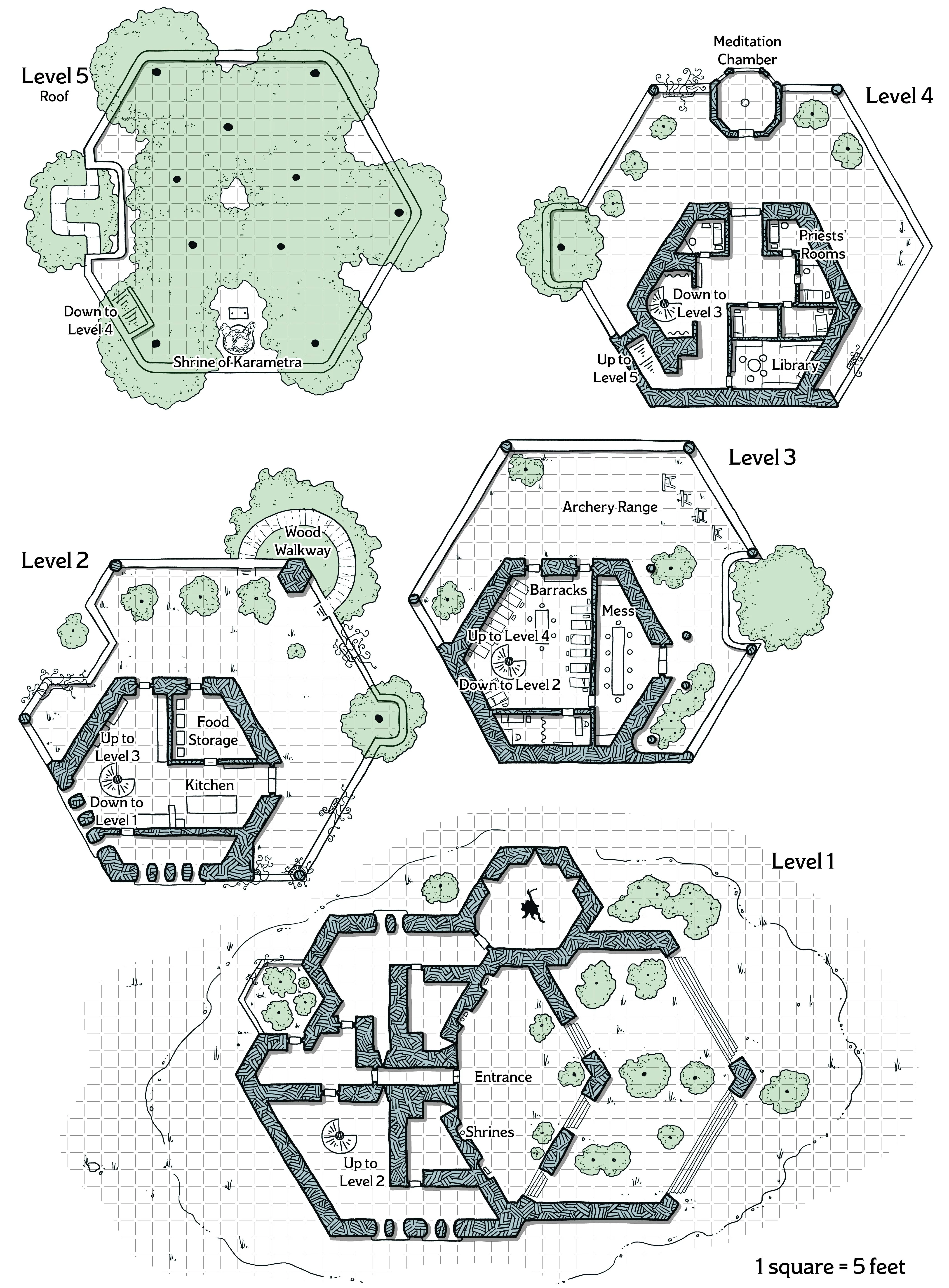
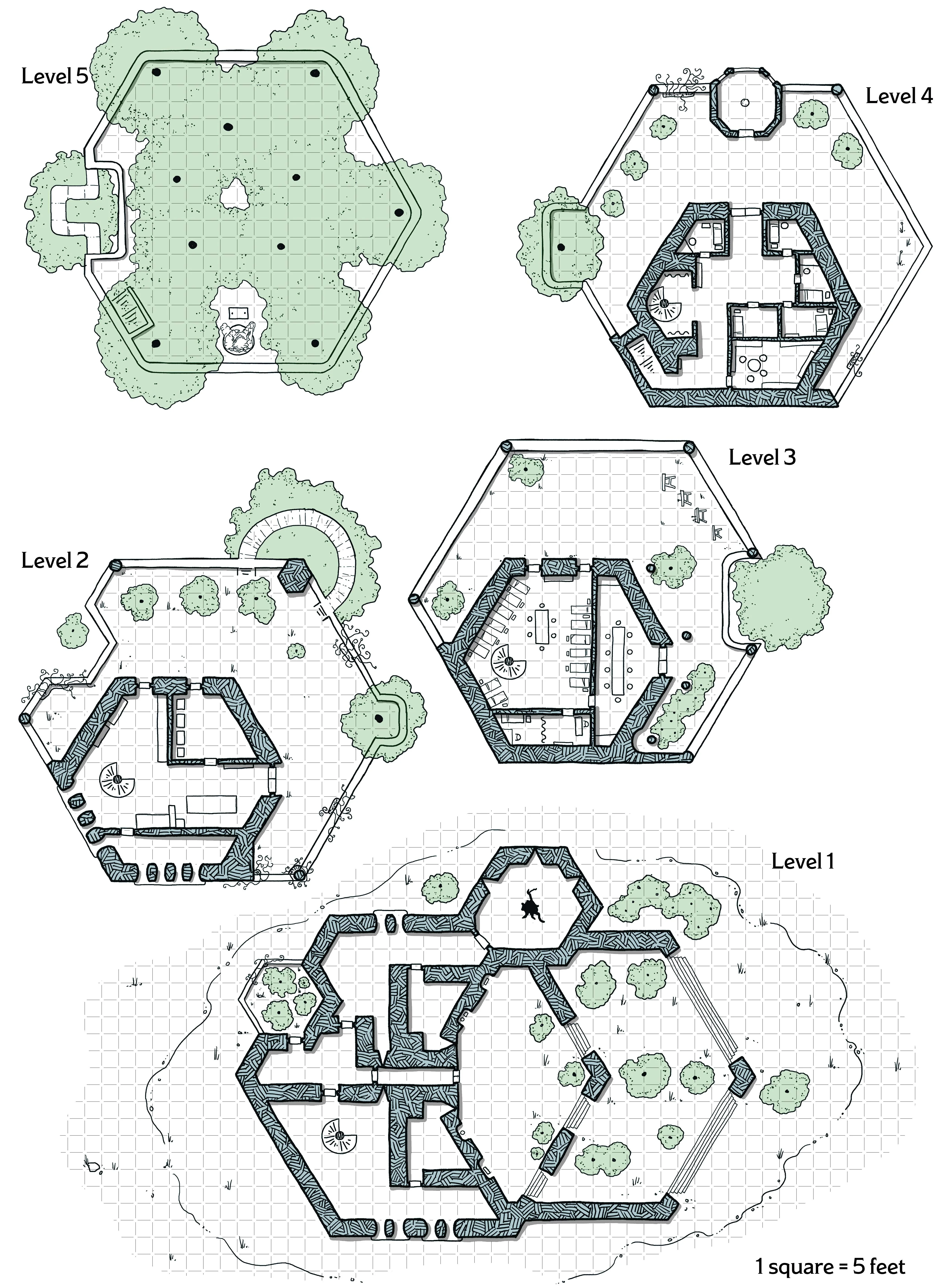
The watchtower shown in map 4.6 is a roughly hexagonal stone tower, sculpted to help it blend in with the natural landscape. Ancient trees grow into and around the structure, causing branches and ivy to sprout from every level’s open balconies.
The first floor houses the main entrance, guard posts, and alcove shrines devoted to the seasons. Most of it is taken up by gardens of flowers and fruiting trees. A spiral stairway ascends through all the higher levels.
The second floor has an enclosed portion with space for storage, food supplies, and kitchens. A broad balcony features gardens of trees, vines, and food-bearing plants.
The third floor looks much like the second, but has barracks for guards and a mess hall. Some of the balcony space is given over to archery targets, but most of it is still gardens.
The fourth floor is similar to the last two, with rooms for priests and a library. There are also gardens on the balcony, perhaps featuring rarer or stranger plants.
The top floor is open to the sky and is the main sanctuary of Karametra. A statue of the god and an altar are here. Several ancient trees form a canopy, and their trunks are sculpted to look like great heroes.
Gallery
Watchtower Villains
Villains at a watchtower usually want to take over, destroy, steal from, or infiltrate the place, or they already occupy it and use the defensible position to crush their enemies. Examples of such villains appear on the Watchtower Villains table.
Keranos

Mercurial and temperamental, Keranos personifies storms. Adventuring in the service of the god of storms is often challenging but never dull.
Keranos’s Champions
Keranos sees his champions as tools to bring insight and change to the world. He doesn’t contemplate the moral or ethical consequences of his insights, believing that such concerns are beneath a god’s notice. This outlook might put his champions in a difficult ideological situation, stuck between the demands of a wrathful deity and uncomfortable moral choices.
The Keranos’s Quests table suggests a few adventures the god’s champions might involve themselves in.
A Keranos Campaign
A campaign focused on champions of Keranos might involve acquiring oracular visions, unraveling a prophecy, or bringing vengeance down on the storm god’s enemies. He uses his champions as agents of change to bring about a great epiphany, as instruments of vengeance against those he feels have wronged him, or as divine agents sent to aid his faithful.
As the campaign begins, the characters might be summoned by an oracle and told of a dire prophecy threatening the polis. Next, they manage to avert the worst consequences for the polis through their wits and skill at arms. Now, having demonstrated their potential to the polis and Keranos, they become embroiled in ever grander, more dangerous prophecies, potentially drawing in secrets of the other gods or of reality itself.
It is relatively easy for a mortal to lose Keranos’s favor because the god is quick to anger and doesn’t suffer failure or foolishness well. Should the characters disappoint the god, they might have to assuage Keranos’s wrath. They could accomplish this through a great feat of wit, by laying low a powerful foe, by embarrassing a rival god, or by discovering a great insight or secret. Until this is done, Keranos would be a potent adversary.
Keranos’s Villains
Inspiration, unguided by morals and ethics, is a dangerous force, but Keranos isn’t usually concerned with matters of good or evil. As such, a charismatic leader, acting on Keranos’s divinely inspired intuition, could find themselves succumbing to megalomania and hubris, with disastrous consequences for a polis.
Keranos’s followers can become too narrowly focused on fulfilling dangerous prophecies without regard for loss of life. If you want to pit the characters against a morally gray antagonist who might have some traits or qualities that they admire, Keranos and his followers would work admirably.
The Keranos’s Villains table suggests a variety of foes that might arise from among the god’s followers.
Keranos’s Monsters
Keranos is associated with creatures that act as extensions of his volatile temper or his sudden, blinding insights. Adventures that bring characters into conflict with Keranos’s agents might pit them against monsters such as these. The Keranos’s Monsters table presents just a few foes likely to serve the god’s will.
Keranos as Campaign Villain
Because Keranos doesn’t readily concern himself with quandaries of good versus evil, it is easy to use him as a villain. The god might be driven by frustration at mortals over their lack of vision, or by a consuming need to trigger unrestrained creative impulses that have far-reaching effects, by anger at a real or perceived slight. His will might be expressed through an oracle who foretells a great tragedy that involves the characters or someone they care about. As the campaign progresses, Keranos becomes increasingly upset at the actions the characters take to thwart his insights or their defense of the status quo and sends his agents to enlighten them.
The campaign might end with the adventurers unraveling a troublesome prophecy, proving themselves of sufficient wisdom to merit respect, or when they convince the other gods (especially Klothys) to intervene and check Keranos’s wrath.
Keranos’s Divine Schemes
Keranos doesn’t interact much with the rest of the pantheon, preferring to brood and dispense epiphanies in solitude. He is, however, easily roused to anger and goes to extremes to satisfy real or perceived slights. The Keranos’s Divine Schemes table explores the sorts of plots the god might pursue.
Oracular Conflux
A few of Keranos’s most isolated temples serve a purpose beyond worship, being sites for the reading of worldly signs and recording of knowledge. These oracular confluxes provide followers of Keranos the tools to glean great truths, be they natural occurrences or omens of the gods. Because of Keranos’s connection to storms and the heavens, such temples often have weather vanes, telescopes, and other tools used to predict the weather and chart the course of celestial bodies.
Each shrine has multiple methods of predicting the future that it might offer visitors—with reading the stars, the clouds, or the entrails of sacrificed animals being particularly common. The most popular readings are those conducted during thunderstorms. Crowds gather in the shrines to watch oracles make predictions based on rainfall, wind, thunder, and other weather measurements. In some communities, oracles actively strive to be struck by lightning, risking their lives to receive mighty messages from their god.
Oracular Conflux Adventures
The player characters could come to an oracular shrine for the same reason that most other people do: to receive a prediction about the future. They also might be hired as bodyguards for the oracles, who often deliver distressing (and perhaps incorrect) predictions to violent individuals. The Oracular Conflux Adventures table offers ideas for adventures in such a place.
Oracular Conflux Map
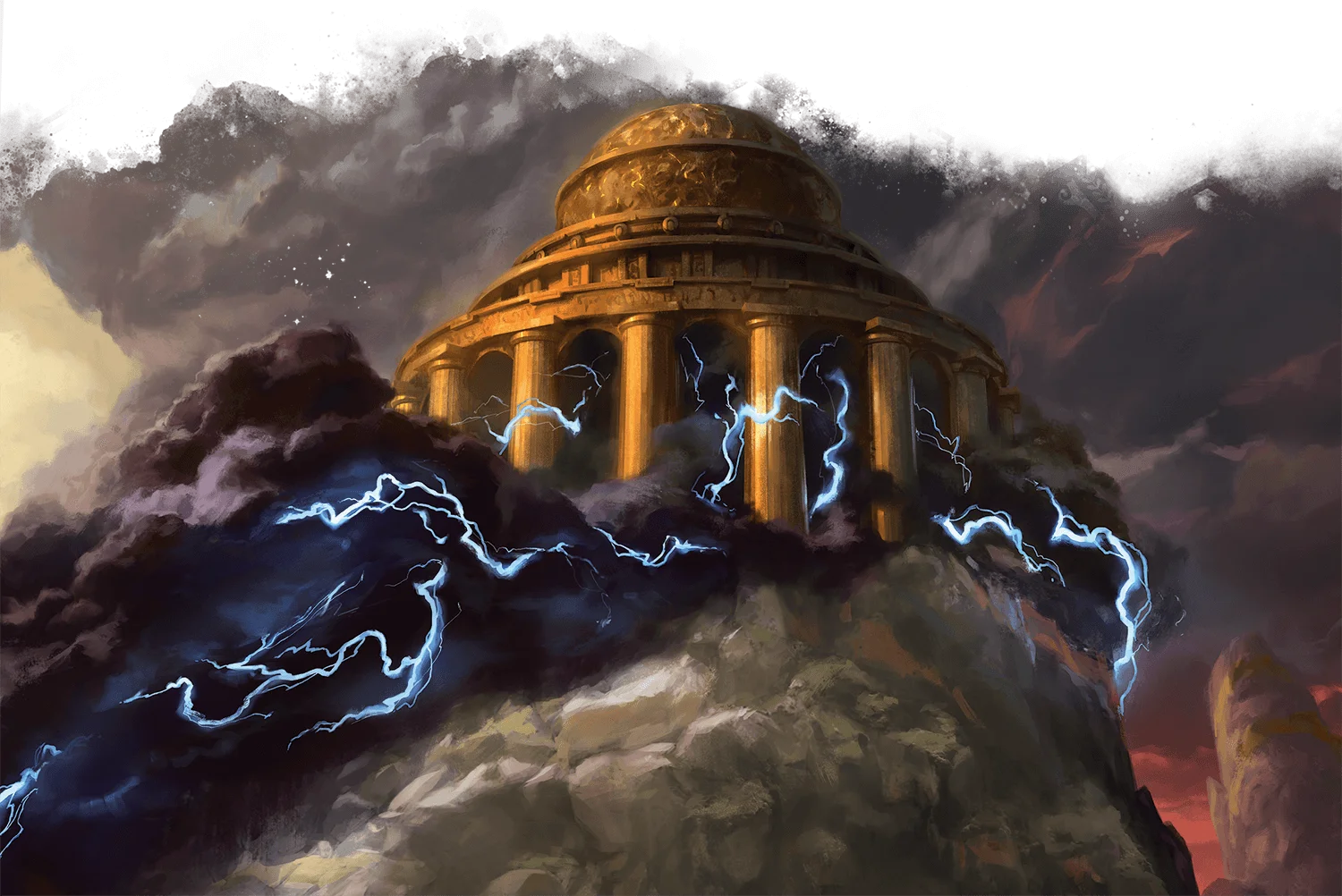
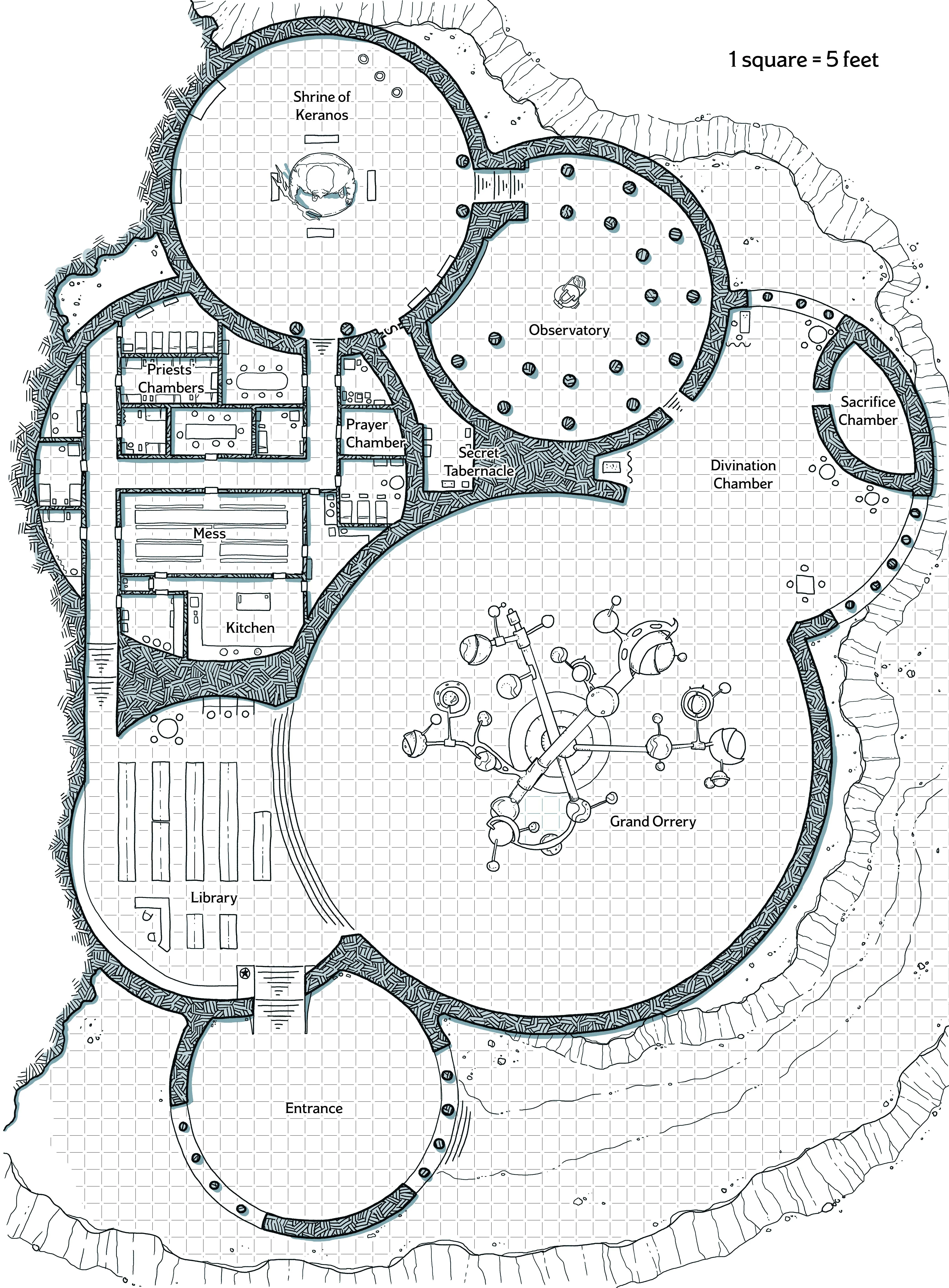
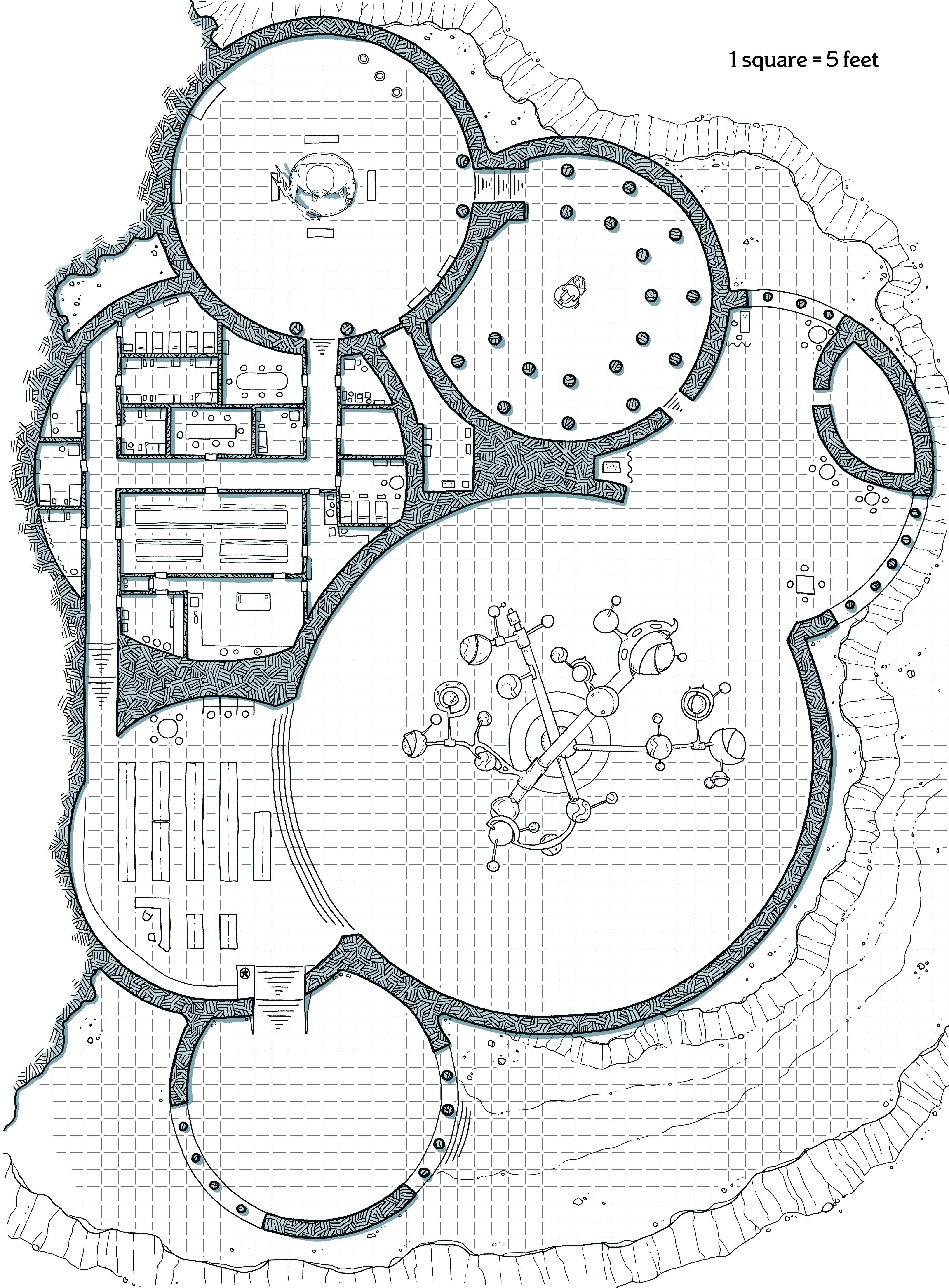
The oracular conflux shown in map 4.7 has a glass-domed roof, atop which is mounted a massive, ornate weather vane. During stormy services, oracles watch the sky for lightning patterns that they use in predictions.
The center of the shrine contains a massive orrery. Connected to the orrery room is a divination chamber, and situated within this chamber is the sacrifice chamber. These areas are used for various forms of soothsaying and predictions, including animal sacrifice and the reading of entrails.
Off the divination chamber is the observatory, which houses a telescope, an astrolabe, and star charts. Past that is the Shrine of Keranos, where a massive statue of the god is connected to a lightning rod which extends through the roof and 100 feet into the sky. When lightning strikes the rod, magical iron plates in the floor temporarily glow in the colors of the rainbow. Oracles use this display to predict the future.
Another section contains living areas for priests and oracles, and the library which connects the living areas to the orrery room contains books that can help oracles interpret visions.
Gallery
Oracular Conflux Villains
A villain in an oracular shrine is likely taking advantage of or fighting against the predictions of the future. Examples of such villains appear on the Oracular Conflux Villains table.
Klothys

Secretive yet vindictive in enforcing her vision of destiny in Theros, Klothys not only takes umbrage at perceived slights but has also awakened a horde of terrors during her ascent from the Underworld.
Klothys’s Champions
The world has suffered terrible wounds from the hubris of mortals and divine entities alike. Klothys directs her champions to thwart the overly ambitious, undo their damage, and reinforce the natural order that sustains Theros.
The Klothys’s Quests table suggests a few adventures the god’s champions might involve themselves in.
A Klothys Campaign
Although followers of Klothys tend to be solitary, fate might conspire to bring them together to execute a grand plan or be prepared for an imminent event. A campaign structured around the player characters as champions of Klothys might cast them as anarchists, prophets, or vigilantes committed to primal justice. The excessive pride of gods and mortals threatens a world already weakened by Xenagos’s gambit, and Klothys chooses champions who can restore and restabilize Theros—even if doing so requires extreme measures.
Klothys rarely reveals her plans. The characters might begin the campaign by following a prophecy to a far-off land or interpreting infrequent omens to learn of nearby threats. Such a campaign can be flexible, allowing the player characters freedom to explore other opportunities before the next augury draws them back into the main storyline. As they overcome greater challenges, topple mighty demagogues, and mold the world in accordance with its destiny, the characters might attract followers, incite rebellions, and clash with rivals who interpret Klothys’s will in different ways.
Champions of Klothys are at risk of misinterpreting their god’s intentions to serve their own purposes or selfishly demanding a greater destiny than what they are due. This behavior could lead to Klothys retracting her blessings or even dispatching loyal champions to destroy her wayward servants. Her most successful champions stand to reorder errant civilizations or rebalance disrupted natural orders.
Readaloud
Myth of Klothys and the Titans
Most mortals know little of the titans, except the comforting fact that these ancient, gigantic terrors are bound far away in the Underworld—and are therefore nothing to worry about. The fact that Klothys, god of destiny, personally and actively holds them there is unknown to most. With her spindle, Klothys endlessly knots and unravels the strands of destiny, constantly tightening the trap that keeps the titans imprisoned. Were it not for her immortal vigilance, the titans might once again claim the mortal realm as their own.
Klothys’s Villains
Klothys emerged from the Underworld in order to restore the natural order on Theros, creating a number of Nyxborn agents to aid her. Virtually anyone could end up a target of the god or her agents if they stand in opposition to destiny.
Various monsters rose from the Underworld when Klothys entered the mortal realm, and her most zealous followers often see them as manifestations of her will. Some might goad these terrors into attacking communities, or foster them to further spread the god’s will. Klothys’s most callous followers might also believe that society must crumble for the world to heal. If Klothys didn’t intend this, they reason, then surely she wouldn’t have brought so many monsters along in her wake.
The Klothys’s Villains table suggests just a few foes that might arise from among the god’s followers.
Klothys’s Monsters
A variety of monstrous creatures might arise in an area as a result of Klothys’s influence, particularly those presented on the Klothys’s Monsters table.
Klothys as Campaign Villain
As a foe, Klothys might endeavor to reestablish the order of the cosmos that existed before the meddling of Xenagos and Heliod. These corrections start small, manifesting as fires, monster infestations, or a spate of accidental deaths. The more the characters intervene, the more dire these events become as the god’s servants overcorrect to account for the heroes’ meddling. Alternatively, averting one disaster might naturally lead to a greater one, at which point characters must contend not only with the latest catastrophe but also with the accusations and assaults of Klothys’s tireless followers.
Ultimately, Klothys holds grudges only rarely. The campaign might conclude when the characters identify the moment they strayed from their destined place and correct things in order to appease the god. Likewise, the heroes might invoke the other gods’ support to deflect Klothys’s wrath. Boldest of all, the characters might determine what device allowed the god to enter the mortal realm; its destruction could hurl Klothys back into the Underworld for untold ages to come.
Klothys’s Divine Schemes
Klothys has many designs for Theros and for the futures she has foretold that might never come to pass. The Klothys’s Divine Schemes table provides several ways in which her foresight and fury might ensnare adventurers.
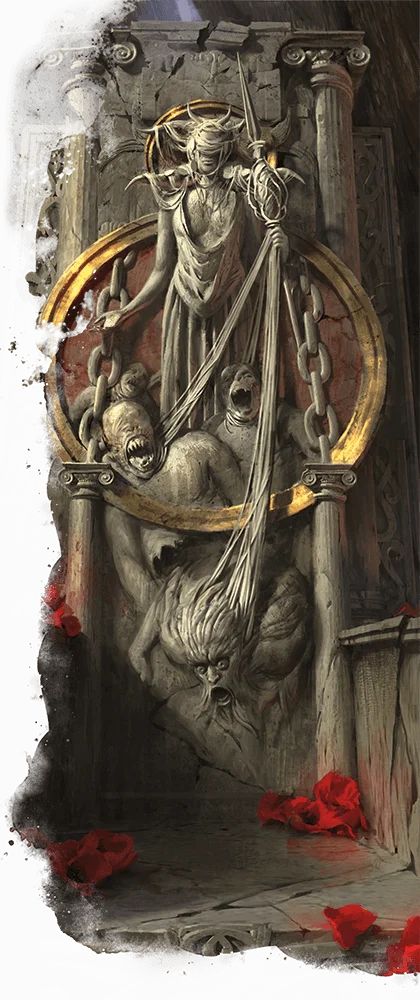
Abandoned Temple
Abandoned temples can be found across Theros. Some of these places were once houses of worship of Klothys, the nearly forgotten god of destiny, but abandoned temples of many other gods also exist as the result of war, monster attacks, natural disasters, mass migration, neglect, or the wrath of deities.
Every abandoned temple is distinctive, combining aspects of its patron god with the result or effect of what caused it to be abandoned. You can use the Abandoned Temple Condition table to determine an abandoned temple’s present state.
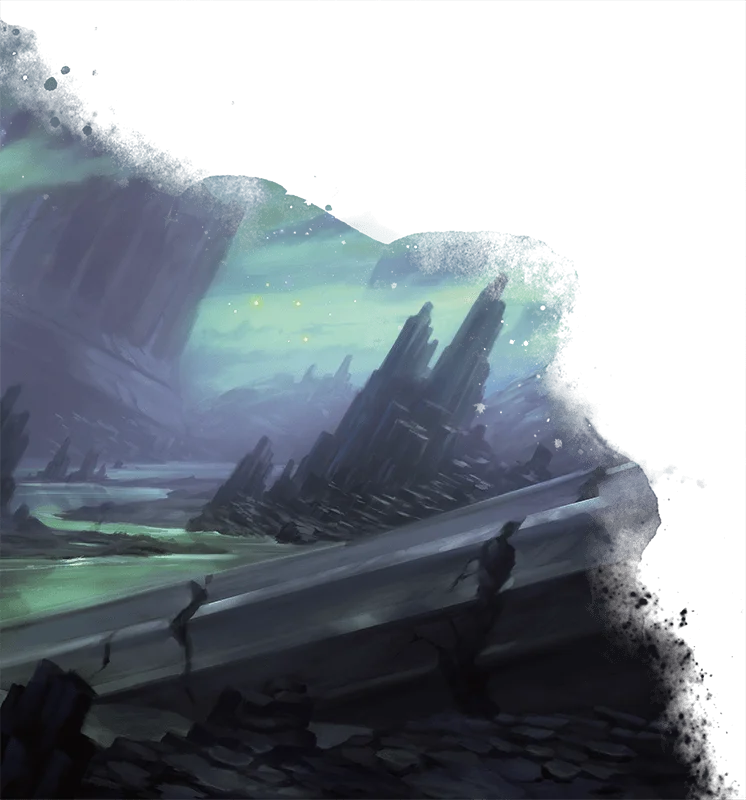
Abandoned Temple Adventures
An abandoned temple might contain records, special items, and humanoid remains, any of which adventurers might be called upon to retrieve. Many of these temples hold dangerous phenomena (such as gates to the Underworld), which might have been their undoing. Monsters and brigands often inhabit these ruins, as do hermits and scholars hording secrets too dangerous to sequester elsewhere.
The Abandoned Temple Adventures table offers ideas for adventures that could occur in such a place.
Abandoned Temple Map
The abandoned temple shown in map 4.8 is partially collapsed, with overturned pillars, and parts of the ceiling sunken in to prevent passage to some areas. The aboveground section is overgrown with vines and includes the ruins of the main sanctuary, which contains mostly rubble except for a cracked altar and a headless statue. A library of rotting books and priests’ quarters containing skeletal remains complete this section.
The halls are streaked with burn marks. Many of the rooms in this place are rubble-strewn and ruined. A passage leads to an ancient room with scrying pools filled with blood that has barely a trace of dust. A sturdy iron door protects the temple’s vault.
Gallery
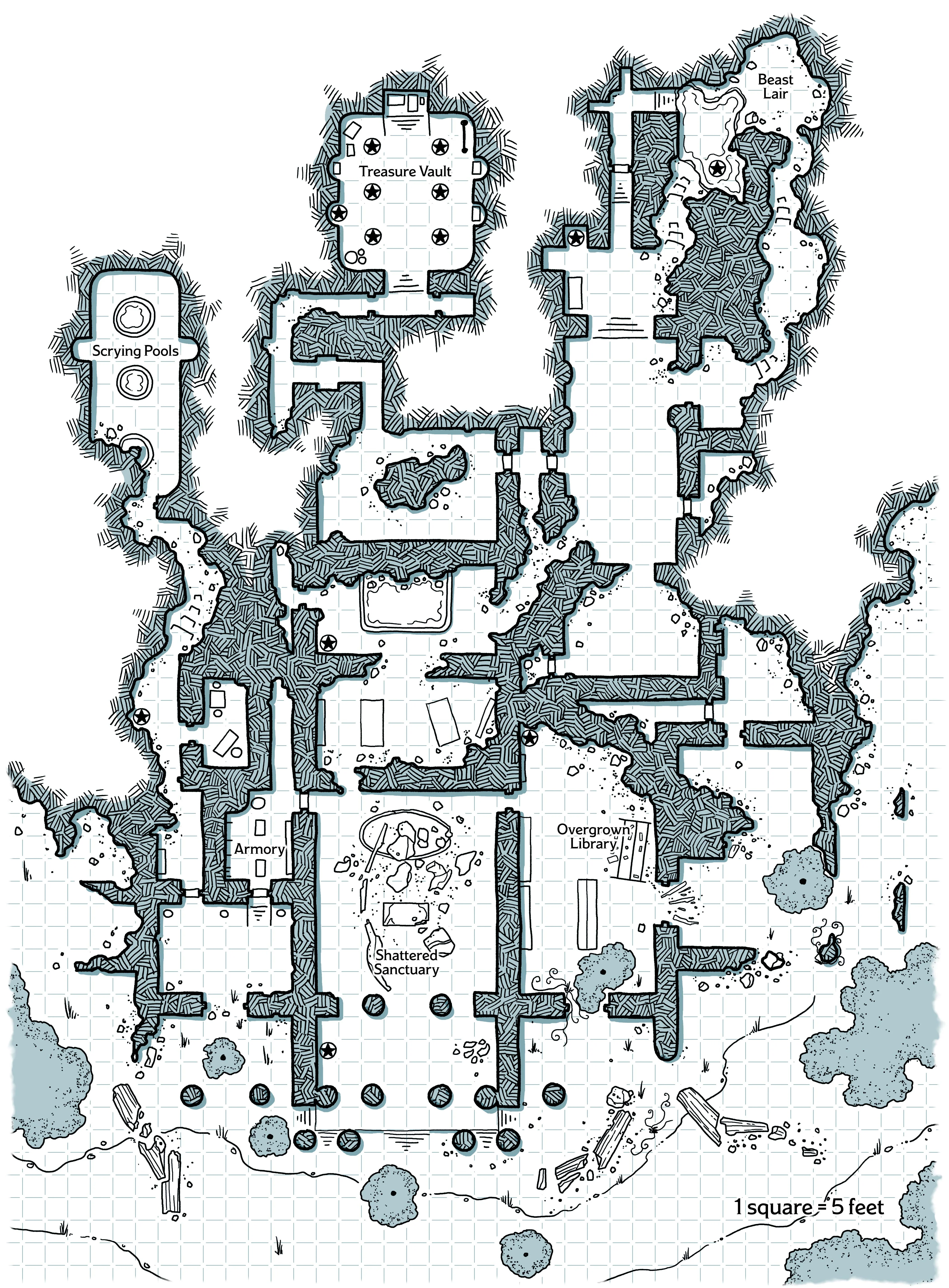
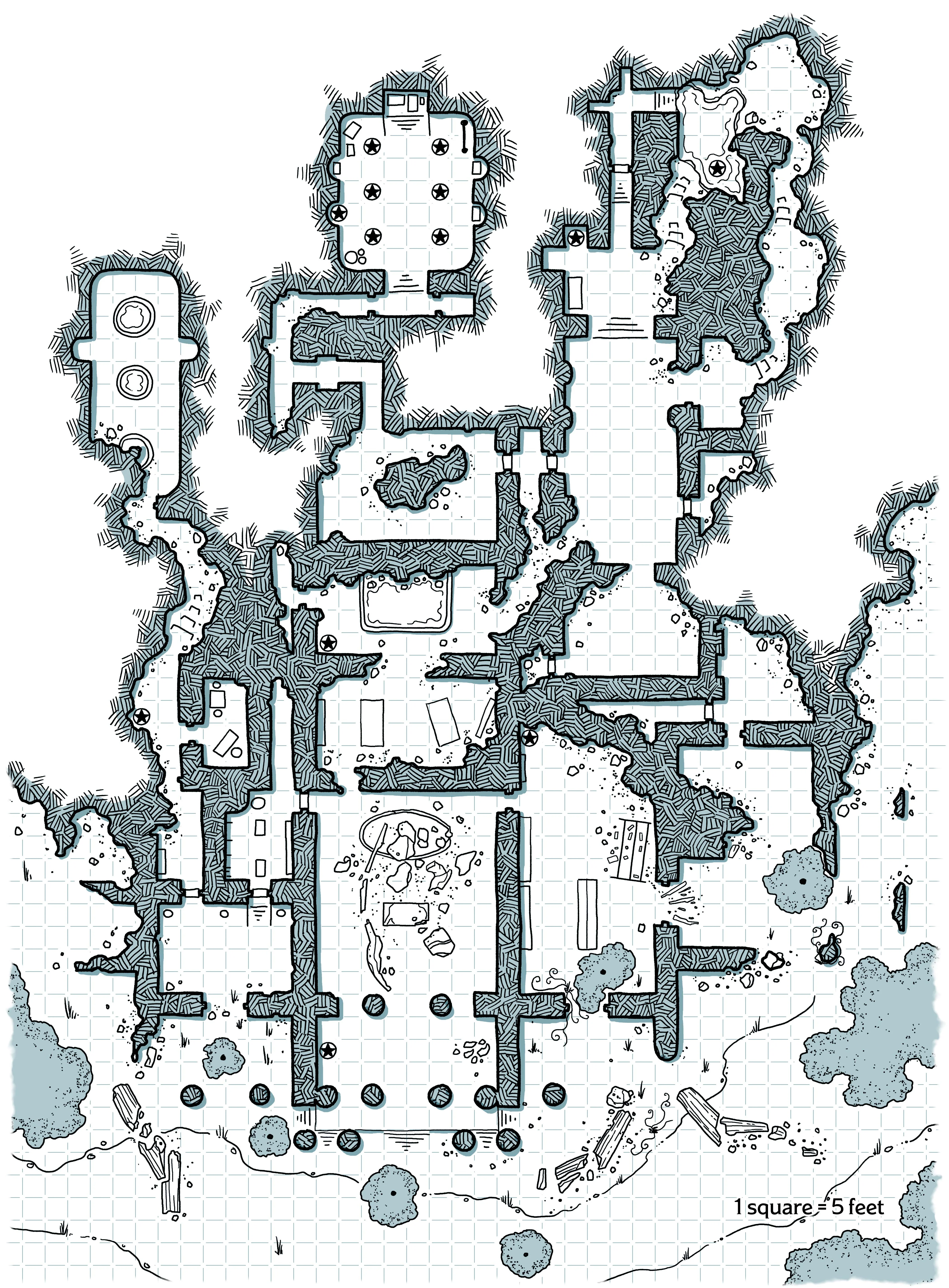
Abandoned Temple Villains
Monsters who plot alone and criminals on the run or who engage in taboo behavior are often found in abandoned temples. Examples of such villains appear on the Abandoned Temple Villains table.
Kruphix

Enigmatic and patient, Kruphix influences the lives of his champions in ways both subtle and profound.
Kruphix’s Champions
Kruphix seldom works directly in the mortal world, preferring to act through his champions—when he acts at all. He might call upon his followers to suppress a dangerous truth, reveal a vital secret, or end a destructive conflict. When the other gods send their champions to circumvent divine agreements, Kruphix often calls upon his champions to set things right.
The Kruphix’s Quests table suggests a few adventures the god’s champions might involve themselves in.
A Kruphix Campaign
A campaign structured around champions of Kruphix can embrace moral complexity, with the adventurers sometimes making choices that cause short-term harm in the service of long-term good. They might be charged with destroying secret knowledge that could help people, revealing a secret that could kill someone but avert a larger conflict, or standing in judgment over whether knowledge is safe or unsafe.
At the beginning of the campaign, the characters might be united by their discovery of a powerful secret, earning Kruphix’s patronage in order to keep that secret safe. Armed with knowledge that they alone possess, the adventurers set out to learn more about the secret they share and avert dangers that only they are aware of.
Champions of Kruphix approach their work with an impartiality that others don’t always respect, and they could find themselves the targets of vendettas by the followers of other gods. Over the long term, they risk learning things about their world and its gods that could shake their faith. Some might even abandon Kruphix’s principle of balance, either to enrich themselves or to serve what they see as the greater good. Kruphix would then become a villain, as he sends other agents to suppress the secrets the adventurers carry with them.
Readaloud
Myth of the Temple at the World’s Edge
Legends say that Kruphix’s holiest temple of mystery stands at the edge of the world. Dominated by Kruphix’s Tree, the temple overhangs Nyx itself, jutting past the vast waterfall that marks the edge of the mortal realm. The site’s precise location can’t be found on any map, but tales claim it is one of the few places on Theros where mortals can pass directly into Nyx. To pass beyond the waterfall anywhere else is to tumble into the Underworld.
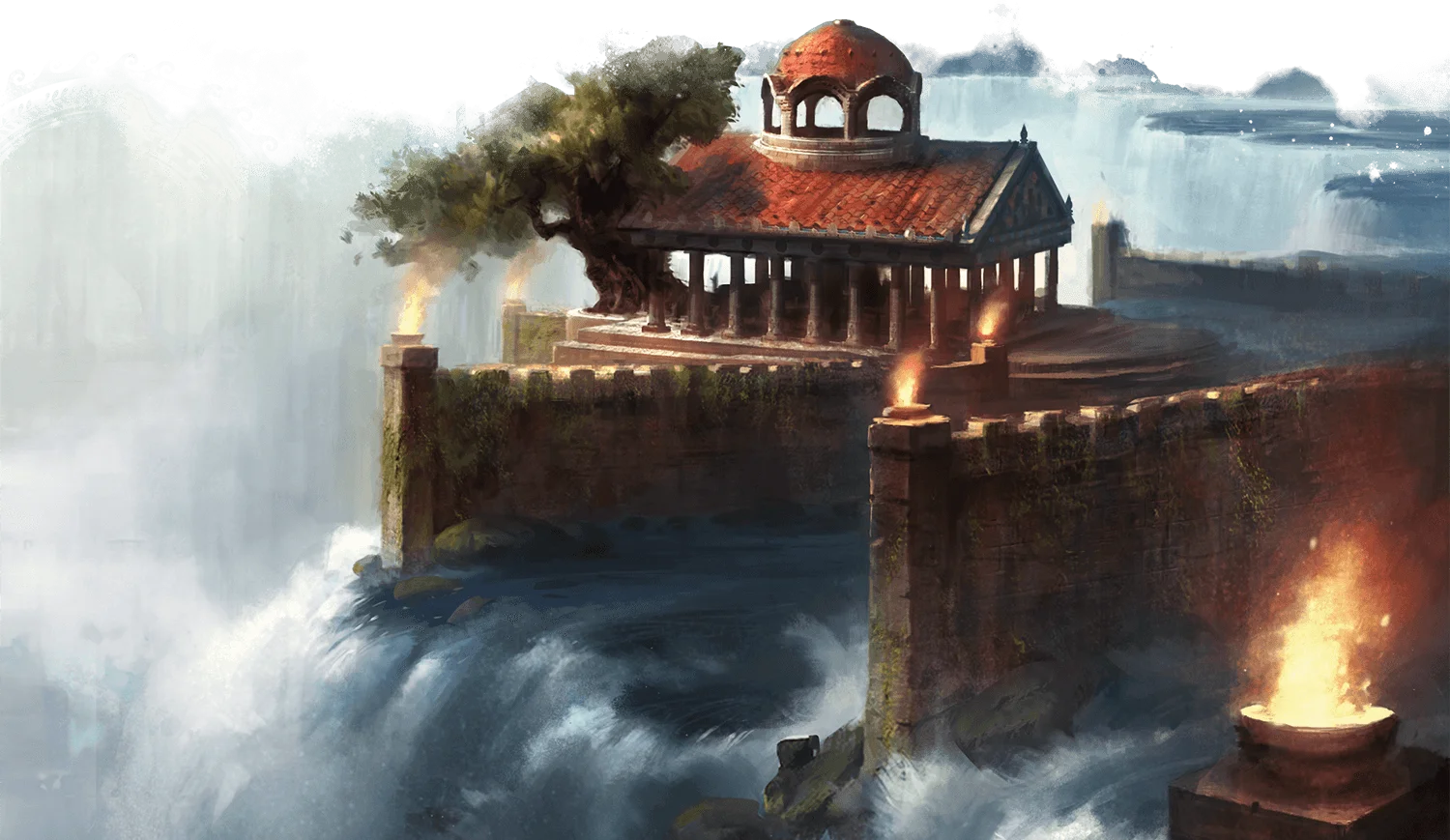
Kruphix’s Villains
Kruphix doesn’t often act in the world, but when he does, his agenda is often morally ambiguous, and his servants’ sacred quests can look like villainous schemes from other points of view. Kruphix often leaves his instructions open to interpretation, and not all of his agents use this considerable latitude responsibly.
The Kruphix’s Villains table suggests a variety of foes that might arise from among the god’s followers.
Kruphix’s Monsters
Kruphix is rarely associated with monsters, but those most likely to serve him appear on the Kruphix’s Monsters table.
Kruphix as Campaign Villain
As a campaign villain, Kruphix is most likely trying to maintain or restore the balance of power among the gods. He doesn’t know the future, and his actions sometimes have dire consequences that he can’t predict and wouldn’t willingly cause.
The campaign might begin with the misbehavior of another god or gods, then escalate when Kruphix delivers a punishment that seems out of proportion to the crime. Further attempts by the other gods to circumvent or reverse the punishment could be countered by more edicts from Kruphix, perhaps even culminating in another great Silence.
Just as Kruphix reins in the worst excesses of the other gods, the best chance of foiling Kruphix as a villain lies in the nature of Kruphix himself. A campaign in which Kruphix is a villain might end with the adventurers convincing him that his current actions don’t serve the balance among the gods. Kruphix’s mind isn’t easily changed, though, and the adventurers might need to produce extraordinary testimony or evidence. Even just reaching Kruphix in order to communicate with him could easily require the patronage of other gods.
Kruphix’s Divine Schemes
Kruphix wants to maintain the status quo rather than overturn it, so his schemes often begin as reactions to the activities of another god. The Kruphix’s Divine Schemes table presents a few examples of how Kruphix’s inflexible judgments might have a mythic impact on the mortal world and make divine conflicts more severe rather than less.
Temple of Mystery
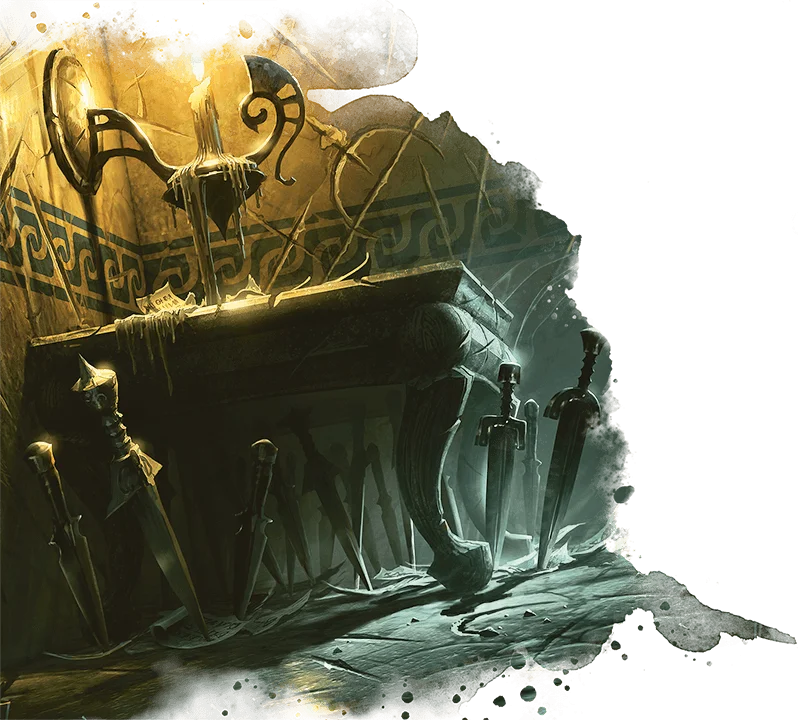
A temple of mystery is an enigmatic location full of puzzles and traps, found in remote regions of Theros. It is believed that surviving and solving the mysteries of such a shrine earns Kruphix’s respect. Some scholars claim the temples aren’t stationary and that finding a shrine’s location is the first puzzle that explorers must solve.
The priests who care for temples of mystery tend to be as mystifying as the puzzles within the places. Each temple typically has one caretaker—a powerful oracle willing to answer questions for adventurers who can overcome the temple’s challenges. The priests are particularly impressed with guests who can solve puzzles that the oracles themselves have yet to complete.
At most temples of mystery, the most valuable knowledge and treasures are protected by the most difficult and deadly challenges. For a few bold—or foolish—investigators, the rewards are worth the risk.
Temple of Mystery Adventures
Exploring a temple of mystery presents the opportunity for an adventure that features puzzles and traps, though you can also populate it with any other challenges you like. The Temple of Mystery Adventures table offers ideas for adventures that could occur in such a place.
Temple of Mystery Map
The temple of mystery shown in map 4.9 presents a labyrinth Kruphix might use to test followers and to protect valuable secrets of existence. The four-armed sculpture at the maze’s heart is said to hold a great secret, perhaps a mysterious treasure or a riddle that the statue alone can speak. Each other chamber in the complex also holds its own unique puzzle or trap. When solved, these hazards allow one to progress, but also often impart some lesson about history, the nature of the cosmos, or the explorer themselves. While this temple exemplifies one of Kruphix’s more elaborate (and potentially deadly) holy sites, no two of the god’s temples are alike.
Gallery
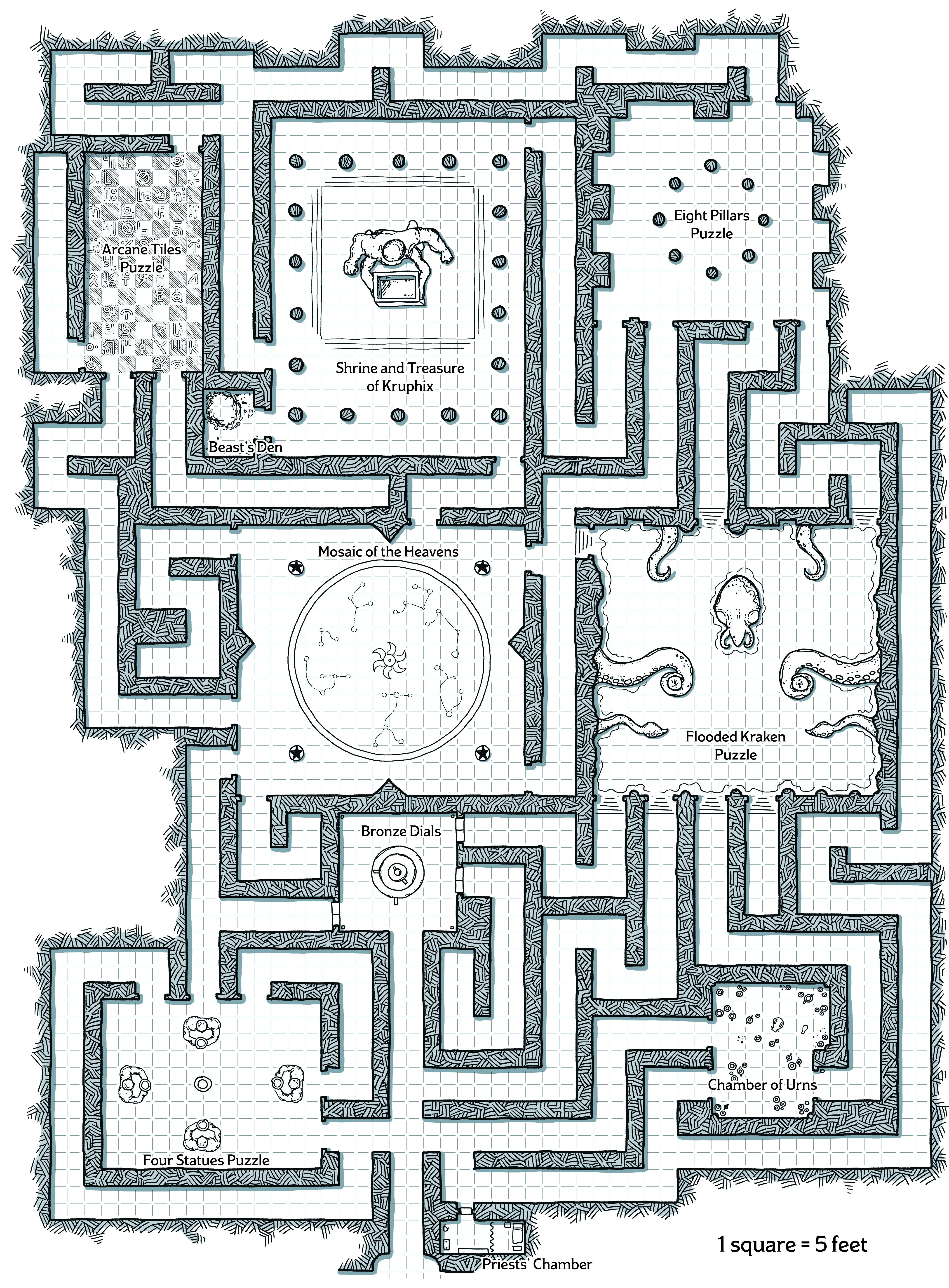
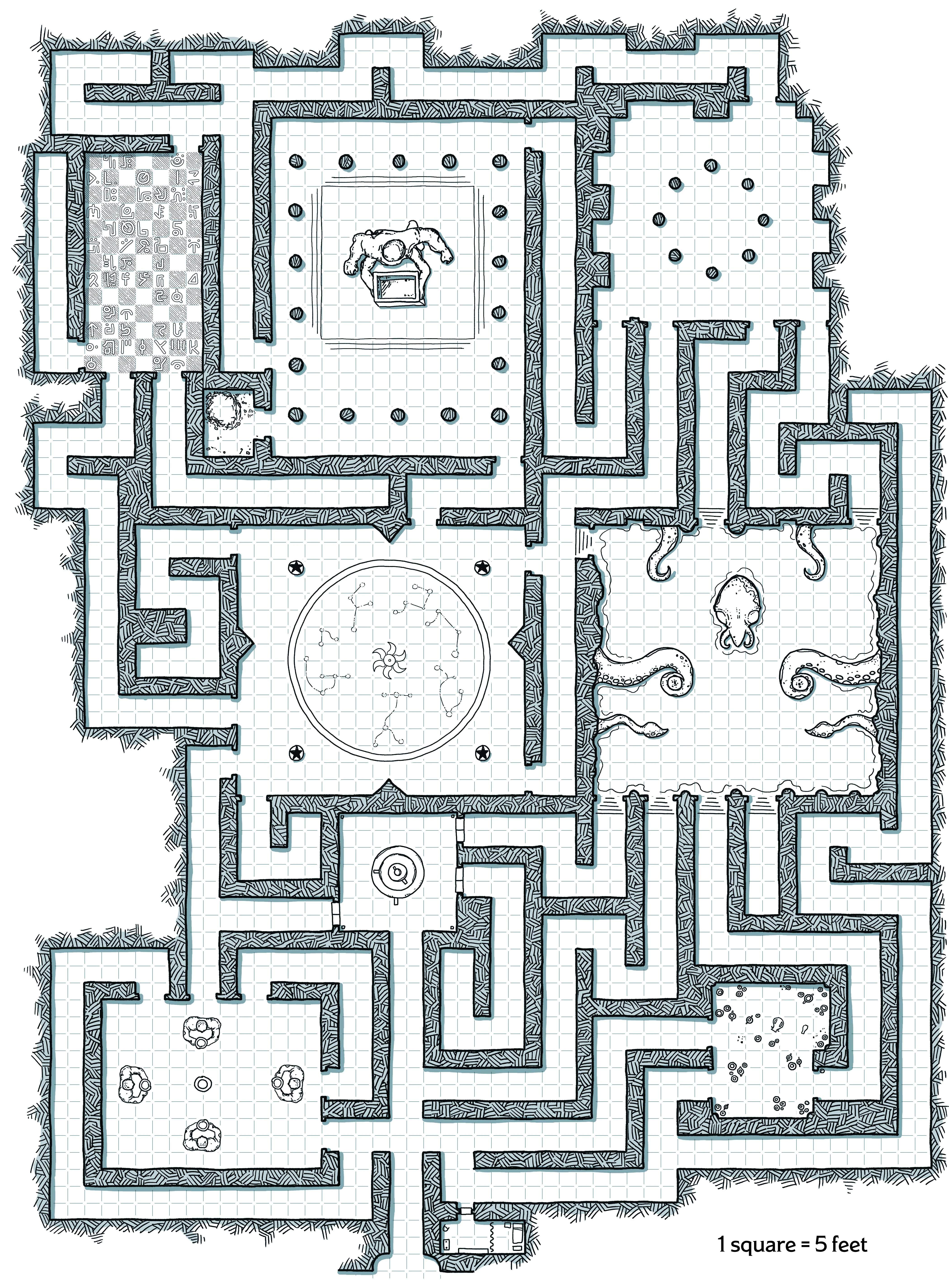
Temple of Mystery Villains
A villain in a temple of mystery might seek information, enjoy torturing adventurers with traps, or have motives as enigmatic as the place itself. Examples of such villains appear on the Temple of Mystery Villains table.
Mogis

Mogis demands deeds, not just words, from his followers—and he is by far the most bloodthirsty god of the pantheon. As such, Mogis and his worshipers are ideal antagonists to pit heroes against. Tread carefully when using him as a patron, as his area of concern trends toward villainy rather than heroics.
Mogis’s Champions
Mogis’s champions are extensions of his ability to wreak havoc in the world. The god of slaughter cares only for causing strife, and he uses his agents to heighten the tension between the poleis, hoping to ignite an all-out war. In part, he wants to cause so much carnage that his brother eventually has no choice but to face him in a duel to the death.
The Mogis’s Quests table suggests a few adventures the god’s champions might involve themselves in.
A Mogis Campaign
A campaign structured around Mogis as the party’s patron can be challenging, and all players must agree to play characters in service to the god of slaughter. You should work to create a narrative that eventually allows the characters to perform acts of heroism. Perhaps this means the group swears a vow to Mogis to pursue some collective revenge, or maybe the group understands that just as Mogis watches them, so does Iroas, and they’ll be courted by both gods during the campaign.
In one possibility, perhaps the characters start out as the sole survivors of a mercenary company left to die. Embittered and resentful, the party swears vengeance on their former employer, thereby catching Mogis’s attention. He offers the characters power to help them pursue their quest for revenge in exchange for their fealty.
As the characters become immersed in their plans for vengeance, Mogis, acting through his agents, pushes them farther down a dark path until, at last, they realize what they have become. The characters, now deeply indebted to the god of slaughter, realize that he will not release them willingly from his service. At this point, the characters might seek freedom from Mogis’s service. Iroas or another god could take this opportunity to offer the party aid against their former patron. Mogis might then assume the role of campaign villain as the characters do what they must to atone.
Mogis’s Villains
Unquestionably, Mogis makes an excellent villain. His lust for bloodshed and willingness to fight all comers makes him easy to build a campaign around if you want a straightforward, unambiguous foe.
Mogis’s followers could be anything from a disgraced politician seeking revenge against their enemies to a roving band of minotaurs pillaging the countryside. Mogis’s faithful tend to be at least partially blinded by dark emotions, a state that might make them easy to manipulate by the followers of clever deities. The servants of the god of slaughter aren’t all mindless brutes, though, and many allow themselves to be underestimated as a ploy to bring ruin upon their foes.
The Mogis’s Villains table suggests a variety of foes that might arise from among the god’s followers.
Mogis’s Monsters
Mogis is associated with vicious monsters bent on wholesale destruction. He isn’t at all concerned with subtlety, but rather with creating mayhem. Adventures that bring characters into conflict with agents of the god of slaughter might pit them against monsters from the Mogis’s Monsters table.
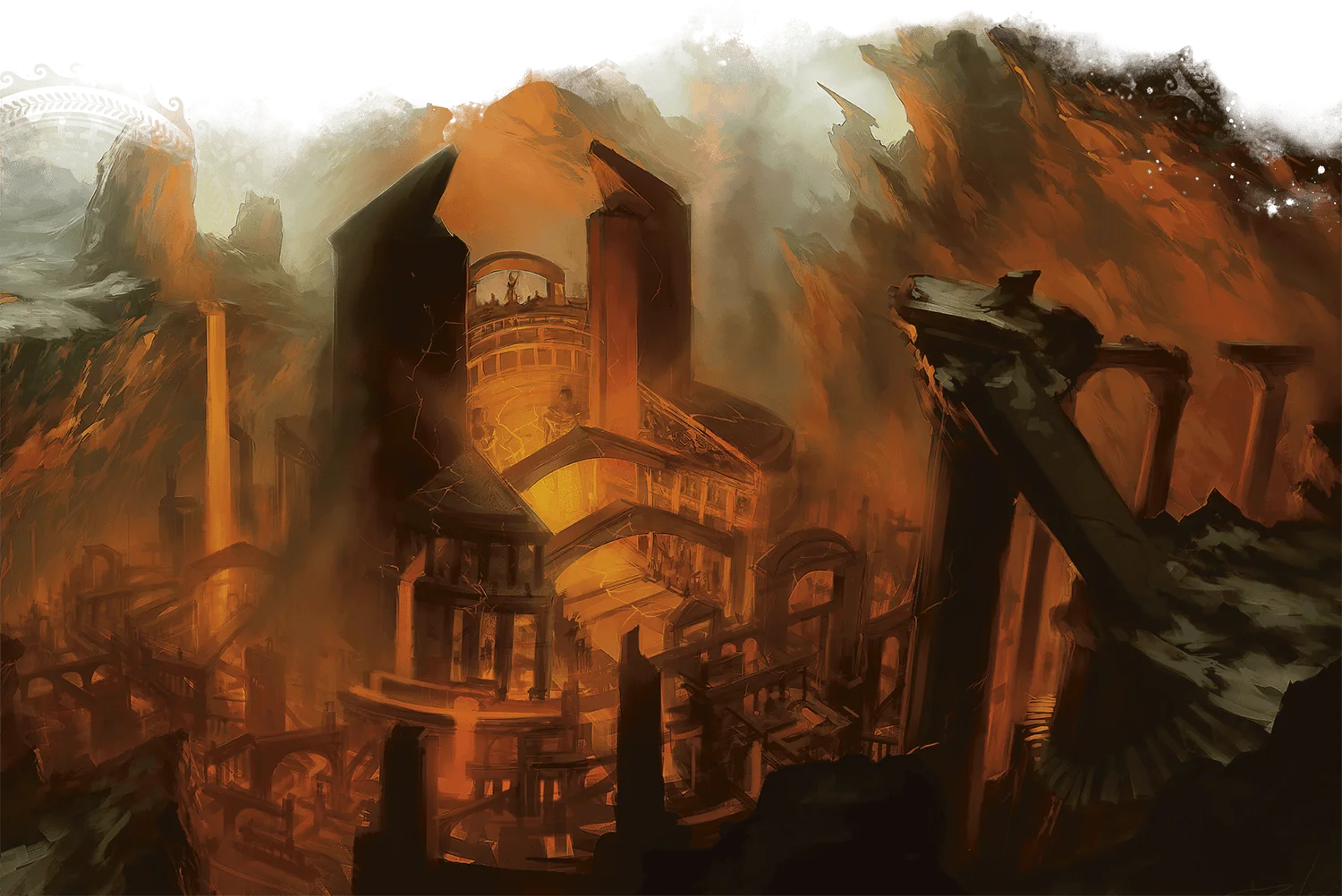
Mogis as Campaign Villain
Left unchecked, Mogis and his followers would destroy all of creation. This situation leads to plenty of campaign hooks and opportunities for the characters to act heroically in the face of classically villainous foes.
Mogis is obsessed with defeating his brother Iroas, just as Iroas is obsessed with besting him. The characters could easily find themselves in the middle of the brothers’ war. At first, they might be swept along by events, but as they grow in power, the characters will become the key to checking Mogis’s influence, perhaps even helping Iroas triumph over his brother. Such an event could be fraught with unforeseen consequences for the fate of Theros!
Mogis’s Divine Schemes
Mogis takes a brutal hand in the affairs of gods and mortals. The Mogis’s Divine Schemes tables presents some ways in which Mogis’s unsubtle plots might have a mythic impact on the mortal world, catching adventurers up in the middle of divine vendettas.
Canyon Shrine
Aside from the other dangers of the twisting canyons of Phoberos, followers of Mogis openly worship and offer sacrifices to their dark god in these places. Twisting cave systems run through the canyon walls, offering shelter to both fugitives and monsters, and the darkness within the caverns provides a suitable environment for the bloodthirsty deeds of the god’s most depraved servants.
Canyon Shrine Adventures
A journey into a canyon where Mogis is worshiped can be an adventure full of unspeakable horrors. A group of characters could come to a canyon shrine as armed escorts, or would-be rescuers of captives, or to cleanse the place of its evil. The characters might also brave such a gorge to hunt one of the many dangerous creatures that haunt the area, such as a catoblepas or a chimera. The Canyon Shrine Adventures table offers ideas for adventures in such a place.
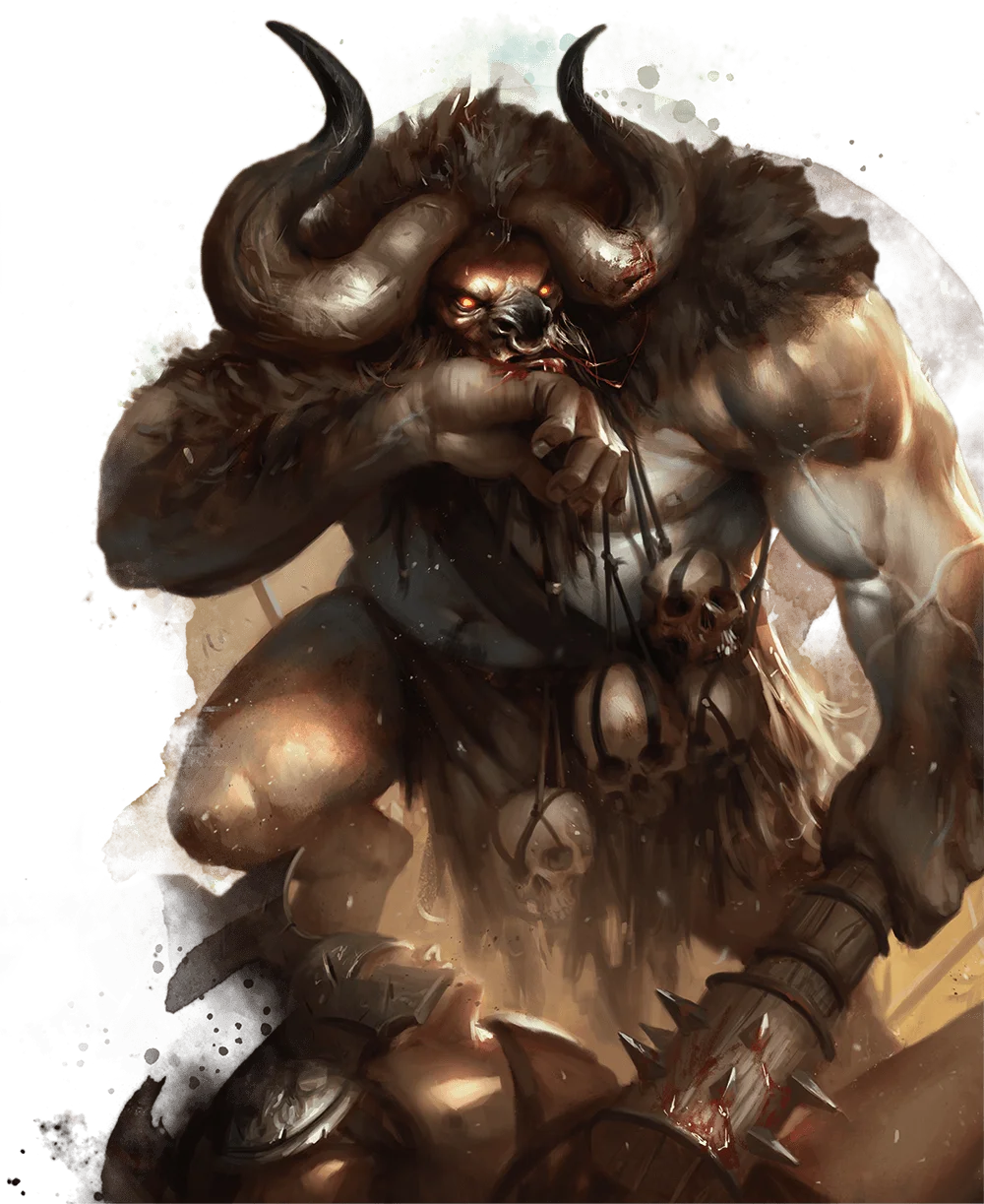
Canyon Shrine Map
Map 4.10 shows a wild canyon that is holy to Mogis. Caves long used by bandits, minotaur raiders, and predatory beasts carve their ways through the craggy walls. Many of the caves are connected, but some are isolated. Ledges cling to the canyon’s sides. Reaching some of these natural platforms requires a dangerous climb over jagged rocks.
The top of the canyon has a few scrubby plants, but is otherwise barren. Flying monsters, such as chimeras, griffons, harpies, and manticores, make nests on the sides of the canyon. At the bottom of the gorge, a river cuts through the stone.
A massive statue of Mogis is carved into an out-of-the-way canyon wall. Signs of a bloody battle and the stains of countless sacrifices lie before it.
Gallery
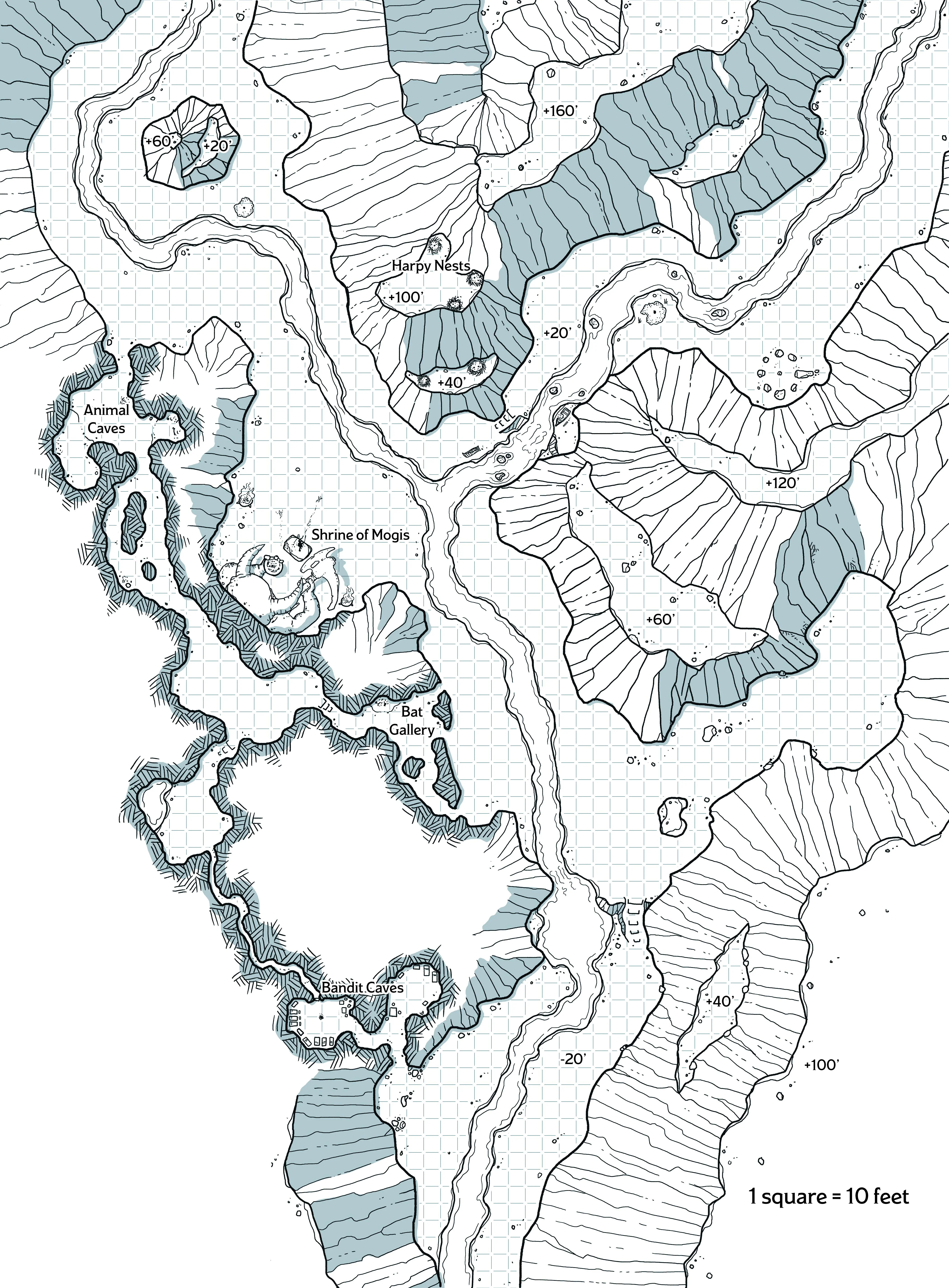
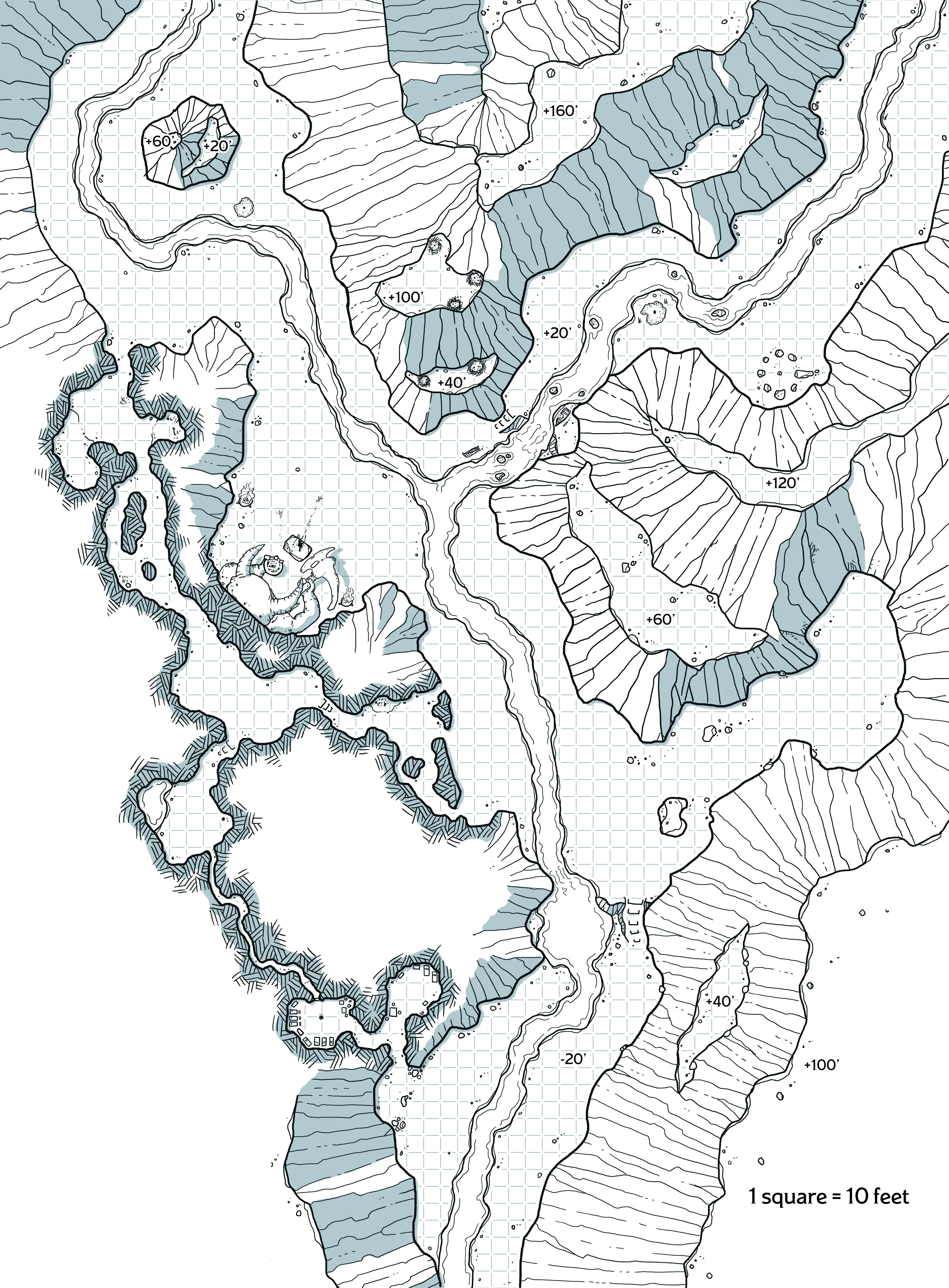
Canyon Shrine Villains
Most of the residents in a canyon shrine make excellent adversaries. The sapient beings are clever and cruel, and the monsters of animal intelligence are as savage as the god of slaughter himself. Examples of such villains appear on the Canyon Shrine Villains table.
Nylea

Wild and unpredictable, Nylea can bring both blessings and hardships to the heroes whose lives she touches.
Nylea’s Champions
Nylea is one of the more active of the gods in the mortal realm, but she can’t be everywhere at once. Her heroes are her eyes, ears, and arrows on Theros, defending her interests anywhere and anytime she can’t.
The Nylea’s Quests table suggests a few adventures the god’s champions might involve themselves in.
A Nylea Campaign
A campaign in which the player characters are champions of Nylea will feature great feats of heroism in defense of nature. Nylea might instruct the characters to defend a corner of the Nessian Wood, pitting them against poachers, sport hunters, unnatural abominations, and ordinary people who want to develop the wood for mortals’ use. Nylea doesn’t care if the characters are opposed by simple peasants, or by monsters beyond the characters’ ability to cope with. They might need to get creative, calling upon Nylea’s own servants—such as hydras—to beat back the more powerful threats.
At the beginning of the campaign, the heroes might help defend Setessa from an attack that also threatens all of the Nessian Wood, which is their main concern. Hailed as heroes even though their defense of the polis was a secondary goal, they continue to enjoy Nylea’s favor as they confront greater threats. Perhaps they will align themselves with the leaders of the polis, or maybe Setessa will eventually find itself at odds with the wild ideals of Nylea.
Nylea’s dictates are simple but inflexible, and her champions find that her favor turns to wrath if they neglect their duty to the forest. She might simply banish them from the Nessian Wood, or she might become a villain, with the characters either seeking to appease her or trying to find a new divine patron to protect them.
Readaloud
Myth of Halma, Nylea’s Emissary
One day, Nylea came upon an enormous lynx lounging in the shade of an olive grove, blood on its maw, the carcass of a colossal boar beside him. The boar had been one of Nylea’s favorites, and what followed was a legendary chase where the god pursued the lynx through the heart of the Nessian Wood. Whenever Nylea drew close, the great cat vanished into the forest’s shadows. Seasons passed as the god loosed arrow after arrow at the lynx, but her efforts remained fruitless. Nylea eventually abandoned the hunt, only to find the feline waiting for her at the edge of a stream the next evening. The hunt resumed, but with the same outcome. It continued like that for some time, until Nylea began to grow fond of the beast. Soon, the pair started hunting together, and the lynx, which she called Halma, became one of Nylea’s confidants.
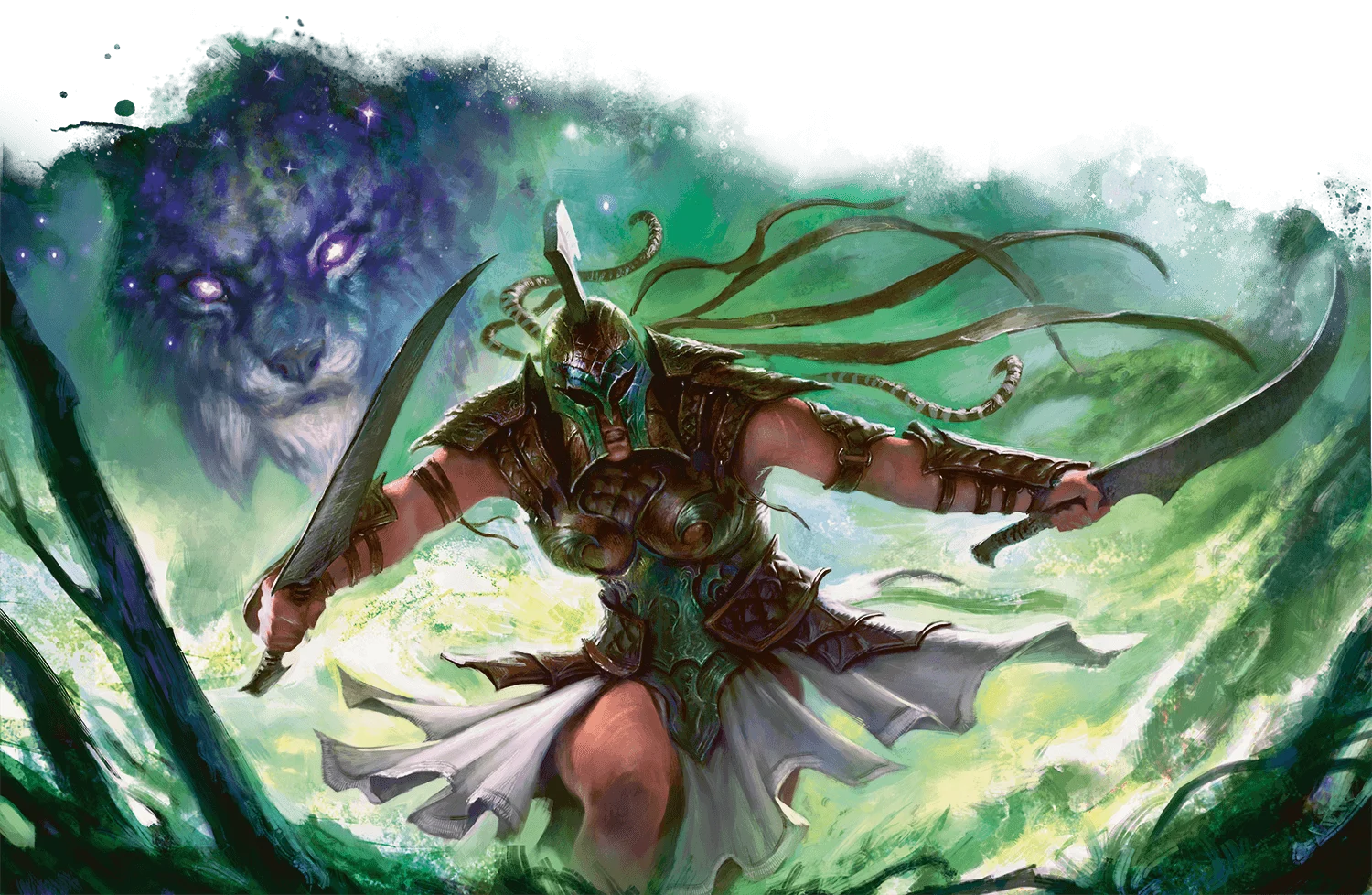
Nylea’s Villains
From Nylea’s perspective, her desires are benign, but her unwillingness to favor sapient beings over wild animals and plants sometimes makes her a figure of menace. Those who dwell in permanent settlements often do not understand or appreciate the boundaries Nylea sets, and can run afoul of her even with the best intentions.
Nylea’s followers might obsess over the idea of wiping out civilization, turning them into agents of destruction. On a smaller scale, they might twist her patronage of the hunt into an excuse to enact vendettas against those who wrong them. Even natural creatures can become threats when the balance of nature is disrupted, and Nylea herself could send champions to intervene when her own creatures and followers turn toward evil.
The Nylea’s Villains table suggests a variety of foes that might arise from among the god’s followers.
Nylea’s Monsters
Nylea’s forests are home to many dangerous creatures, both natural and supernatural. Adventures that take characters into the Nessian Wood might pit them against monsters such as those that appear on the Nylea’s Monsters table. Additionally, Nylea might turn any natural creature—from the rarest of exotic creatures to suddenly-bloodthirsty livestock—against those who offend her.
Nylea as Campaign Villain
As a villain, Nylea is most likely driven by transgressions against her realm, whether by mortals or by other gods. She might begin her retaliation by barring all sapient creatures from the Nessian Wood, or by visiting punishment on an entire polis for the actions of a few citizens. From there, she could easily end up in an escalating conflict against mortals across Theros, drawing in multiple gods and threatening the idea of civilization itself. Player characters who are champions of other gods could find themselves marked for death by hunters who have a grudge against their patrons.
Nylea’s Divine Schemes
The Nylea’s Divine Schemes table suggests a few ways in which Nylea’s whims might impact the mortal world.
Forest Shrine
Forest shrines honoring Nylea are found in the woodlands of Theros. These places have few features made of stone or steel. Instead, the druids and nymphs who care for the shrines use magic to direct the growth of plants, producing beautiful natural altars, sculptures, and shelters. These creations, wondrous as they are, don’t dominate the layout of a shrine, since Nylea and her worshipers prefer to let nature flourish untamed at her holy sites.

The druids that occupy a shrine sometimes leave for days at a time to go on a mission, but they never leave the place without guardians. Beasts, plants, and nymphs are always on the lookout for intruders.
Forest Shrine Adventures
A forest shrine is a remote place with inhabitants who are difficult to impress. Simply finding and getting permission to enter a shrine can be an adventure in itself, since the druids and nymphs that guard the place are wary of outsiders and ready to put down those who take needlessly from the forest.
Characters who are accepted into a forest shrine find it to be a guarded, peaceful place, an excellent shelter against enemies and weather. Sacred animals and hunting weapons are protected in the shrines. The druids might be willing to share knowledge and forest secrets with those who gain their trust. The Forest Shrine Adventures table offers ideas for adventures that could occur in or around such a place.
Forest Shrine Map
The forest shrine shown in map 4.11 is a clearing surrounded by a grove of wild olive trees. A pond at the center is fed by streams coming from the north and south. Arches of grapevines grow up from the ground, each creating a small, sheltered area for private conversations. Several bushes sculpted in the shape of Nylea and predatory forest animals, such as the bear and the wolf, are scattered throughout the shrine. These plants can come to life as guardians if the shrine’s protectors call upon them.
An old, twisted lemon tree grows near the hunters’ quarters. Bows, spears, and other hunting weapons hang from the tree’s branches alongside a beehive. South of the tree is a firepit with a few boulders surrounding it for seats. Nearby, a dense, flowering bush shaped as an altar stands before a simple log table and wood rack used in dressing animals.
Several hunting blinds lie hidden in the forest surrounding the shrine. From these camouflaged posts archers keep watch for game and threats.
Gallery
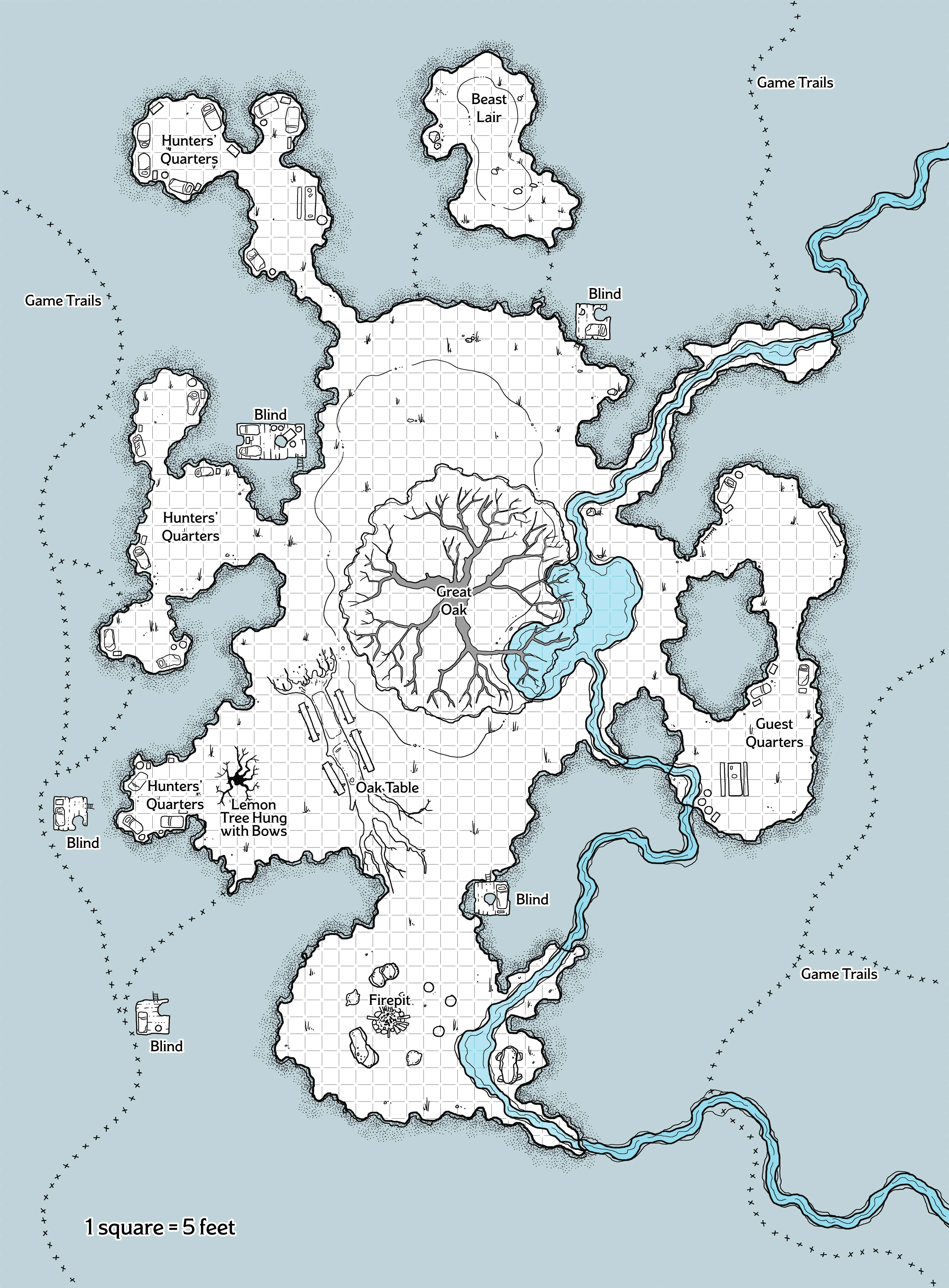
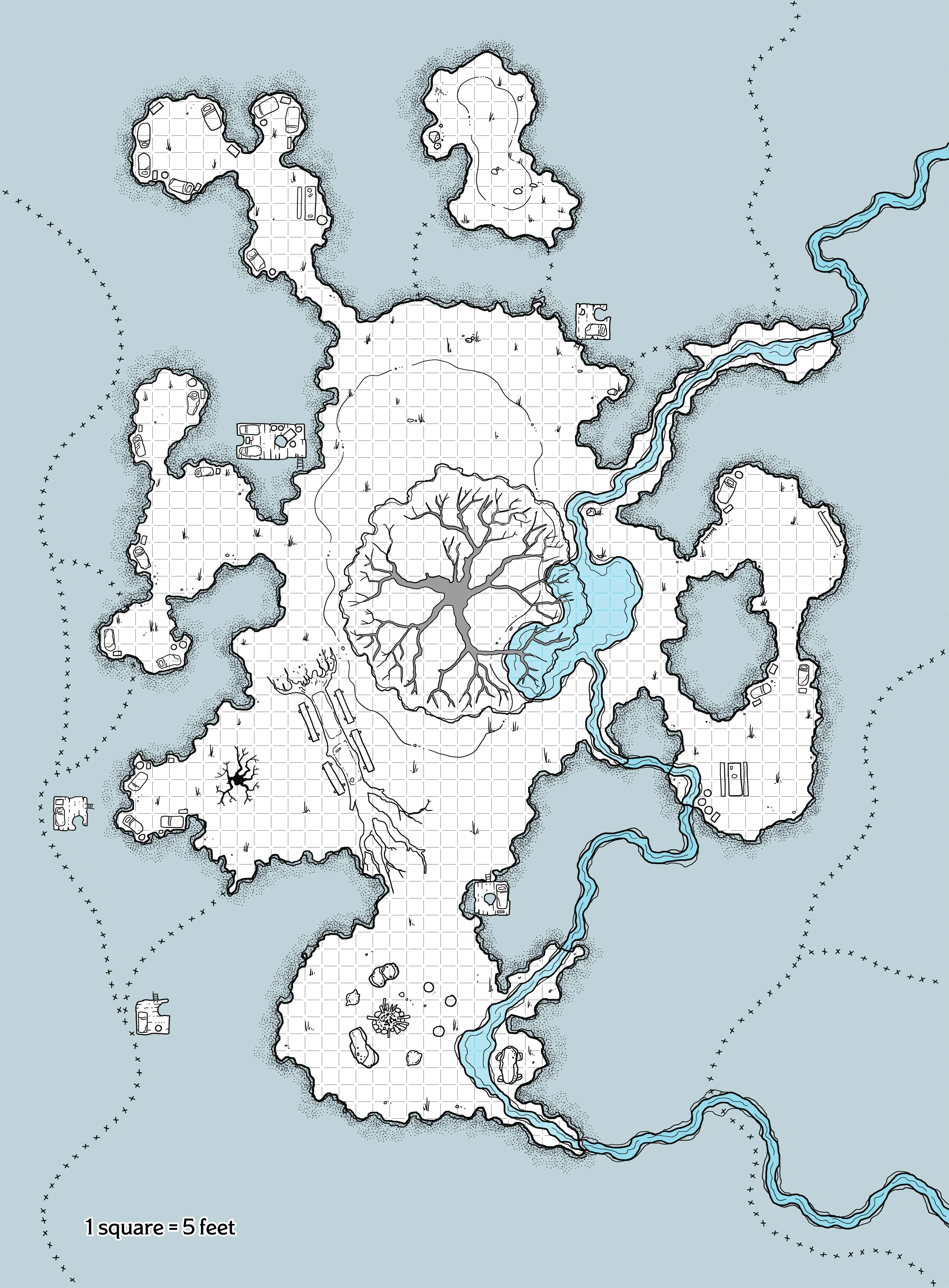
Forest Shrine Villains
Villains in a forest shrine are likely either trying to destroy nature or using the power of the natural world to harm others. Examples of such figures appear on the Forest Shrine Villains table.
Pharika

The god of affliction cares little for mortals, seeing them as test subjects whose agony, resilience, and defiance all contribute to Pharika’s efforts to reveal reality’s secrets.
Pharika’s Champions
The champions of Pharika are custodians of her experiments, keepers of her secrets, and practitioners of her esoteric arts. They serve as doctors, herbalists, and advisors as often as they do assassins and poisoners.
The Pharika’s Quests table suggests a few adventures the god’s champions might involve themselves in.
A Pharika Campaign
Pharika delights in testing the limits of mortality, vacillating between helping and harming innocent subjects. Characters working in Pharika’s service might travel to sites of suffering and death in order to provide relief, such as by slaying the monstrous guardians of a place that holds the medicine needed to cure a plague. Then, before leaving the area, they or the god’s other servants might sow the seeds of a new threat.
Despite any aid they provide, Pharika’s servants are likely viewed with suspicion. In obtaining rare ingredients or defending researchers, the characters might come into conflict with those who can’t see the bigger picture—often followers of Heliod or Ephara. Undermining these faiths might be the best means of preserving Pharika’s favorite wildernesses and laboratories.
Ultimately, Pharika might call upon servants to abandon worldly scruples in favor of deciphering one of Theros’s great secrets. To accomplish this, the god might send the characters into the Underworld or Nyx to answer a burning cosmic question.
Pharika’s Villains
Even the most well-intentioned of Pharika’s healers can be hiding a venomous ulterior motive, and the same hand that stitches the characters’ wounds one day might try to slit their throats the next. Pharika encourages her followers to seek balance in administering their “cures,” spreading afflictions to counteract excessive prosperity at least as often as they provide life-saving help to those on the brink of death. All the while, Pharika watches with interest to see how mortals contend with both good fortune and misfortune, gleaning new knowledge through every cry of elation and every death rattle.
On occasion, Pharika’s followers might seem to be beneficent when they ease others’ suffering or cure a pandemic. Yet they do so indiscriminately, meaning that these cures could also save the lives of terrible beasts and unrepentant villains.
The Pharika’s Villains table suggests a variety of foes that might arise from among the god’s followers.
Pharika’s Monsters
Serpents, rare magical beings, and poisonous creatures number among Pharika’s favorite servants, and medusas and basilisks hold special places in her esteem. The Pharika’s Monsters table presents just a few foes likely to serve the god’s will.
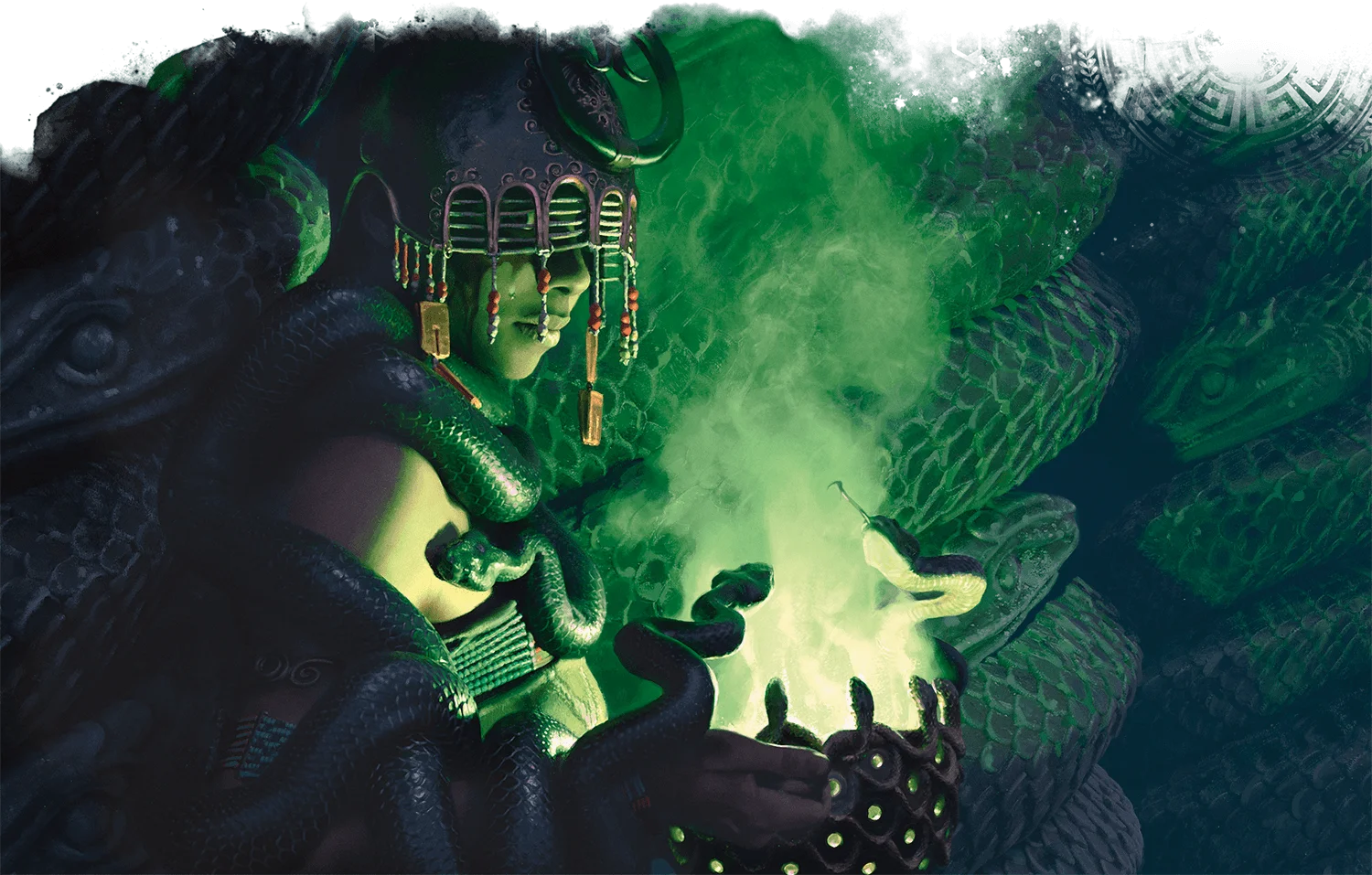
Pharika as Campaign Villain
As a campaign villain, Pharika might conduct experiments in mortal resilience and curiosity, tests that unfold over generations. The characters might spoil one of these experiments, making them the target of Pharika’s ire. While tormenting mortals might seem petty, the perils she puts them through could also be a way of toughening up the characters to face greater threats. As the campaign progresses, Pharika could evolve from antagonist into an unlikely patron.
Pharika is also an excellent partner for a range of other divine antagonists, lending her support in exchange for future favors. However, with the right overtures and services, the characters might entreat her to betray a client, turning her against a new mutual enemy.
Pharika’s Divine Schemes
Pharika has hundreds of ongoing schemes and experiments, any number of which might come to fruition in the near future. The Pharika’s Divine Schemes table describes several ways her deadly plans might complicate adventurers’ lives.
Healing Pools
Healing pools are naturally occurring springs and tidal pools said to have magical curative properties because Pharika has blessed them. Sick or injured people come to the pools and leave an offering for the god with her priests before bathing. If Pharika deems an offering worthy, the waters rapidly cure diseases, heal wounds, and sometimes even remove magical curses. If the god finds the offering unworthy, the waters poison the bather in some way, making their plight worse. If a person who wants to bathe has no offering for the god, that individual can offer themselves or a captured beast as a subject for the priest’s medical experiments.
Many healing pools are in remote locations that are difficult to reach, such as hot springs at the top of a volcano or tidal pools on a monster-infested island. A priest of Pharika, often a medusa, usually watches over the pool. The priest’s chambers are often in a building or a cave near the pools. Such places are part living quarters and part medical and alchemical laboratory, where the priest makes medicines and poisons and performs experiments on beasts and humanoid subjects.
Healing Pools Adventures
Sick or injured characters might have good reason to seek out healing pools when a malady is beyond their ability to treat. Medical tests that are being conducted near healing pools could also present opportunities for adventures involving rare cures, new poisons, and experiments gone awry. The Healing Pools Adventures table suggests ideas for adventures in such a place.
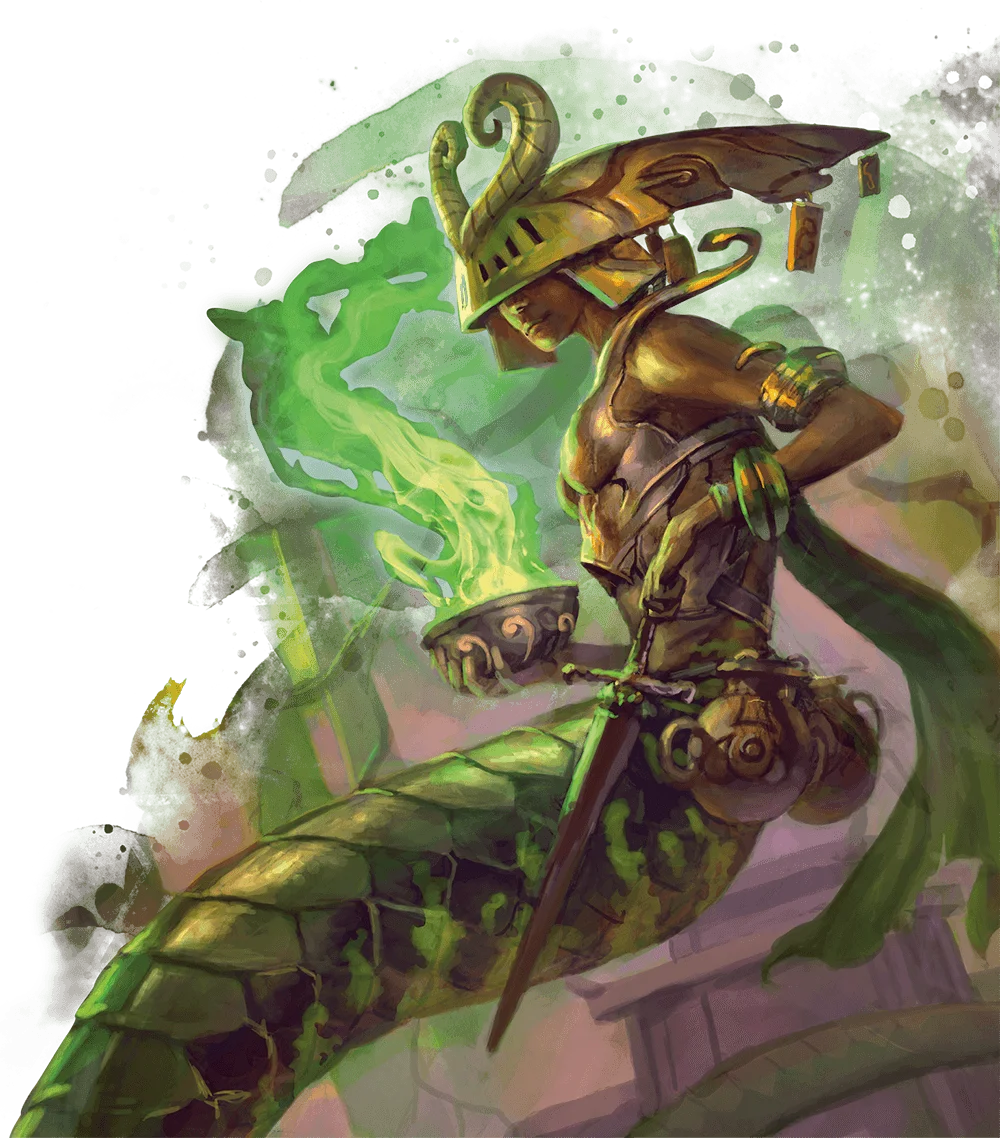
Healing Pools Map
The healing pools shown in map 4.12 are located in an underground cavern, accessible through a wide hole in the cavern’s ceiling that leads to a shaft connected to the surface. The pools have varying shapes and depths, with a bronze statue of Pharika holding out a bowl for offerings overlooking many of them. One small but deep pool contains an underwater tunnel, which leads outward and then upward to a dry cavern that serves as the priest’s chambers.
In crude laboratory above the pools, a stone table with restraints is used for experiments on humanoid subjects. The cages lining the walls are meant for beasts used in experiments. Secret passages connected to these chambers connects to the pools and the surface.
Gallery
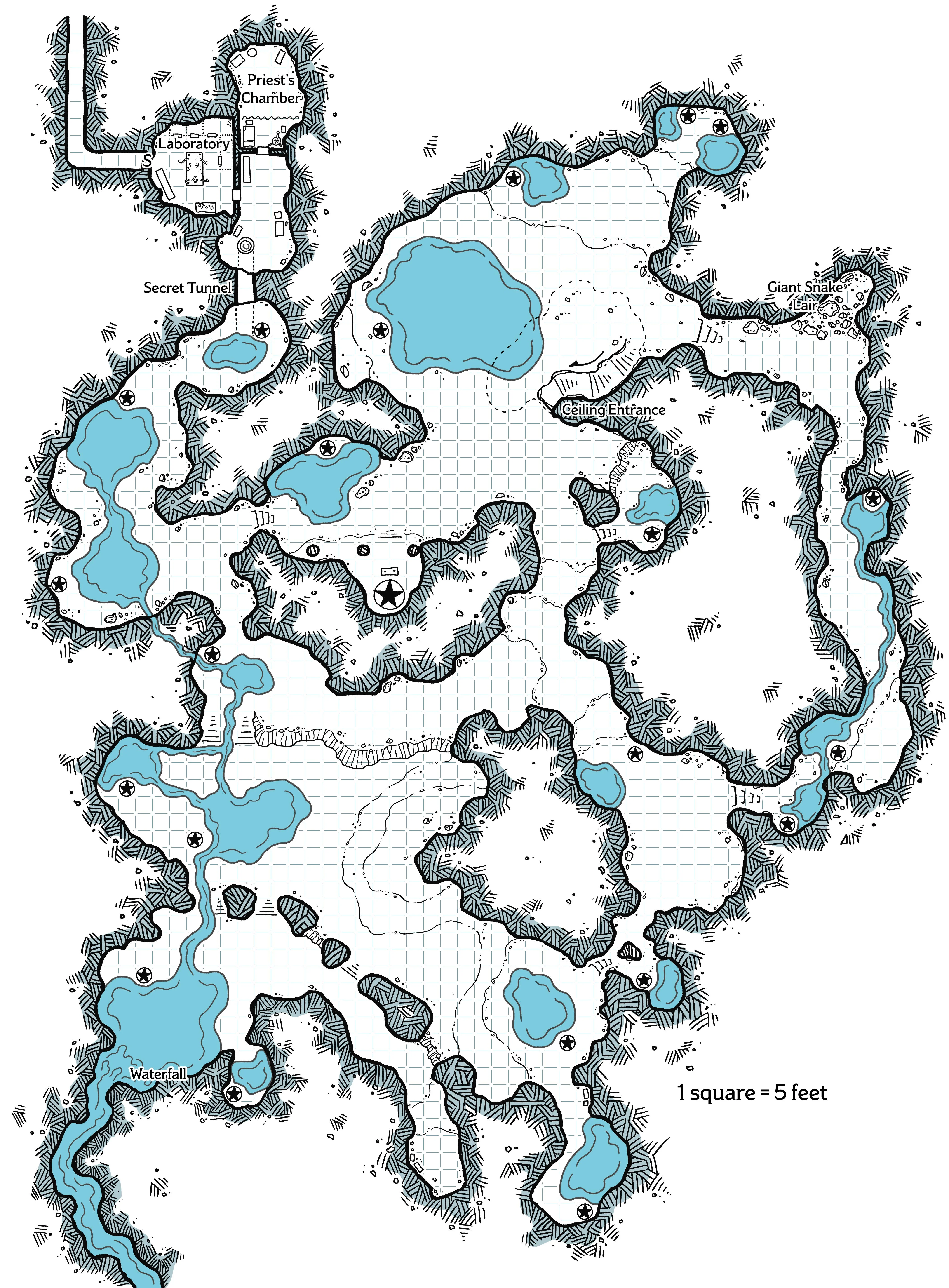
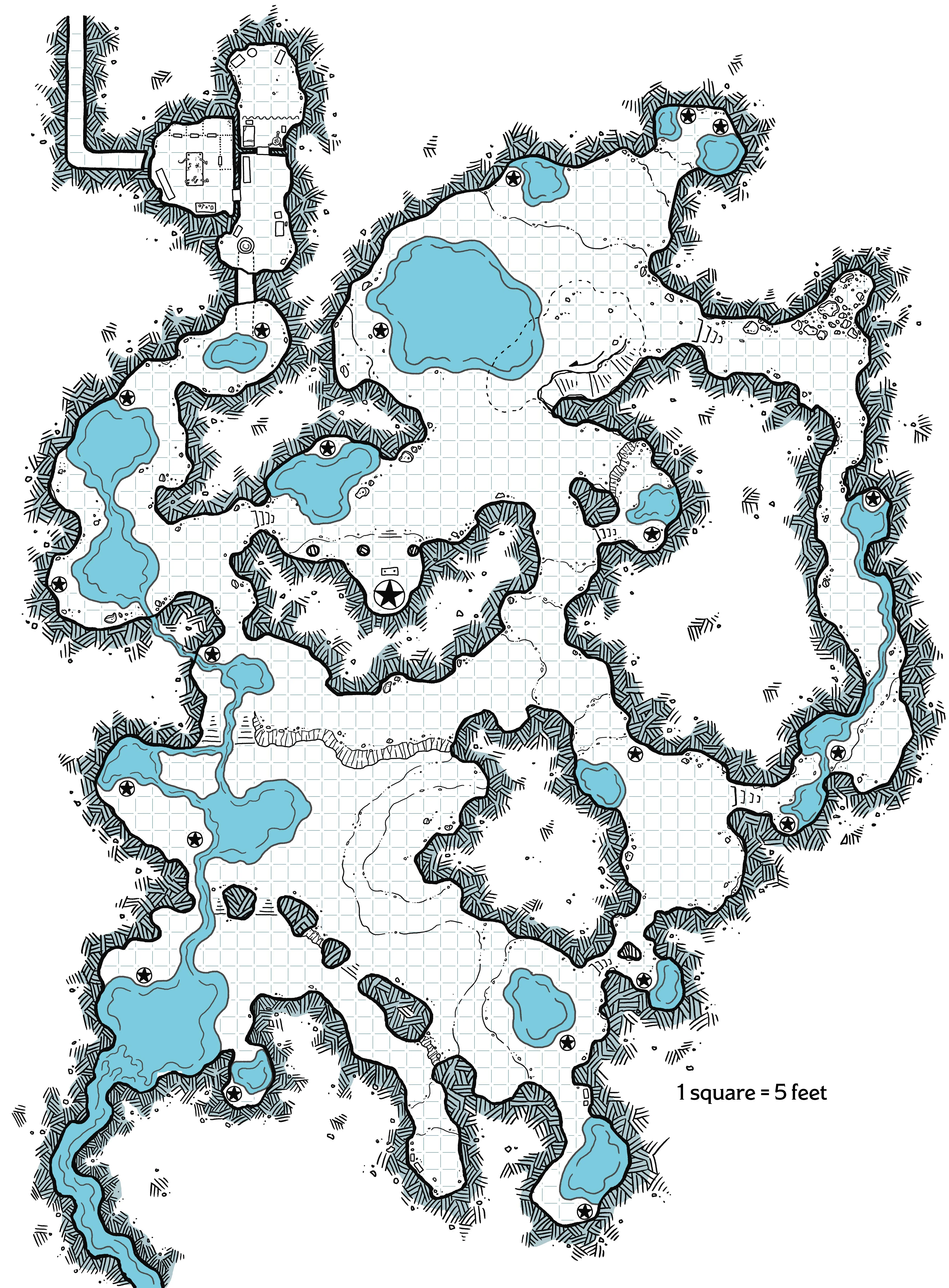
Healing Pools Villains
Villains at healing pools are usually interested in healing themselves, harming others, or controlling others’ access to the pools. They might also take issue with the strange practices of the pools’ clergy. Examples of such villains appear on the Healing Pools Villains table.
Phenax
Cunning and deceitful, Phenax spins innumerable plots across all of creation. He enjoys upsetting the natural order of things, either by thwarting the plans of his fellow gods or secreting away information for later use.
Phenax’s Champions
Phenax’s champions are pawns in his grand game of lying, cheating, and deception. He takes particular pleasure in tormenting Heliod and Iroas, whom he regards with special scorn. Phenax’s servants have a tendency to show up at the most inconvenient times and places.
The Phenax’s Quests table suggests a few adventures the god’s champions might involve themselves in.
A Phenax Campaign
Phenax fits easily into the role of primary campaign villain. He also might be an unconventional and exciting patron of the player characters. Phenax is the archetypal outsider, and his champions might be tasked with disrupting the established order of a polis or aiding one of the necropoleis in expanding or dealing with various threats.
Plots and schemes are Phenax’s lifeblood, suggesting a complex, shifting campaign full of surprises and twists. For example, a simple heist could be the triggering event for a series of major conflicts between two rival temples that ends in a citywide conflagration.
Champions of Phenax could also serve as a bulwark against more aggressive gods who oppress or subjugate others. Alternatively, the party could be a band of freedom fighters resisting the tyrannical ruler of their polis. Even though Phenax traffics in lies and deceit, a morally gray campaign can be built around the use of illicit means to achieve righteous ends.
Phenax’s Villains
Servants of Phenax dot the world, largely staying hidden until they are needed to help spin the web of lies that advances his plots. His servants prefer to confront foes using guile, cunning, and planning instead of brute force. Phenax and his champions move with purpose, don’t draw attention to themselves, and use misdirection to keep foes guessing about when and where their next attack will come.
Phenax’s followers could be involved in the political machinations of a polis or the crimes of the local thieves’ guild. Investigating instances of gambling, smuggling, robbery, and fencing stolen loot might bring the characters into opposition against Phenax and his followers. Whenever possible, servants of Phenax try to stage their misdeeds in a way that implicates other faiths or groups, to stir up as much conflict and confusion as possible.
The Phenax’s Villains table suggests a variety of foes that might arise from among the god’s followers.
Phenax’s Monsters
Phenax is often associated with monsters and individuals that use cleverness and guile to overcome foes. The Phenax’s Monsters table presents just a few foes likely to serve the god’s will.
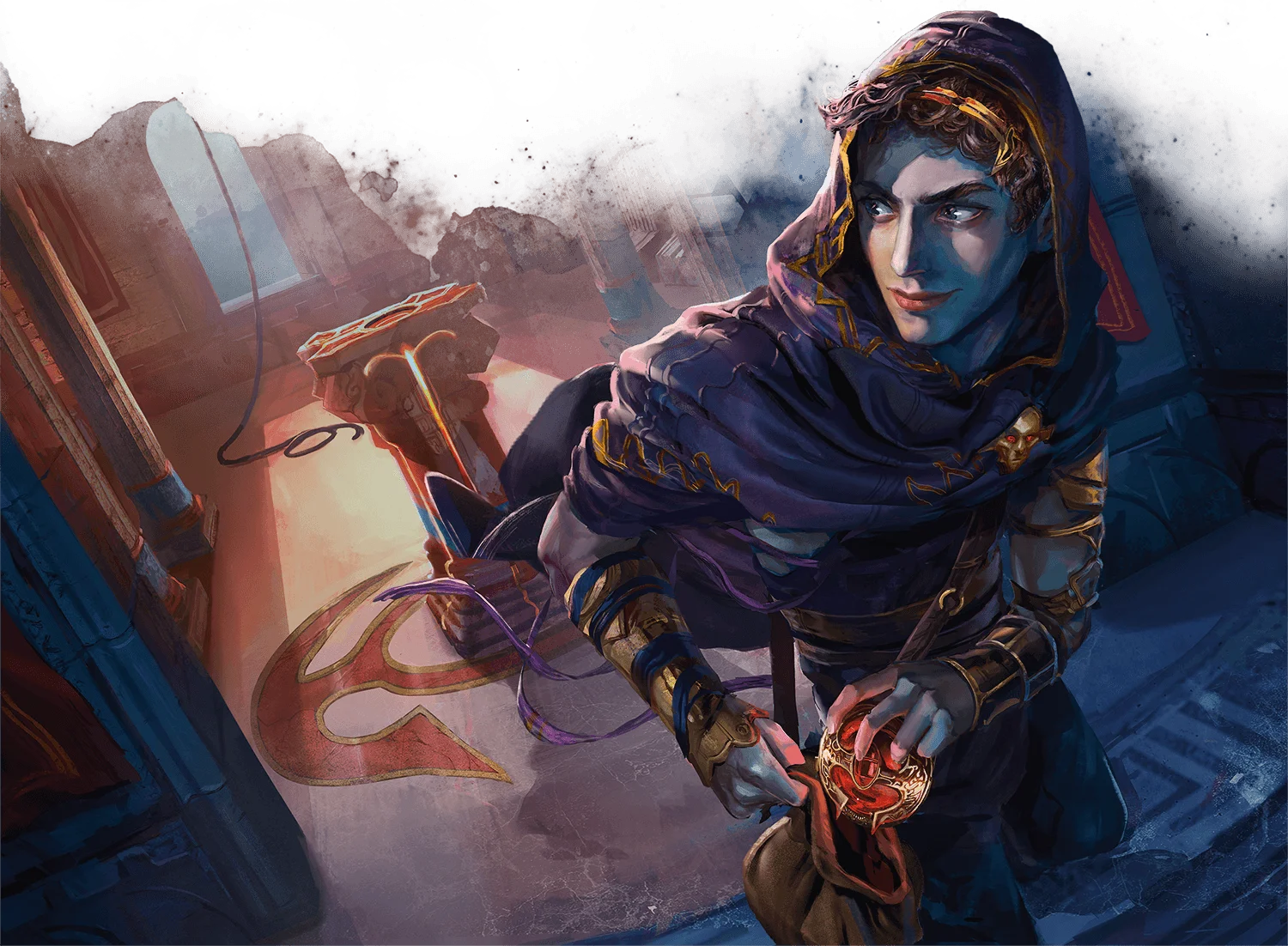
Phenax as Campaign Villain
Regardless of whether Phenax begins the campaign as a villain or turns against his champions during the course of play, he presents himself as a confounding, slippery foe.
As a campaign villain, Phenax might be driven by a desire to incite conflict against his fellow gods, usually to serve his own ends. Although Phenax doesn’t desire rulership over Nyx, he does love to hoard damaging secrets and powerful magic. Acquiring these coveted items always involves duplicity and theft, and sometimes murder. To Phenax, the ends justify the means. Upsetting the order of things is a worthy goal, whether it’s done as a means to a greater end or simply to enjoy the disruption caused by radical change.
The campaign’s objective might involve determining what Phenax is up to and thwarting his scheme or, failing that, dealing with the fallout. Whatever the objective, it will require the player characters to confront a being who was clever enough to escape the Underworld.
Phenax’s Divine Schemes
Phenax’s activities can have a wide-ranging impact on both the pantheon and the mortal world. The Phenax’s Divine Schemes table offers examples of the ways in which Phenax’s duplicity might have a mythic impact, catching adventurers in the middle of divine squabbles.
Amphitheater
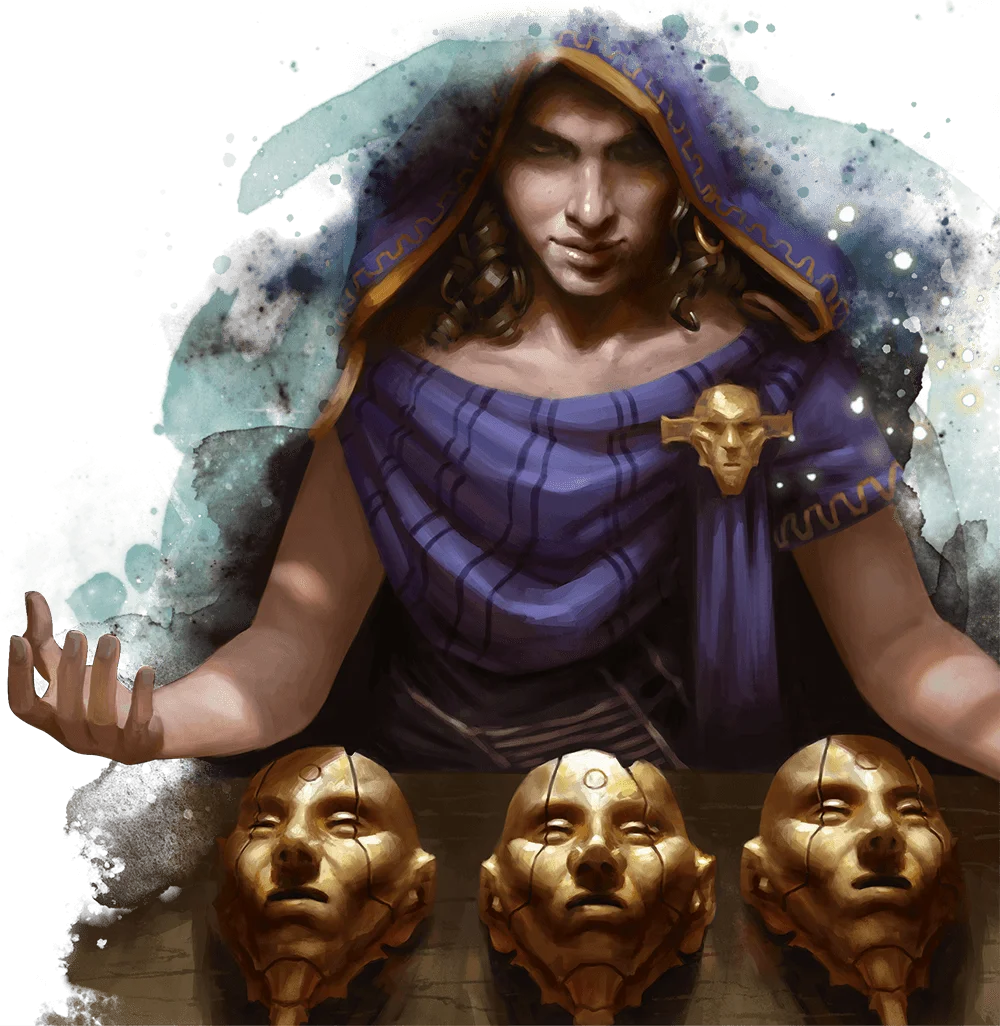
Music, dance, poetry, drama, comedy, and satire are all performed and celebrated in the amphitheaters of Theros. These public spaces are also the scene of secret hand offs, private meetings, and espionage. The amphitheater’s costumes, makeup, props, and hidden halls and entrances make it a good place for those who operate in the shadows to do so without arousing suspicion. Many performers moonlight as assassins, spies, and thieves, given their talents and resources, and as such many amphitheaters contain hidden shrines to Phenax.
Amphitheater Adventures
Adventures in an amphitheater often revolve around deception. Great performances get audiences immersed in what they’re seeing, lowering their defenses and allowing pickpockets and spies to work. Backstage, the performers and staff hide stolen goods and even bodies in plain sight among legitimate props, and they craft disguises for use outside the theater.
Theaters make great settings for social adventures. In a place where the rich and poor relax together, the characters can impress, blackmail, bribe, or steal from people of all walks of life. The Amphitheater Adventures table presents ideas for adventures in such a place.
Amphitheater Map
The amphitheater shown in map 4.13 is set in a natural depression that provides seating for the audience. The backstage area contains dressing rooms for the performers, a prop workshop, and a storage area filled with extra set pieces. Below, secret halls include space for the games and drinking one might expect from a typical den of iniquity, but it also disguises the barracks and training hall of a thieves’ guild devoted to Phenax, a shrine, and an escape tunnel for making a quick getaway.
Gallery
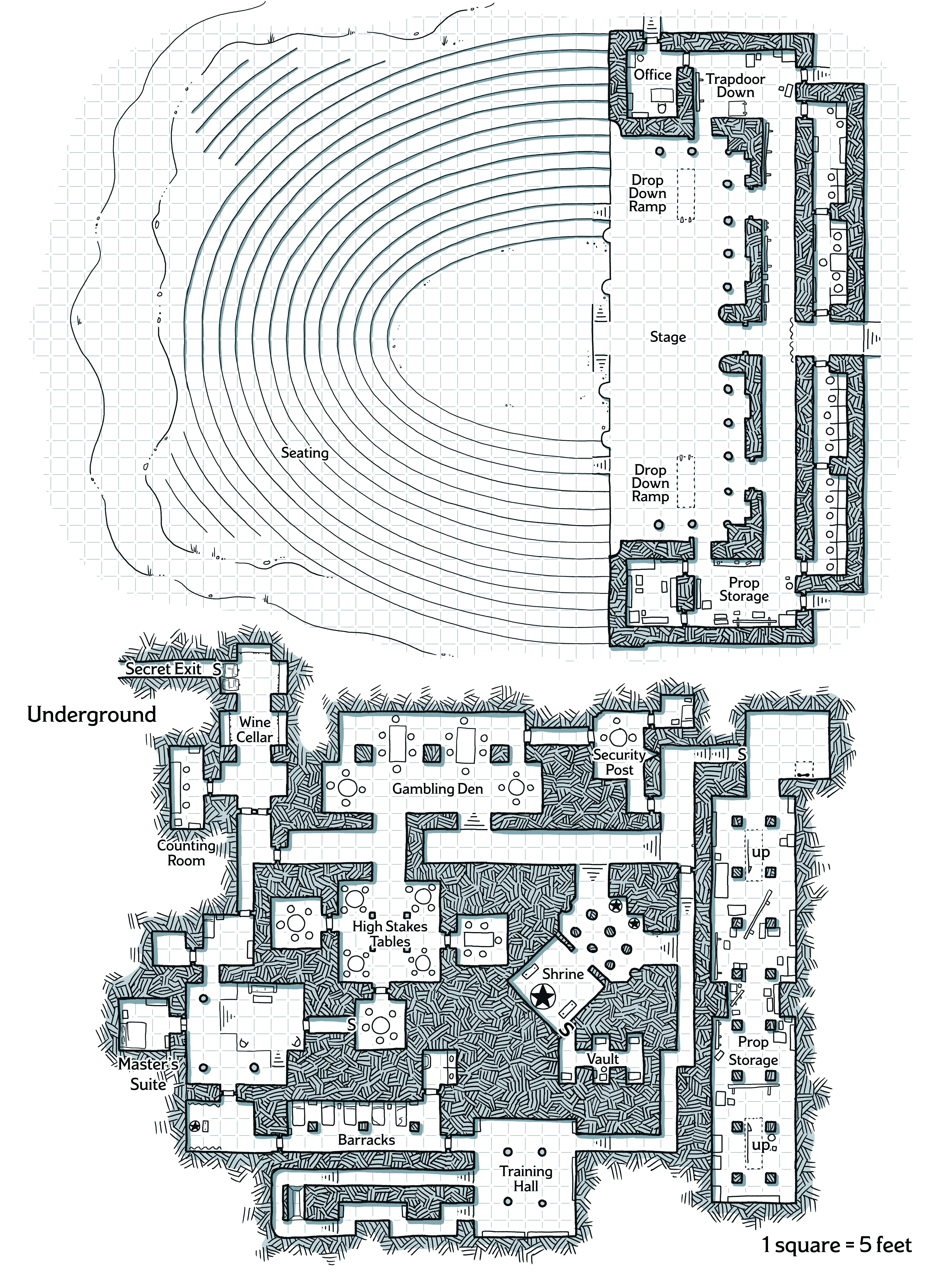
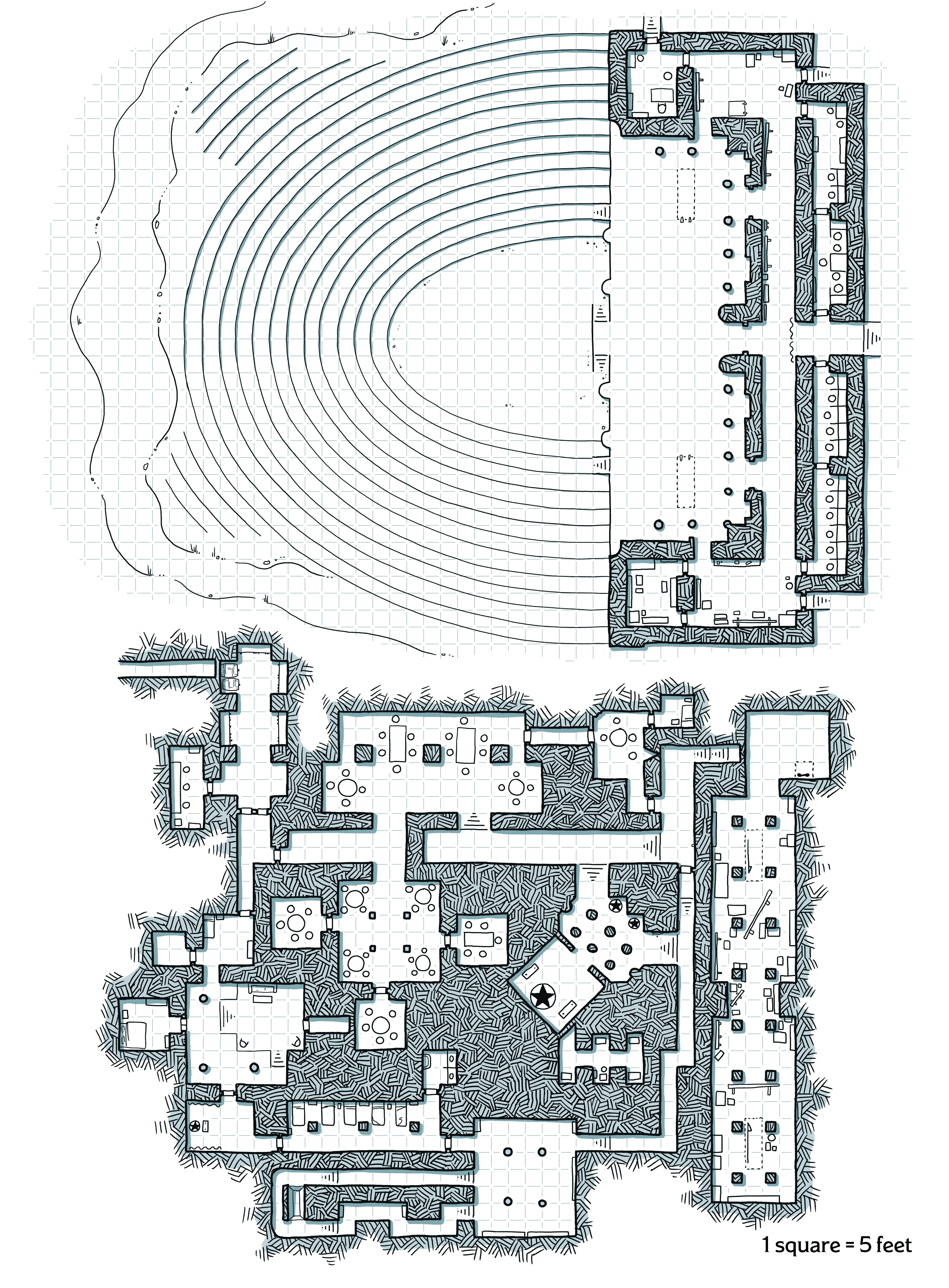
Amphitheater Villains
Liars, sneaks, and charmers often make their living as performers. Examples of such villains appear on the Amphitheater Villains table.
Purphoros

Impulsive and unsubtle, Purphoros is an unpredictable force in the lives of his chosen champions.
Purphoros’s Champions
Purphoros’s relationship to his champions is more that of a patron than a ruler. He chooses champions whose passions advance his interests in the world, and he grants them his blessings to use as they see fit in service to him. Purphoros is eccentric, however, and he could suddenly appear to hand down commands to his champions after months or years of silence. Priests, other followers of Purphoros, and regular people in need might also approach the champions requesting aid. Purphoros never rebuffs followers of other gods if their need is genuine.
The Purphoros’s Quests table suggests a few adventures the god’s champions might involve themselves in.
A Purphoros Campaign
A campaign structured around champions of Purphoros can feature the themes of freedom, self-expression, and passion, casting the adventurers as brave rebels fighting against tyranny and convention. Purphoros’s champions come from many walks of life, but they are united in their dedication to their god and his ideals.
A Purphoros campaign might begin with the adventurers being called together by a priest of Purphoros or a master smith to lend aid with an urgent matter. From there, the characters’ victories on behalf of Purphoros might arouse the ire of Heliod’s followers. Given Purphoros’s impulsiveness, conflict with the followers of other gods can quickly escalate from petty to violent.
Although Purphoros is usually even-tempered, his champions occasionally run afoul of his violent impulses. They might find themselves inadvertently in the path of one of his destructive rages, or they might earn his wrath more directly by displaying weakness or cowardice. Wayward champions are usually able to atone for their deeds and regain his favor when he is in a better temperament, but in extreme cases, they could be forced to seek refuge with another god, thereafter contending with Purphoros as a villain.
Purphoros’s Villains
Though Purphoros’s ideals are shared by many, the methods he uses to advance them can be brutal. His belief that creation necessitates destruction, combined with his cavalier attitude toward authority, make it easy for followers of the forge god to be seen as villains.
There are many paths to villainy in the name of Purphoros. The quest for ever finer works of craft can give rise to deadly rivalries. Resistance to lawful authority can become tyranny of another sort. And when passions become inflamed, giving in to them can lead to tragedy rather than triumph. Purphoros’s general hands-off attitude toward his champions means that groups of his followers could easily find themselves on opposite sides in a conflict, and in extreme cases Purphoros himself sends heroes to strike down those who stray.
The Purphoros’s Villains table suggests a variety of foes that might arise from among the god’s followers.
Purphoros’s Monsters
In addition to his followers, Purphoros is associated with a wide range of other creatures, such as those presented on the Purphoros’s Monsters table.
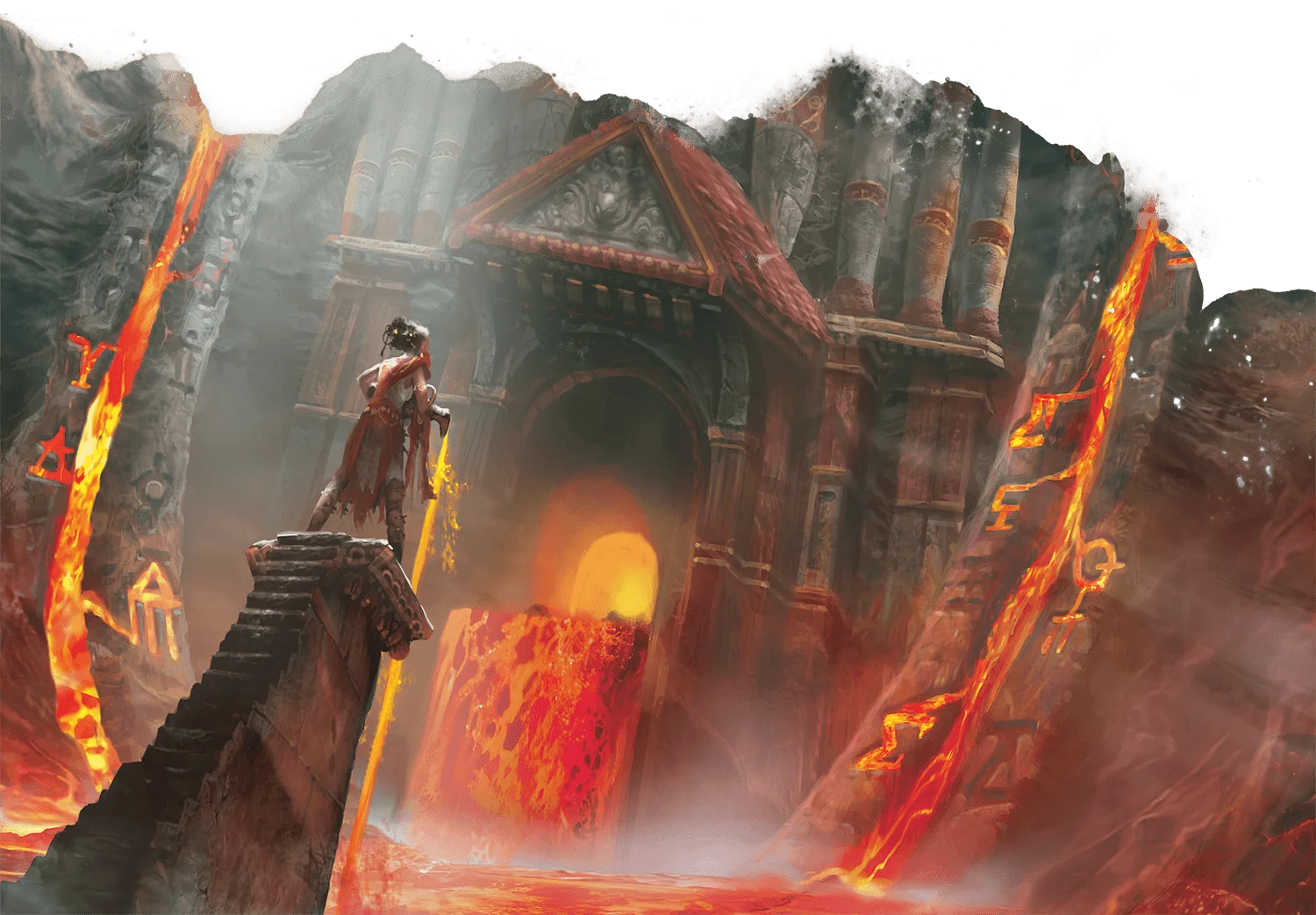
Purphoros as Campaign Villain
As a campaign villain, Purphoros is more likely to be driven by his impulses rather than by any coherent plan. He might begin by encouraging his champions to create works and spread tales that belittle the other gods. When other deities retaliate against his chosen, Purphoros reacts with rage, taking vengeance on other gods’ temples and priests across Theros. Assuming the player characters are champions of other gods, they might well find themselves the targets of Purphoros’s rage.
Purphoros’s Divine Schemes
Purphoros’s fits of passion can have a long-lasting impact on both gods and mortals. The Purphoros’s Divine Schemes tables outlines a few ways the god’s explosive temper might have dire consequences for the world.
Volcano Temple
The grandest temples of Purphoros burrow into the hearts of active volcanoes, being both places of worship and workshops. The volcanic vapors inspire artisans who worship at the top of the temple, then journey down to glowing forges where they craft armor, jewelry, weapons, and other works of art. The forges in a volcano temple get so hot they can work almost any material, mundane or extraordinary. The faithful of Purphoros often work on commission or sell their works, though some create strictly for themselves.
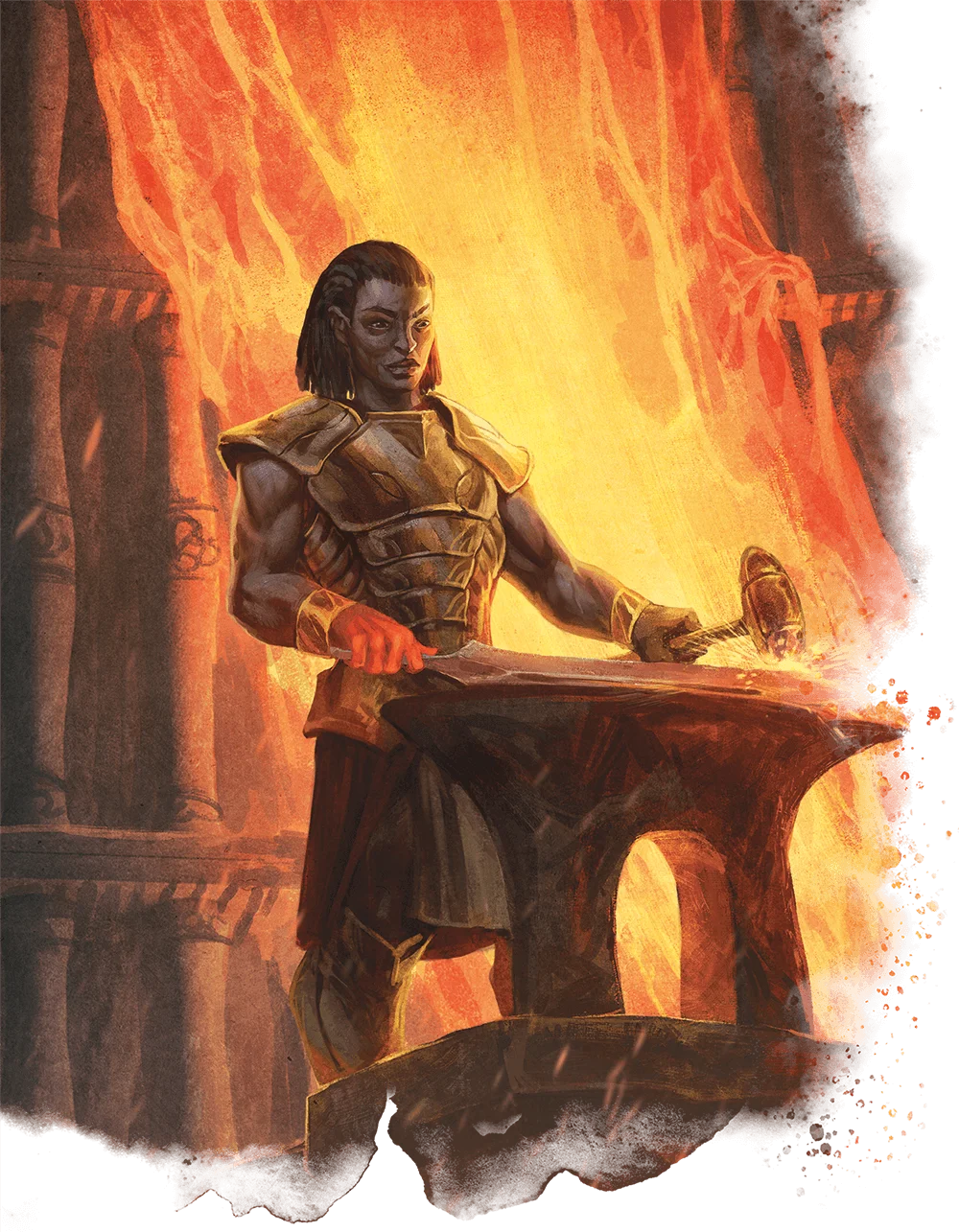
Just like the treasures forged inside them, volcanic temples are works of art. The priests who maintain the structures carve intricate designs with metal filigree in the stone walls and craft ornamental decorations that make each temple look more like an art museum than a cave inside a mountain. The priests know that one day the volcano will erupt, destroying their work but providing an opportunity to start afresh with newly inspired ideas when the cataclysm subsides.
Volcano Temple Adventures
An adventure in a volcano temple incorporates the danger of fire, the power of divine magic, and the allure of art and treasure. It is easy to get lost in the temple’s twisting, never-finished halls, minor eruptions pose a constant threat, and former temples ruined by eruptions now connect to dark places that monsters call home. Despite these hazards, the valuables most temples hold can be too tempting for some adventurers to pass up. The Volcano Temple Adventures table presents ideas for adventures that could occur in such a place.
Volcano Temple Map
The volcano temple shown in map 4.14 is reached by a switchback stair carved into the side of the volcano, which leads to an ornate edifice sculpted into the face of the mountain. The temple’s facade features massive pillars, two mighty statues, and a pair of towering, bronze-bound doors. The interior holds a complex of workshops, forges, barracks, and mines. The physical and spiritual heart of the place is a large cavern where a gigantic statue of Purphoros stands amid a pool of lava, with a raised altar facing a forge where smiths can complete their work in sight of their god.
Gallery
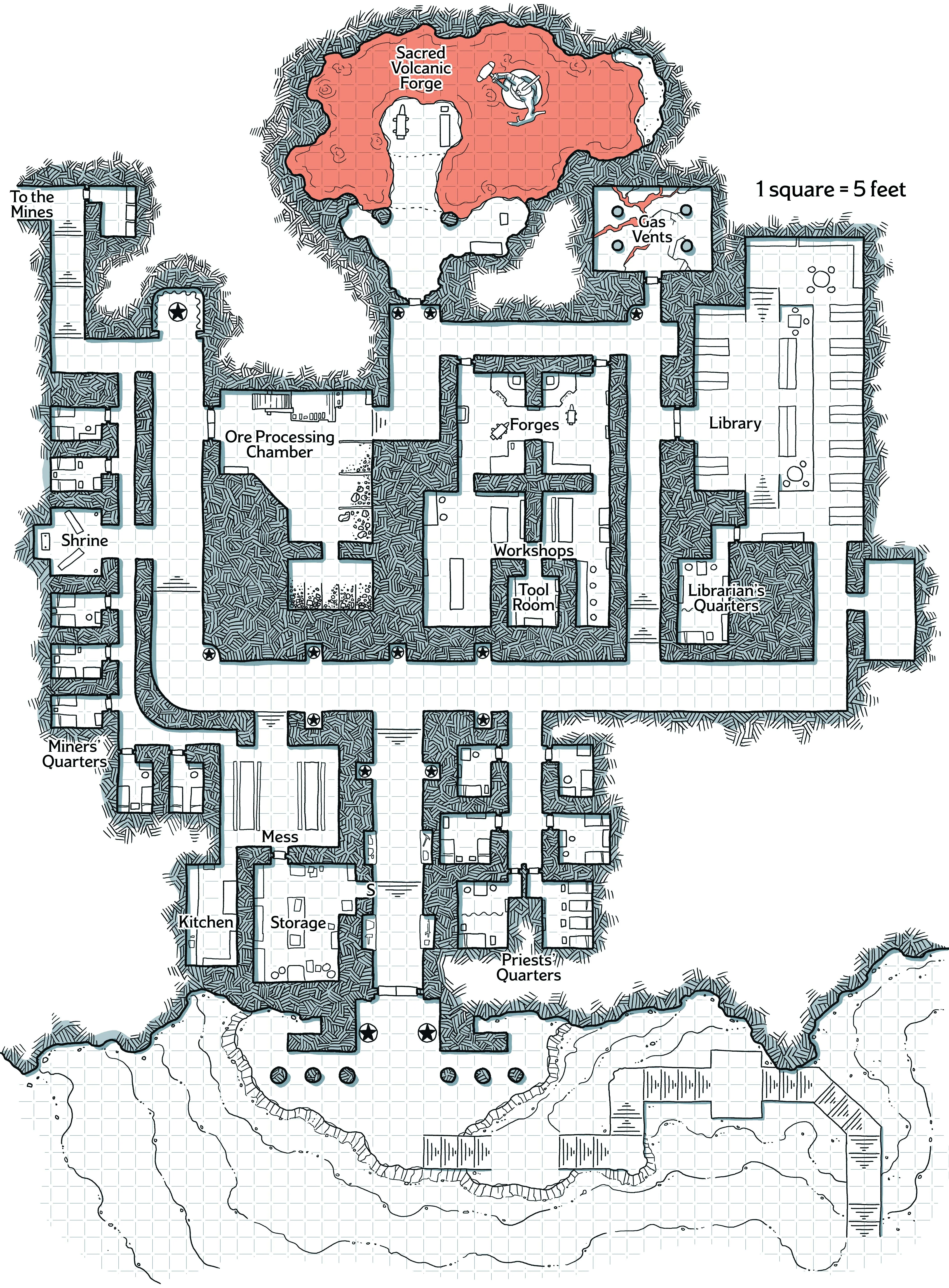
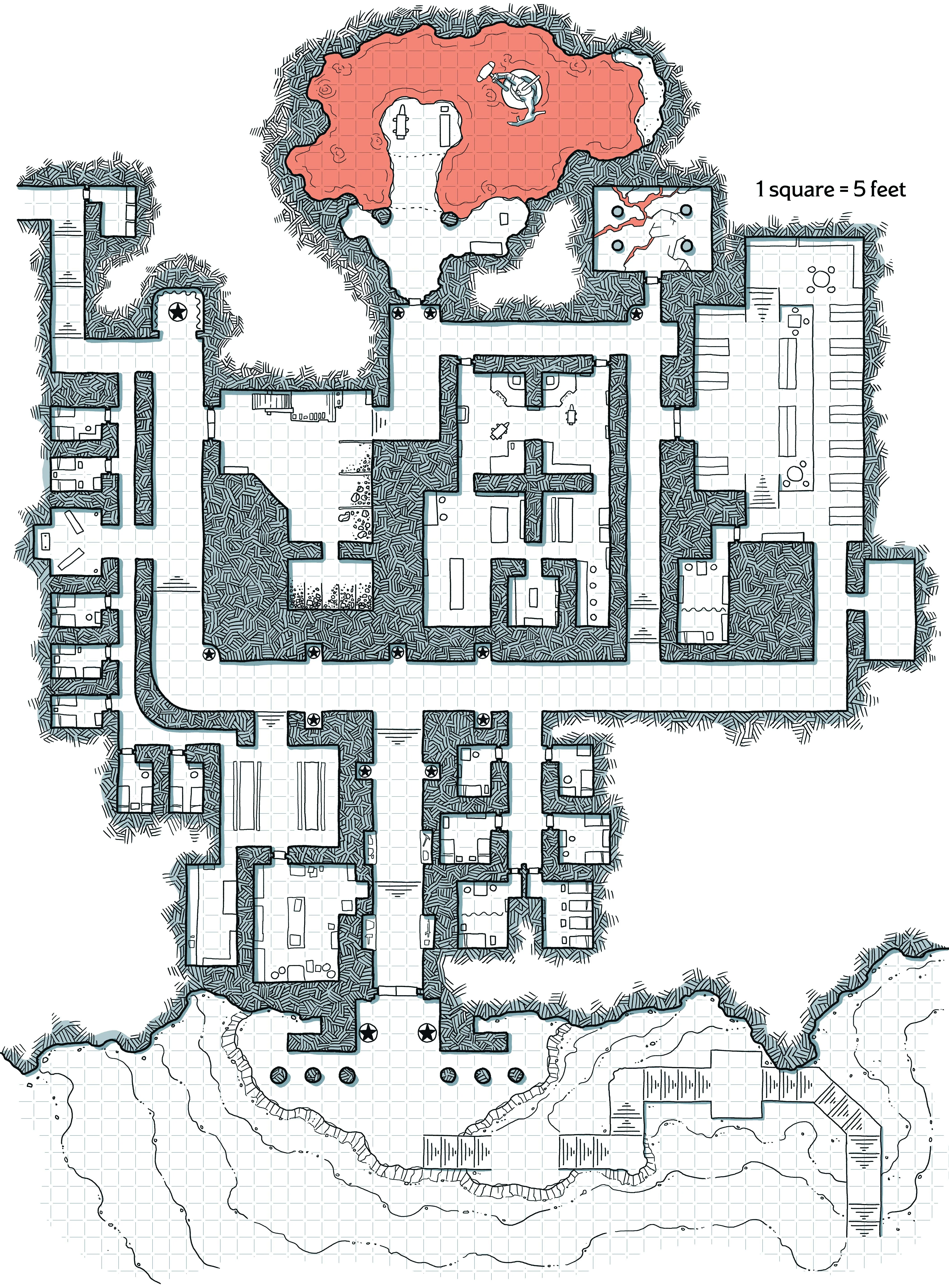
Volcano Temple Villains
Villains in a volcano temple are out to claim the place’s treasures or harness the mountain’s destructive power. Examples of such villains appear on the Volcano Temple Villains table.
Thassa

Thassa’s influence on the lives of her champions varies wildly, often influenced by her stormy whims. A champion of the god who serves dutifully might not attract her attention for years. Those who displease her, though, or who engage with those who have earned her ire, might find themselves the uncomfortable focus of her attention for an extended period.
Thassa’s Champions
Thassa’s champions are more expressions of her desires than the means for enacting long-term agendas. She disdains the status quo but also has no interest in committing to lengthy campaigns to overturn it. Rather, her champions’ work often serves her immediate interests or embodies her ire about some recent slight.
The Thassa’s Quests table suggests a few adventures the god’s champions might involve themselves in.
A Thassa Campaign
Thassa’s interests naturally pull the characters toward the sea, coasts, or lands affected by (or starved of) water. She makes a fantastic patron for sea-based campaigns, but also land-based journeys where the characters might spread Thassa’s desire for change and discovering ancient knowledge.
The campaign might begin with Thassa warning the characters about an impending attack or disaster involving a seaside community, leaving them to convince others and organize a defense. Some citizens might hail them as heroes, while others are suspicious of them—particularly when one of the disasters they foretell seems likely to be Thassa’s doing. They might get caught up in the schemes of other gods’ minions who resent their growing influence over the community.
Thassa knows nothing is permanent, including her champions’ service. If they fail to uphold her wishes, she will abandon them. In such a case, she might become a villain, trying to thwart the characters unless they can appease her or gain the protection of a new patron.
Thassa’s Villains
Thassa can take on a villainous role as much through indifference as through malice. Thassa takes revenge on those who wrong her, and she doesn’t particularly care who else is harmed.
Thassa’s followers might become villains for a vast range of reasons. Some become obsessed with recovering or keeping hidden the secrets of the deep. Others come to worship the ocean itself, with its uncaring depths and half-glimpsed monsters. Still others preemptively strike at those who risk offending the god—white knights, overprotective of their own deity.
The Thassa’s Villains table suggests a variety of foes that might arise from among the god’s followers.
Thassa’s Monsters
Any sea creature might answer Thassa’s call. In addition to any aquatic beast or being of elemental water, the Thassa’s Monsters table presents a few of her servants.
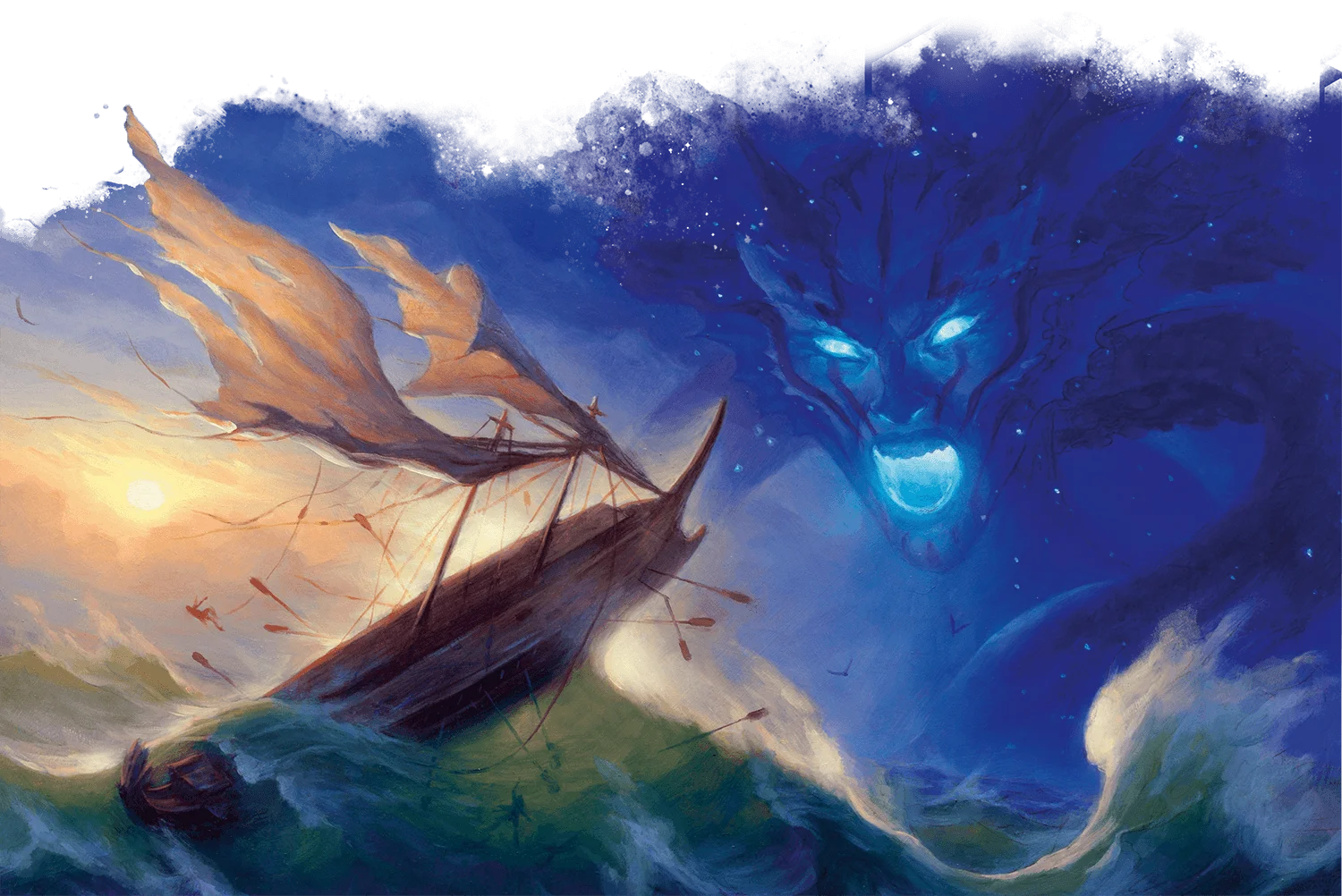
Thassa as Campaign Villain
Many of Thassa’s schemes begin with some perceived slight, or even a genuine threat, perpetrated by one of the other gods. But Thassa’s acts of intervention are seldom subtle, and her resistance to change sometimes causes her to let a situation worsen until she erupts in rage.
Thassa might begin by answering another god’s offensive act with a display of power—which might be viewed as a threat by other gods. An arrogant dictate from Heliod or developments in a coastal community might prompt Thassa to send forth a kraken, requiring that heroes fight it off. When the kraken is defeated, Thassa sends her champions to collect the beast’s heart so they might resurrect the creature. Characters might then face off against Thassa’s champions while they attempt this resurrection, or fight several younger krakens her champions are training. Such a campaign might end with the adventurers convincing other gods to placate Thassa, or paying penance in the form of treasure, service, or sacrifice.
Thassa’s Divine Schemes
The Thassa’s Divine Schemes tables offers examples of how the god’s whims might have ruinous impact upon the world.
Coastal Temple
Thassa’s temples are often located in coastal areas, to accommodate both her land-dwelling worshipers and her faithful who live beneath the waves, such as tritons. These houses of worship often make use of natural caves and coves that demonstrate the power of the sea over the passage of time. Wave-worn rocks, tidal pools, stalactites, stalagmites, coral reefs, and other marine features are all incorporated into the decor of a temple.
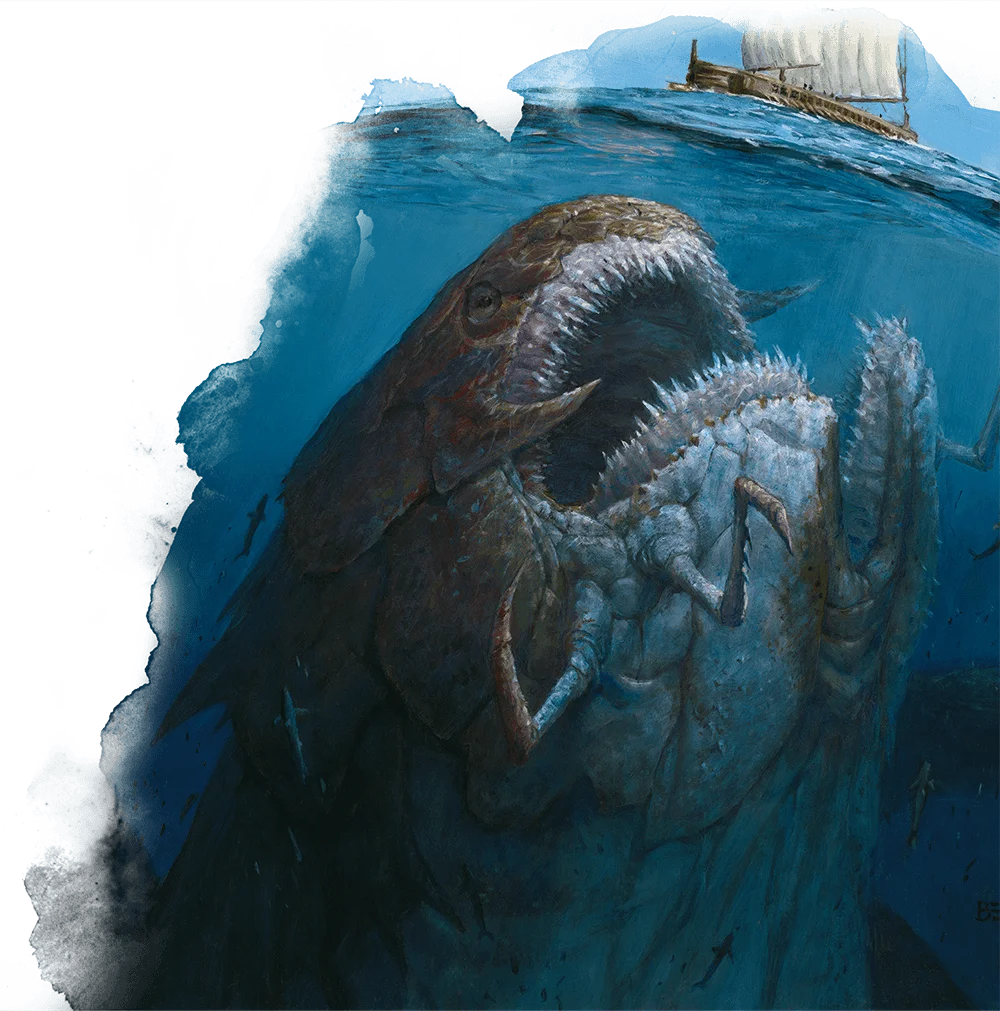
Most coastal temples include chambers that are underwater at high tide. Worshipers sit in these places at low tide and meditate on what the future might hold while the water rises around them. They leave offerings to Thassa in these places, which are carried out to sea as the water recedes.
A coastal temple is where people come to contemplate the sea, the passage of time, and the natural world while enjoying the sound of the waves, the sight of the sea’s sculptures, and the refreshing feeling of cool water.
Coastal Temple Adventures
Fierce tides and sudden storms make coastal temples potentially hostile places for the land-dwelling faithful. No worshiper, aquatic or otherwise, is safe on the rare occasions when a shark or something worse comes up from the depths.
Adventurers could come to a temple to clash with a group of Thassa’s faithful, which include pirates, cultists who worship krakens, and other unsavory types who sail the waves or swim beneath them. Characters might also to come to such a place to meditate and listen to what the sea tells them. The Coastal Temple Adventures table offers ideas for adventures in such a place.
Coastal Temple Map
At high tide, the coastal temple shown in map 4.15 is covered in a few inches of water, some of which gets trapped in depressions when the tide goes out. These shallow pools sometimes contain colorful fish, crabs, shells, and flotsam, any of which Thassa’s followers might consider to have divine meaning. The largest cavern boasts a massive coral altar where the sea god is worshiped. Tunnels lead to priests’ quarters, private meditation areas, docks, and other areas well suited to the use of both land-dwelling and aquatic worshipers.
Gallery
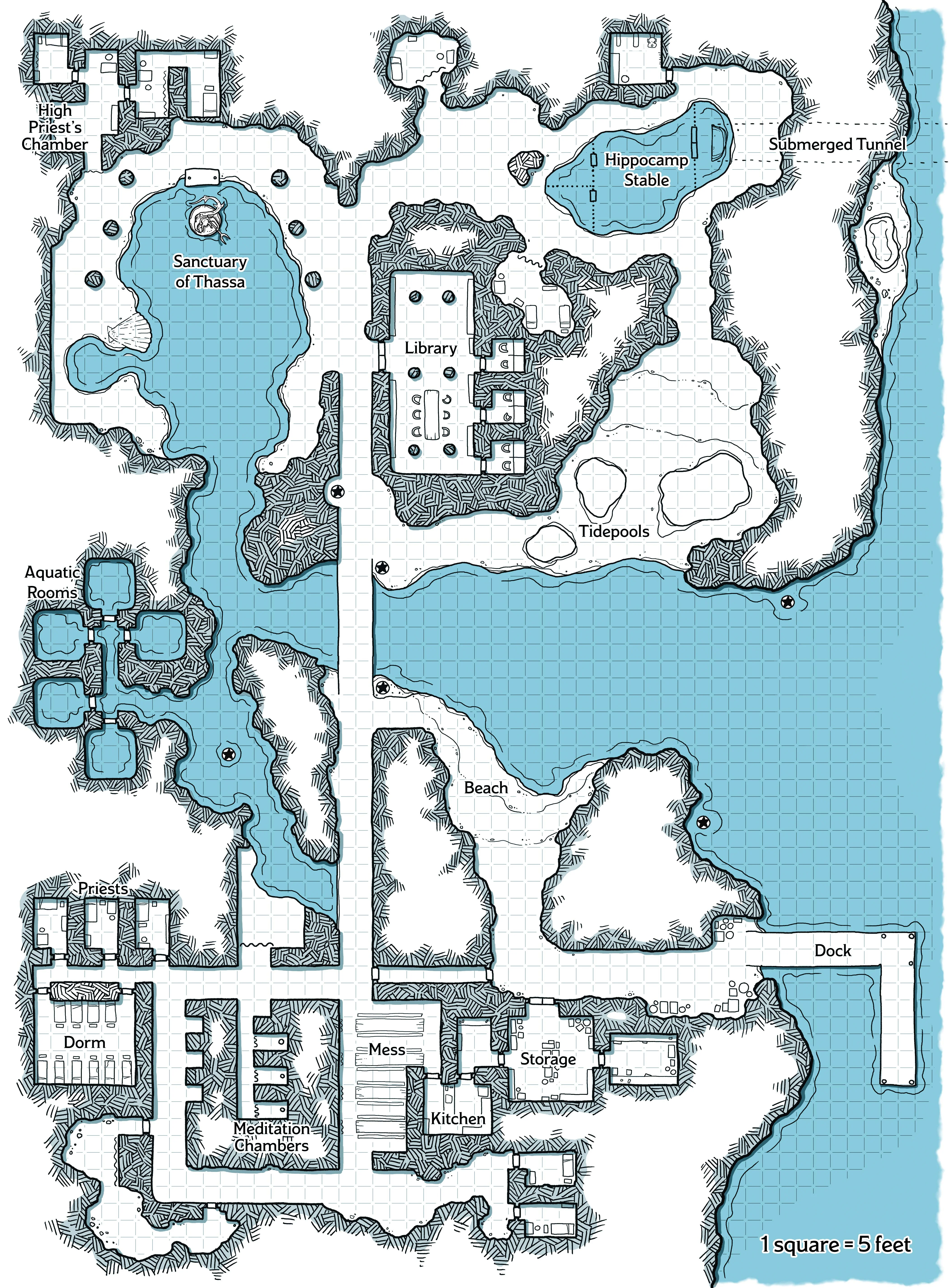
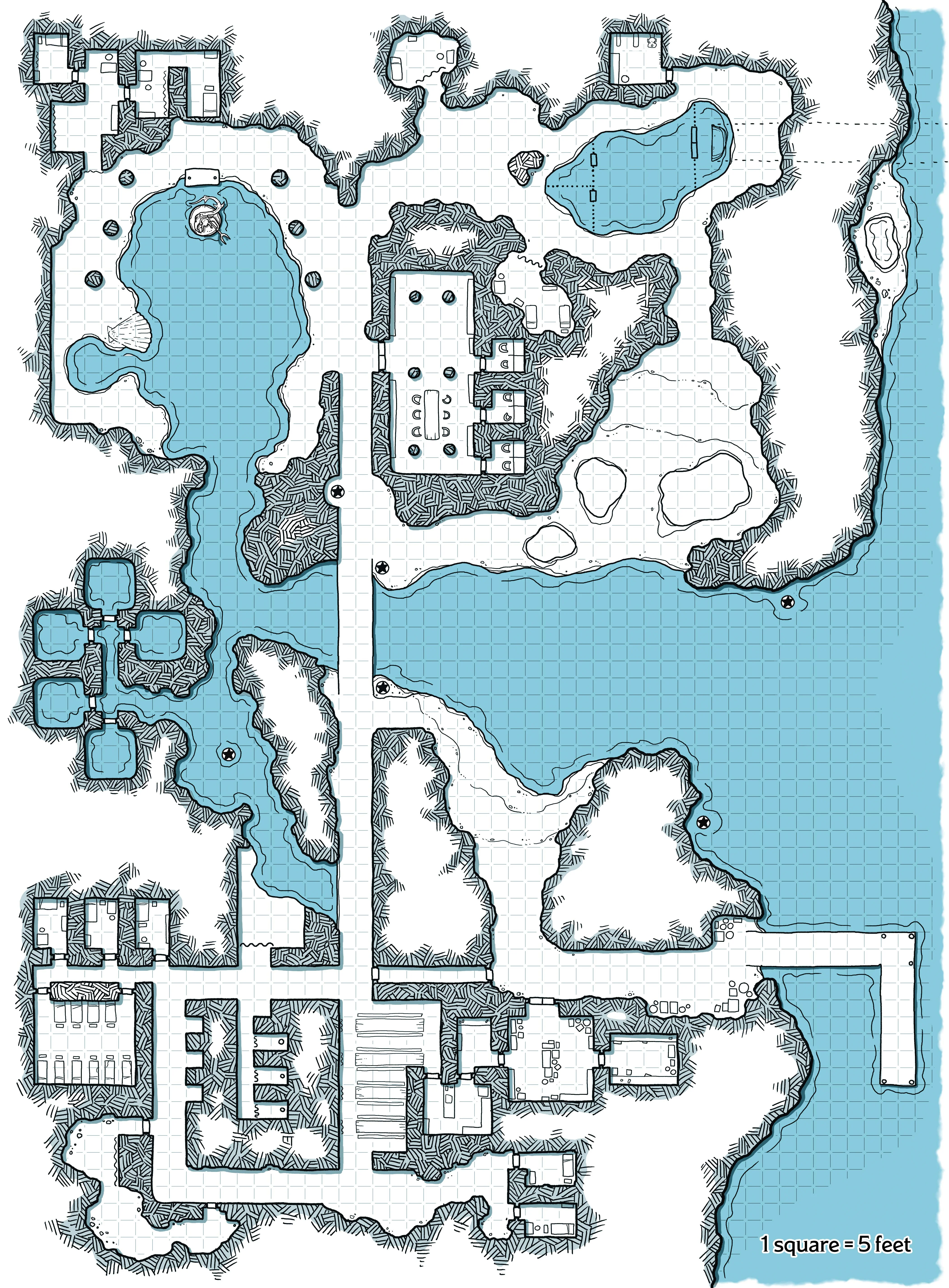
Coastal Temple Villains
Villains in seaside temples often seek to harness the might of the sea or are almost alien beings that have crawled from the depths. Examples of such villains appear on the Coastal Temple Villains table.
Nautical Adventures
The Callapheia chronicles the legendary story of Callaphe, captain of The Monsoon, whose wild adventures pitted her against all manner of pirates and sea monsters. Sailors also tell tales of the bold explorer Captain Siona and her ship, the Pyleas, recounting her epic voyages to mystical islands. Both captains and their crews still sail the waves of Theros, their stories far from complete. Yet word of their deeds has inspired generations of sailors, merely hinting at the endless treasures and adventures to be found at sea. This section provides an overview of the wonders and dangers heroes might encounter when they venture out to sea.
Running Nautical Adventures
Running adventures involving ships and the sea doesn’t need to be daunting, especially not in a world as steeped in magic as Theros. Knowing the difference between port (left) and starboard (right), or a ship’s bow (front) and stern (rear) isn’t necessarily important to legendary heroes, particularly when brave crews sail along with them. Feel free to think of the ship your heroes travel upon less in the terms of a pirate story (full of commonplace duties and dangers) and more like a vessel in a space-faring, sci-fi adventure (where mundane operations often fade into the background). How much a story engages with course setting, provisioning, periods of inactivity, and other aspects of long ocean journeys is ultimately up to you and the players to decide, but consider cleaving to what the group thinks is fun rather than stretching for unnecessary accuracy (whatever that might mean for a world as magical as Theros).
That said, if you’d like to add nuance to your nautical adventures in Theros, the book Ghosts of Saltmarsh provides more information on ships, hazards, and environments at sea as well as tables for use with nautical encounters, mysterious islands, and other marine features. The galley presented in that book might also make a fine vessel for your adventures—once your players give it a name worthy of their legend, that is.
Sailing the Sea
Just as on land, everything in the waters of Theros exists on a mythic scale. While map 3.1 in “chapter 3” suggests that travel across the Siren Sea should take only a few days, its hazards and countless uncharted islands can make what should be a journey of a month a year-long odyssey. Even a routine journey can become an epic adventure if the characters anger a god, such as Thassa, who can make sure the waves are never in their favor.
Embarking on Adventure
To begin any nautical adventure, heroes must take that first, often daunting, step away from dry land. The Adventures at Sea table provides a variety of story ideas that might help compel heroes to set forth upon the waves.
Getting Lost
Many adventures at sea start with a simple premise: get home. Whether the tale starts with characters getting marooned or in the aftermath of some calamity, the characters might share the goal of getting back to where they belong. Perhaps the characters find themselves on an island of legend, one not found on any map, making their travels a journey through the unknown. Even if the characters are shipwrecked on a well-known island, the influence of the gods, pursuit of deadly sea beasts, will of a living vessel, or countless other challenges could stand in the way of them reaching home.
Maintaining Relationships
In a campaign that often changes location, it can be difficult to have recurring NPCs. If you introduce characters you’d like the party to stay in touch with, consider the following options:
- Aquatic or flying characters can visit the characters as they travel, appearing unexpectedly.
- Magic items such as sending stones and spells such as animal messenger allow characters to stay in touch over long distances.
- Powerful creatures might teleport to the characters’ location—particularly those unable (or disinclined) to share their teleportation powers.
- When the characters dream, they might meet other creatures in Nyx.
- Some of Theros’s mystical islands move around on the sea, allowing the characters to run into them and their inhabitants multiple times.
Mystical Islands
The Siren Sea is dotted with mysterious islands that are home to strange creatures, mysterious hermits, odd phenomena, and ancient ruins. These islands make fantastic adventure locations for characters exploring uncharted oceans or those simply trying to get home. While any island might present the opportunity to rest, weather storms, restock, and explore, the islands of Theros might also be worlds unto themselves, where unlikely beings hold dominion or the gods have crafted a realm to their specific whims. Such mystical islands aren’t just stops on an ocean journey; they’re unique lands touched by the magic of the gods.
A mystical island could be the ultimate destination of a nautical adventure, or a magical interlude amid a larger seafaring campaign. When creating a mystical island, consider how its environment and inhabitants contribute to making it feel like a world unto itself. Also, consider how the laws of nature and the gods might operate differently on the island, giving rise to all manner of magical properties.
Island Environments
While a mystical island could be a simple spur of rock and sand jutting from the ocean depths, there’s the potential to make it much more. When considering the very foundations of an island, consider what the gods might have set adrift, what might have fallen from Nyx, or what might have floated upon the seas for centuries. The Mystical Island Environments table suggests some possibilities for the sorts of unusual islands that might be floating in the Siren Sea.
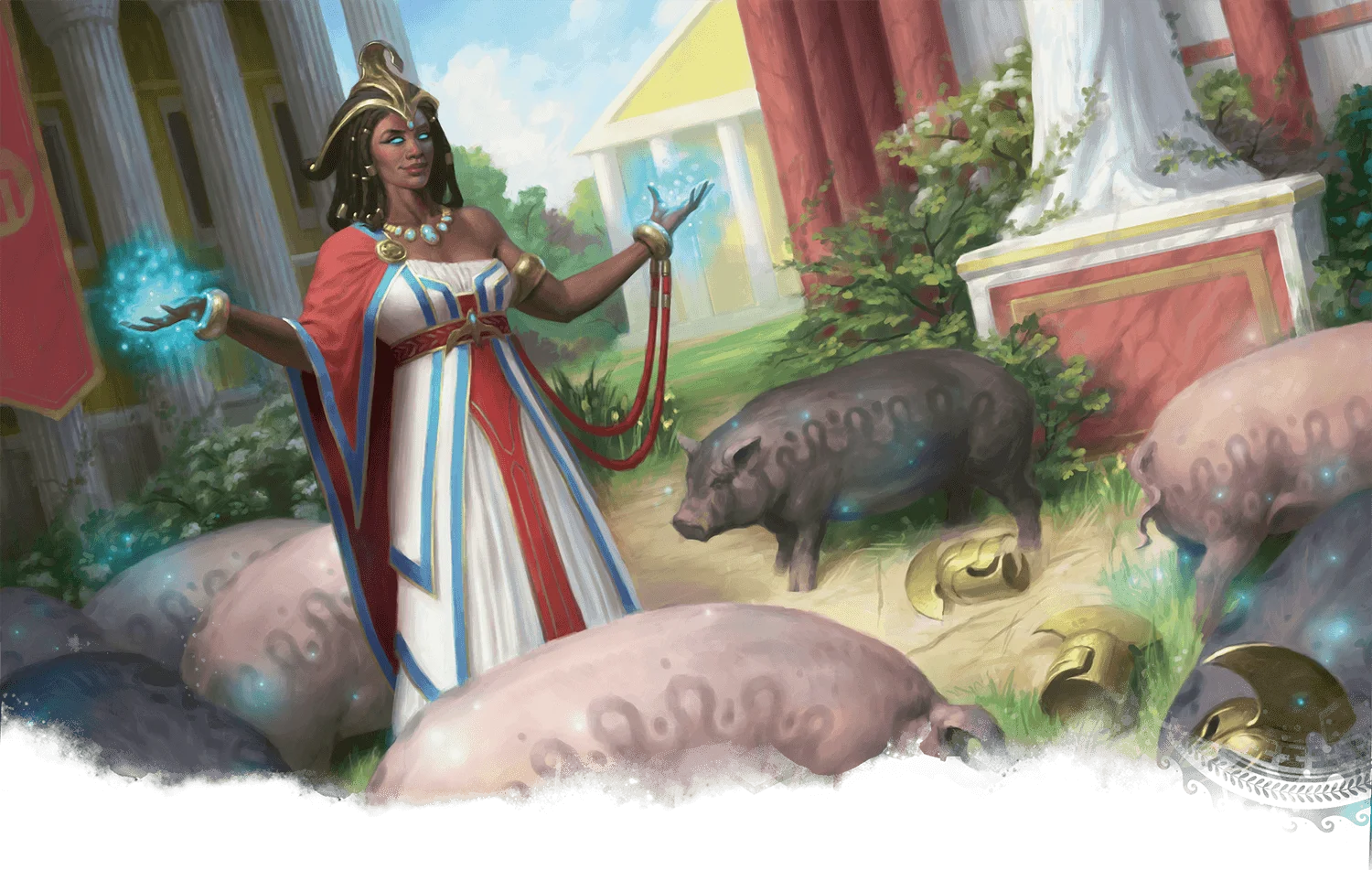
Island Inhabitants
Any sort of people, from isolated societies to desperate castaways, from monstrous predators to the last beings of their kind, might make their home in a hidden island sanctuary. The Island Inhabitants table offers just a few suggestions for what sort of people might make their home on a mystical island.
Island Magical Properties
Beyond unusual physical compositions and strange inhabitants, mystical islands might have magical properties. Effects include persistent weather, a unique law of physics, a curse that affects visitors, or something stranger. When determining what magical properties affect a mystical island, consider using any of the magical effects here, either as presented or as inspiration for magical properties of your own design.
Bliss Island
Those who visit the island risk being enchanted so they never want to leave. At the end of each long rest it takes on this island, a visitor must succeed on a DC 10 Wisdom saving throw or be unwilling to leave the island before finishing another long rest. After failing this saving throw three times, the creature never willingly leaves the island and, if forcibly removed, does everything in its power to return. A dispel evil and good spell removes this effect from the creature.
Swine Island
Visitors to this island risk being afflicted by the Curse of the Swine. At the end of each long rest it takes on this island, a visitor must succeed on a DC 10 Wisdom saving throw or be affected by the polymorph spell and transformed into a pig (use the boar stat block). The curse lasts until the visitor leaves the isle or until it is broken by a spell like remove curse.
Timeless Island
When characters leave the island after spending at least 1 day there, they might find that time has passed differently for the outside world. Use the Feywild Time Warp table in chapter 2 of the “Dungeon Master’s Guide” to determine how much time has passed.
Wild Magic Island
Whenever a spell is cast on the island, the caster must roll on the Wild Magic Surge table from chapter 3 of the “Player’s Handbook”.
Underwater Adventures
With vast triton realms hidden beneath the waves and legendary ruins drowned in the deep, endless potential for adventure lies under the sea. Characters interested in exploring the ocean’s depths might seek the means of surviving underwater—whether such takes the form of magic items or devices crafted by ingenious inventors. Alternatively, drowning might only be a concern of those who aren’t favored by the gods, and heroes might find themselves welcomed into the deep by Thassa herself. The riches of the deep are also vast, with the peoples of the sea hoarding strange treasures and more ships resting on the ocean floor than sailing its surface. However characters contend with the depths and whatever they might seek, consider using the possibilities on the Underwater Adventures table to launch a party’s explorations into the deep.
Readaloud
Myth of the Sinking of Olantin
In ancient days, Olantin was a wealthy coastal polis along the Siren Sea. Because it was the westernmost of the great poleis of old, it became associated with sunset, and therefore, with Heliod. A magnificent shrine to the sun god rose within the polis, and its priests, a group known as the Triarchy, grew wealthy and powerful.
Details about what came next are unclear, but records tell of a veil of darkness that engulfed the coast. People believed that Heliod had abandoned them, and many fled the polis. In a panic, the Triarchy raised an enormous ball of light into the sky as a replacement sun. When the darkness cleared, Heliod saw the fake sun and grew furious. With his spear, he struck Olantin, shattering the city and casting its ruins into the depths of the sea.
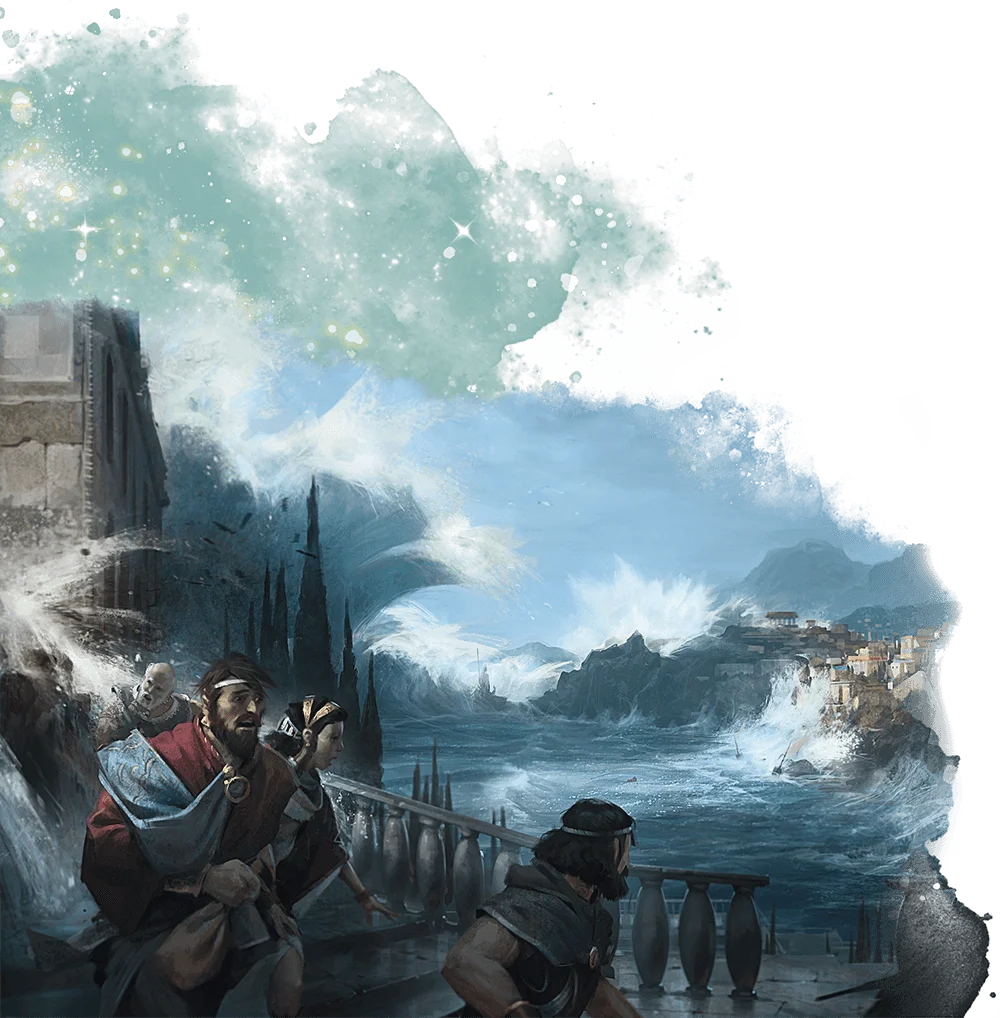
Underworld Adventures
All things eventually reach their end and pass into the Underworld. That doesn’t mean the heroes of Theros need to accept that fate and embrace eternity quietly, though. This section examines fates and features of the Underworld, including how the living and the dead might interact with this grim land and its inhabitants. Methods of escaping this supposedly final resting place of all mortal souls are also explored here, along with what adventures the Underworld holds for Theros’s bravest heroes.
What Happens When You Die?
When a soul arrives in the Underworld, it has all the memories and skills it enjoyed in life. In all respects, it is identical to its living self, including its game statistics. Though souls can enjoy the acts of eating, drinking, and sleeping, they don’t require them. They feel hunger and thirst and might be tormented by deprivation, but they don’t suffer the effects of exhaustion because of it.
Every time a soul dies in the Underworld, it reanimates at the start of its next turn with 1 hit point per Hit Die it possesses, and it gains one level of exhaustion that can’t be removed unless the soul returns to life, at which point all exhaustion gained in this way vanishes. With each level of permanent exhaustion, the soul becomes faded and dull, its eyes glazing over more and more until they are blank, staring pools.
A soul that suffers level 6 exhaustion from the continued application of this effect petrifies into a statue called a misera, and it doesn’t rise again.
Living Descent
Sometimes the answer to a riddle is lost beyond the inky waters of the Tartyx River. When spells and sages fail to recover some crucial bit of information, how far might heroes go to recover it? One answer is to dare an expedition into the Underworld to find what was lost. Entering the Underworld is arguably one of the easiest feats imaginable—everyone ends up there when they die. Entering while still alive, and in such a way as to be able to walk out again, is another matter entirely.
Legends tell of places where the boundary between the mortal world and the Underworld is weak. These paths lie beyond lands controlled by the poleis and other civilized beings. Dark caves with tunnels leading down into darkness and rivers quietly lapping at fog-shrouded gravel shores give way to the Underworld’s borders. Though Athreos ferries the dead across the Tartyx, he’s not above accepting a one-way fare from those who still breathe. Even the other fearsome Underworld guardians that keep watch over the dead often allow the living to enter. Leaving the Underworld isn’t so simple, and once beyond the Tartyx River the living find themselves in the same predicament as the dead. Within the Underworld, characters who entered bodily are still fully alive. They age, suffer damage, heal naturally, and require air, food, drink, and sleep as normal. The Underworld isn’t conducive to mortal life, though, and between deadly creatures and dangerous otherworldly environments, the living might soon find themselves numbering among the dead.
Characters can pursue all manner of goals to the Underworld. Many center on finding something that was lost with no other means available to recover it. Perhaps this means rescuing a dead soul when resurrection magic isn’t an option or retrieving a vital piece of information from someone who wasn’t supposed to die. This might even mean pursuing the soul of a player character, particularly if they’re somehow barred from being returned to life through usual magical means. In such a case, consider allowing the player to run a temporary character who assists the party in the rescue or to play their own character as a soul and let them rejoin the party to help effect their own escape.
Regardless of why living characters might enter the Underworld, those who attempt the undertaking might seek to learn more about the realm of the dead, its various wards (see “chapter 3”), and where the object of their quest ended up. Oracles of any of the gods might aid in divining these details, but those likely to be the most precise—followers of Erebos—are also the least likely to be interested in aiding an Underworld escape. How characters turn such an oracle to their side and determine the accuracy of the information they receive are all part of such a momentous quest.
Once characters enter the Underworld and attain their goal, they still face their most daunting challenge: escape. Consult the following ""Paths of Escape"" section for ideas on how the living might ultimately make their way back out of the Underworld.
Deathly Interludes
When a character dies, their adventures don’t need to end. The Underworld presents an opportunity to provide a sense of closure for deceased characters—as adventurers’ ends tend to be quite sudden—or to give them a way to continue engaging in the quest while their companions attempt to bring them back to life.
These interludes can be played as brief scenes where the player of the dead character is in the spotlight and the rest of the group observes. Alternatively, the rest of the group could participate as NPCs or even monsters the dead character meets and interacts with.
Hero’s Epilogue
Most adventurers hope their lives come to an end with some worthy conclusion. Sometimes in the heat of battle, though, that end can be abrupt and without real resolution. An epilogue featuring a hero’s soul descending into the Underworld, crossing the Tartyx River, and being guided—or dragged—to the ward which awaits them might create that satisfying conclusion.
Consider memorable moments from the character’s story and how they can be reflected in the events of their final descent. Maybe they see the souls of friends, allies, or loved ones who perished, whether their fates are good or ill. Perhaps a villain the hero slew now exists as a broken misera, giving mute testament to the hero’s success. Characters who overcame their personal flaws might even be confronted with symbolic or direct examples of their past failings and rebuke their old vices in a final, crystallizing act of growth.
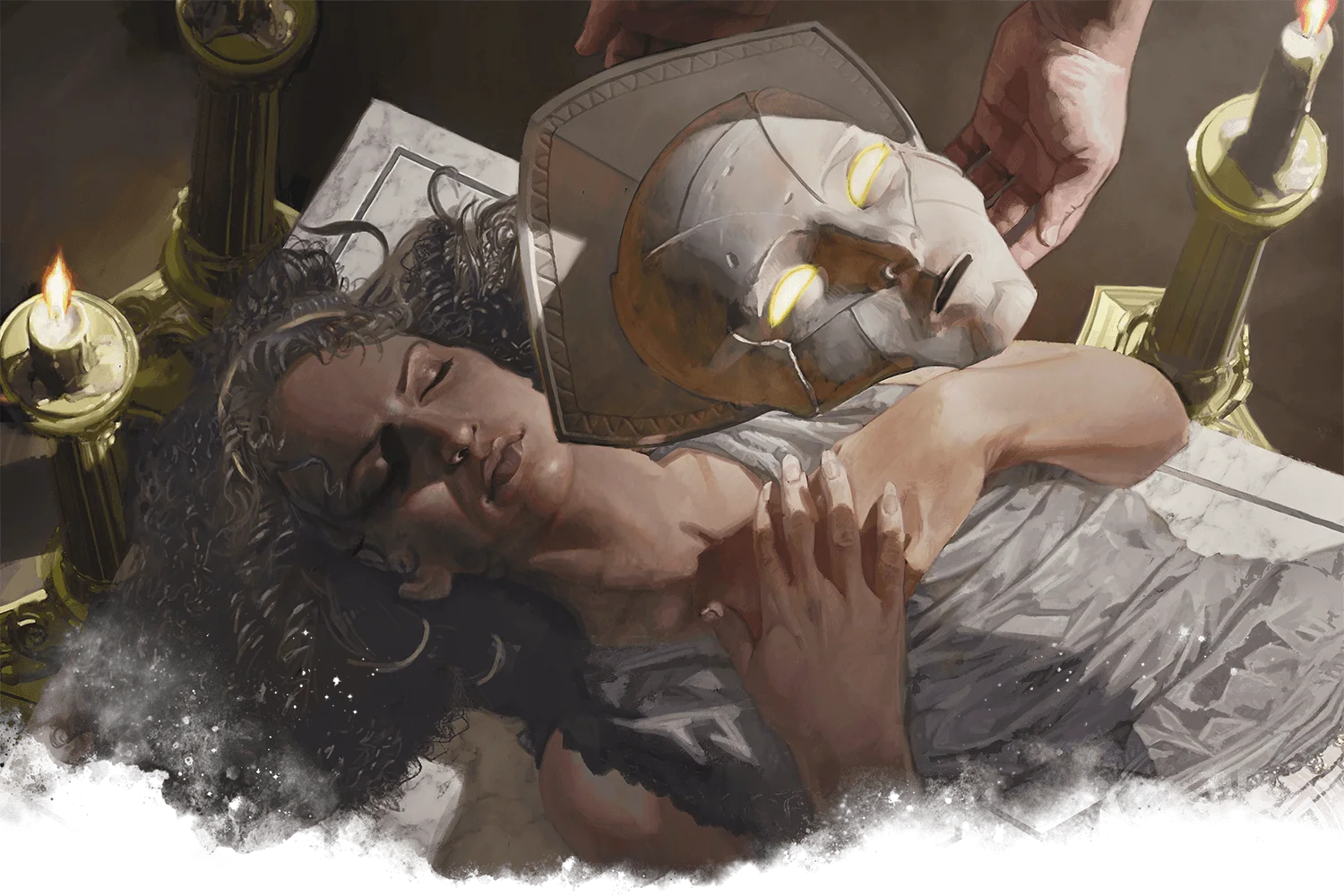
The Soul Abides
When adventurers in higher tiers of play die, they can often expect to be resurrected. In these cases, an interlude where the hero gets a glimpse of the afterlife awaiting them can be powerful. From a personal standpoint, this sort of interlude can serve to reinforce a character’s choices and actions or offer a warning of what’s to come if their priorities don’t change.
For characters who embrace heroic virtues and live as a beneficial force in the world, they might spend a few hours or days in the idyllic embrace of Ilysia. On the other hand, those who have stained their soul with dark acts might return to life after suffering what feels like years of torture in Tizerus’s Mire of Punishment.
In either case, the character might even gain some helpful insight into their current predicament or a portent of events to come. Maybe the soul of a long dead sage offers guidance or a legend the hero long idolized provides advice on how they defeated a similar threat. Silent contemplation while sailing on the Nerono oceans could give the character time to decipher part of a mystery. An Underworld demon might even say something that only one of the character’s dead rivals could have known. Whatever a character learns during their temporary death, they can carry with them back into the mortal world. Such might make dying one of the most helpful things to happen in a character’s greater heroic career.
Journey into Death
Those who are prepared for death, or who receive funeral rites, typically have or are given a coin (or similar token of value) interred with their corpse. When these individuals’ souls reach the banks of the Tartyx River, they have with them the fare necessary to board Athreos’s skiff and pass on to the Underworld.
Those who don’t have a coin with them when they die and aren’t given funeral rites have no means to pay Athreos’s toll and thus have no way of reaching their place of rest. These lost souls primarily collect along the Tartyx’s shores where they languish or beg for coins to pay for their passage. Some wander away from the shore, though, becoming ghosts or other undead. Only if their body is granted funeral rites or if the living give them payment for Athreos can such souls find rest.
What Happens When a Soul Escapes?
If a soul meets all the challenges set before it and slips from Erebos’s clutches, several things likely happen:
- The soul becomes a true, physical being. It is in a new version of its body, a physical manifestation of the soul’s perception of itself (which may or may not be identical to its former body).
- The soul’s former body has no further connection to the soul; it is an inert, empty shell. Casting spells on the body that restore it to life simply have no effect.
- Any object carried out of the Underworld becomes a real, physical thing in the mortal world, with all the properties and features common to objects of its type.
Denizens of the Underworld
When a spirit reaches the Underworld, they find that they’re far from alone. The nature of the Underworld under Erebos’s rule takes its toll on even the heartiest souls. As time wears on, most of the dead feel the weight of ages and misery. Souls suffer injury and pain just as living creatures do, and even the dead can perish over time or after enduring multiple deaths. The result of these forms of spiritual weathering divides the dead into the following groups:
Neoli are newcomers to the Underworld—vibrant spirits who remember their lives and, in many cases, are coming to terms with death.
Glazers are vacant, misery-worn souls who have endured decades of existence in the Underworld. Most have spent far more time dead than they did alive and remember life as little more than a faded dream.
Misera are souls permanently turned to stone after enduring numerous deaths in the Underworld. These corpses of the dead linger where they petrified until they crumble to dust.
Paths of Escape
Despite the inexorable pull of Erebos’s lash, even death itself can end—or at least be forestalled. Simply walking out the way one entered isn’t an option—Athreos refuses to ferry souls back across the Tartyx. Other pathways that connect the Underworld and the living world are guarded by vicious creatures. Still, there are a few means by which a dead soul can return to life.
Resurrection Magic
By far the simplest means of return for a dead soul is for someone who yet lives to cast a raise dead, resurrection, or true resurrection spell. If a mortal is a frequent recipient of resurrection magic, Erebos might take a special interest in that soul. A soul in the clutches of Erebos himself isn’t free, so it can’t be returned to life by mortal magic.
Demon Flight
Creatures that fly across the Tartyx without Erebos’s permission find themselves attacked by flocks of vicious monsters. The demons of the Underworld make this flight with better success than most, though. By bargaining or force, a demon might be convinced to carry a soul on this lengthy, dangerous flight. Should a soul manage to survive the harrowing journey, it finds itself restored to life in the mortal world.
- Escaping Characters. To attempt this means of escape, a party must bargain with a demon or acquire another means of flight in the Underworld. Then they’d better be ready for the fight of their lives as demons, harpies, and other deadly foes pursue them.
Lathos
Hidden in the bowels of Erebos’s palace is the portal Lathos, which leads to the mortal world. Moreover, tales say that Lathos can restore a soul to life without any cost or loss of one’s identity and sense of self. This isn’t to say that Lathos is an easy path to walk, however. Erebos’s most fearsome servants guard the portal. So far, no one has succeeded in escaping through Lathos, and the location of the portal’s exit in the mortal world is unknown.
- Escaping Characters. Escaping through Lathos is likely an appealing option as the portal exacts no price. The trick is reaching it. Perhaps the characters know some secret that Erebos covets and so might bargain for access. Alternatively, they might conduct an elaborate infiltration of Erebos’s palace. Such would be a challenging endeavor but also a feat worthy of legend.
Path of Phenax
The god Phenax, once a mortal who died and passed into the Underworld, was the first to discover a way to escape, forever known as the Path of Phenax. As part of his escape, he swam across the Tartyx, whose waters stripped away his identity. Without that vital part of his being, Phenax couldn’t be detected by Athreos, and Erebos couldn’t snare him with his great whip.
Since Phenax’s escape, other souls have repeated his dangerous journey. When mortal souls travel the Path of Phenax, the Tartyx washes away their identities, symbolized by their faces, which become nothing more than blank flesh. Souls that successfully emerge on the mortal side of the Tartyx River become Returned, with no knowledge of their former name or past life. As this is a known consequence, most souls forge a gold mask to carry with them. This mask becomes the proxy identity worn by all Returned. Souls’ lost identities continue to exist, though, becoming eidolons, which scatter throughout the mortal realm, having no connection to their Returned bodies. (See “chapter 6” for more information about eidolons and the Returned.)
- Escaping Characters. Traveling the Path of Phenax can present an exciting but challenging option for most parties, as it results in affected characters becoming a monster of some type—either an eidolon or a Returned. If you’re comfortable with characters playing as monsters or retiring their characters at the end of the quest, this can be a rewarding arc to play through. You might also introduce some means to reunite a character’s eidolon with its Returned body and restore the character to at least some semblance of their former self. This should be a monumental undertaking, as it shakes the foundation of Theros’s division of life and death.
The exact details of Phenax’s route are unclear, and aside from forging masks and a final swim, any number of challenges among islands in the Tartyx might comprise the path.
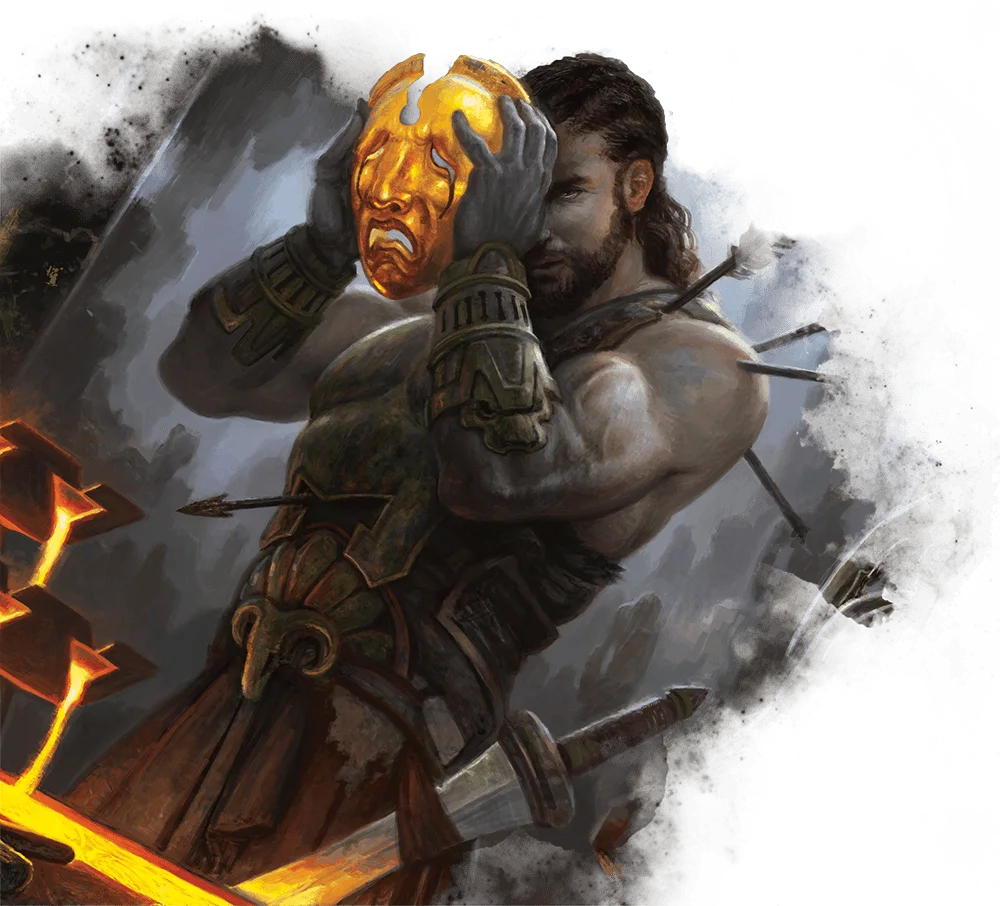
Beyond Death
When a character dies, the Underworld serves as an opportunity to allow a dead character to experience their own story while their companions (hopefully) try to get the body resurrected. Consider the possibilities on the Underworld Adventures table should a character find themselves trying to escape the realm of the dead.
No Silent Secret
“No Silent Secret” is a short adventure for a party of four to six 1st-level characters, who will advance to at least 2nd level by the adventure’s conclusion.